![MaritimeJournal[Seawork]](https://www.maritimejournal.com/wp-content/uploads/2026/09/MaritimeJournalSeawork.svg)




Subsea sabotage – the hidden front of warfare
As global tensions spread to threatening Europe’s critical underwater infrastructure, particularly in the Baltic Sea region, governments are addressing the challenges of protecting vital subsea links requiring potentially military-level responses but involving infrastructure that has traditionally been the domain of the commercial sector.
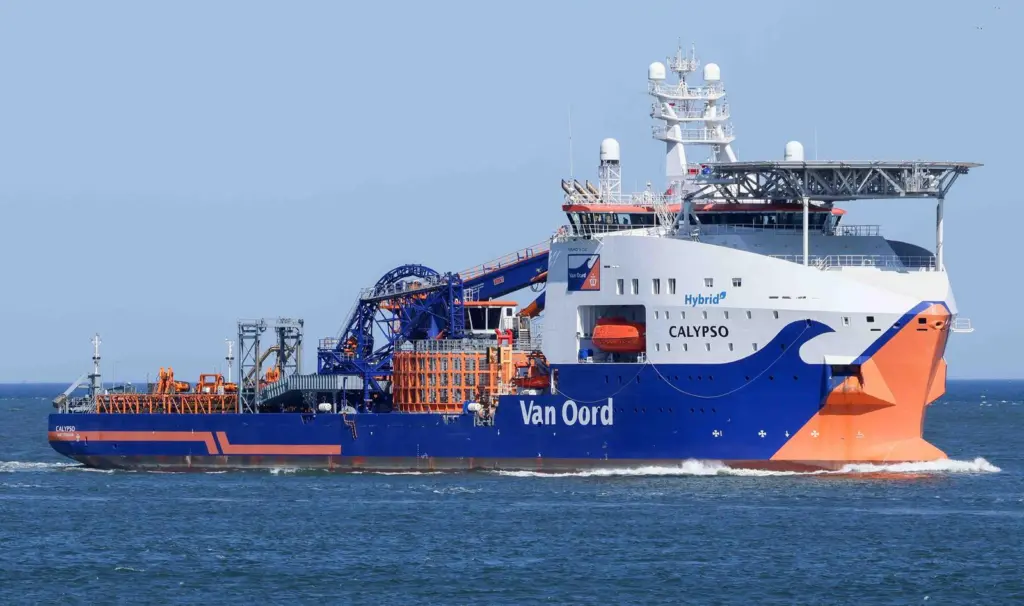
But as military planners look to the commercial world and its vast experience of installing and maintaining subsea cables and pipelines, Peter Barker discovers that companies with the expertise gained on the back of the offshore oil and gas, and more recently wind farms, along with electricity interconnectors and data links, now recognise the expertise and tools they possess.
In 1917 a US Senator said ‘the first casualty when war comes is truth’, and while recent incidents in the Baltic have been linked to Russia’s invasion of Ukraine, accidental damage to subsea infrastructure is a common phenomenon, giving the industry a head start in managing such situations.
Context
Oil and gas pipelines meet the definition of subsea infrastructure but it is disruption to data links that no doubt keep governments awake at night, with 99% of internet traffic carried by around 1.48 million kilometres of cable globally.
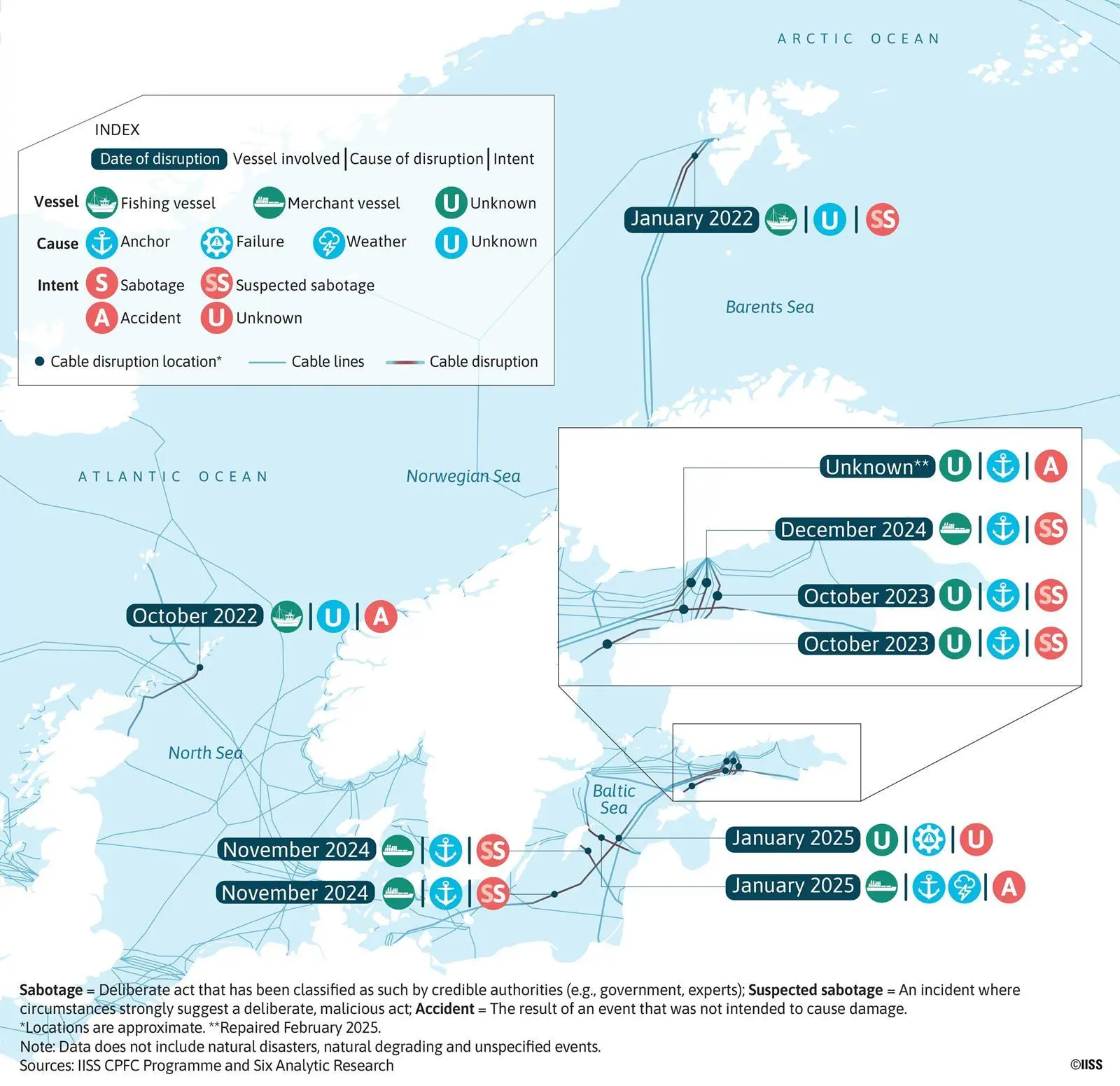
The recent Global Security and Innovation Summit (GSIS) noted that while most data cables are privately owned, governments retain responsibility for ‘strategic continuity’, and that 10 of the 22 reported global disruptions in 2022-25 occurred in Europe – in the North Sea, Baltic Sea and Barents Sea. The intent behind six of these incidents was considered ‘suspected sabotage’.
GSIS says the European Commission has reallocated €1 billion to fund new submarine cables and surveillance capabilities, with NATO initiatives including Baltic Sentry to deter intentional cable damage.
It adds that long-term success of the networks depends on public-private partnerships to build resilience, including additional cable-laying and repair vessels and new cable routes.
Response capabilities
The issues around who is responsible for deliberate acts of sabotage sits with governments but moving down the chain of response, the expertise and assets of those in the commercial world of subsea operations quickly comes into focus.
The first successful trans-Atlantic telegraph cable was laid in 1858. Since then the industry has expanded, installing oil and gas pipelines, electricity interconnectors (including those associated with offshore wind energy), and more importantly, data links.
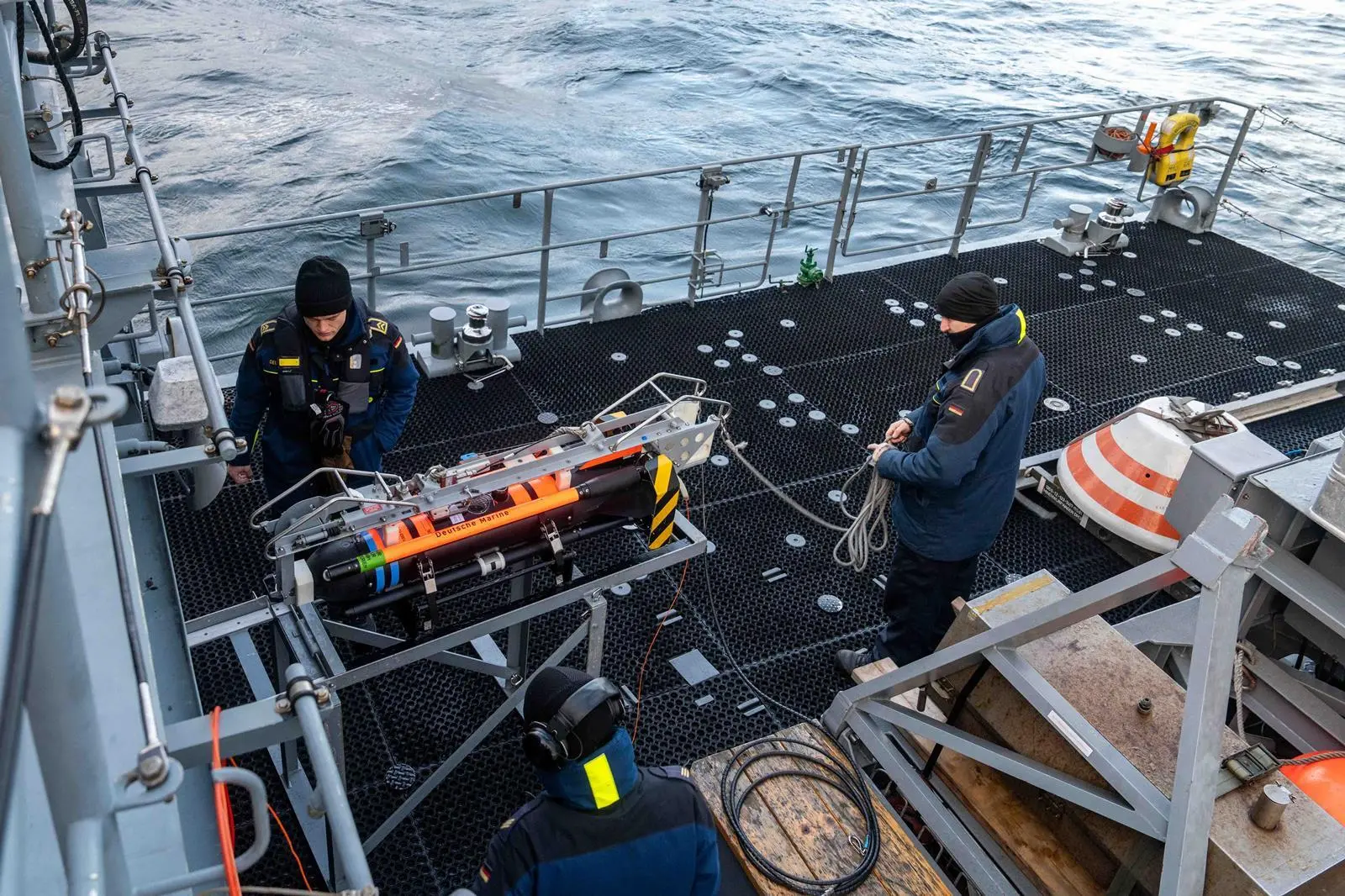
Commercial entities have been detecting damage (of a non-intentional nature) for decades using divers, ROVs and more recently autonomous unmanned vehicles (AUVs) in Inspection, Repair and Maintenance (IRM) roles. They are becoming relevant now for more than routine applications: in particular, detecting major intentional damage.
Established operators such as Norway’s Kongsberg Ferrotech and MacArtney A/S, along with Gatehouse Marine of Denmark, are among those who, to varying degrees, are marketing their subsea services to the world of maritime intelligence and defence.
Finland-based Image Soft’s UNWAS underwater surveillance system is based on the US Navy’s SOSOS (previously SOSUS) fixed hydrophone arrays from the 1950s, involving passive detectors that track both underwater and surface targets.
With its Gen3 UNWAS system deployed by the European Ministry of Defence, Image Soft says ‘the unfortunate fact is that damaging underwater infrastructure is currently possible for a determined and well-resourced attacker with a very small risk of getting caught’.
Repair
It is usually the repair itself that presents particular challenges.
GSIS says there are only around 80 cable-laying and repair vessels globally – sophisticated vessels that are often committed to capital projects including the initial cable-laying phases along with long-term maintenance contracts stretching well into the future.
The arrival of offshore wind has seen the introduction of smaller cable-laying and repair vessels able to navigate the restricted waters within the wind farms themselves, servicing inter-array cables that larger vessels intended for trans-oceanic operations may not be best suited for.
The abundance of wind farms in European waters has seen the arrival of a number of vessels capable of repair activities, including newbuilds and older vessels and barges adapted for the role, but again the GSIS assessment highlights the challenges.
It says the average cost of cable repairs in 2025 was USD$1.29 million (€1.101 million) per incident, with the average repair time for damaged cables (in 2023) being 40 days.
With more than 50 submarine cables connecting countries surrounding the Baltic Sea, the consequences of internet interruptions are significant.
While network redundancies ensure operations continue with minimal impact when a single cable fails, simultaneous or sequenced cable disruptions can oversaturate networks and cut off entire regions in Europe, a problem compounded by limitations in repair capabilities.
The future could see Europe’s navies collectively owning and operating or contracting a fleet of cable-repair vessels available at short notice, dedicated to rapid response in the event of unforeseen damage from hostile actors.
Military and commercial cooperation
Governments and industry are responding by ramping up efforts to enhance resilience through additional networks, funding emergency repair capabilities and investing in surveillance tools.
With cables mostly privately owned and governments responsible for strategic continuity and coordinated threat detection, response and repair capabilities are essential. But how far down the road of what could become semi-military activities will the commercial world want to go?
The two activities probably do not cross the combative line and the expression ‘public-private partnerships’ is used to describe the relationships. Six of the 10 incidents list ‘anchor’ as the cause of disruption and clearly an issue at a more strategic level that, depending on circumstances, attract the interest of the military.
How much the commercial world involves itself depends partly on its desire for involvement alongside its non-military activities, but it also requires governments to be adequately prepared to meet this new threat, which could shape future conflicts – short of actual physical warfare.
Related Articles
 OTHER NEWS
 MARINE CIVILS
 MARINE CIVILS