![MaritimeJournal[Seawork]](https://www.maritimejournal.com/wp-content/uploads/2026/09/MaritimeJournalSeawork.svg)






European Tugowners call for change
The European Tugowners Association is calling for change, urging leaders to help defend its industry against Asian competition and inflate the status of its vessels.
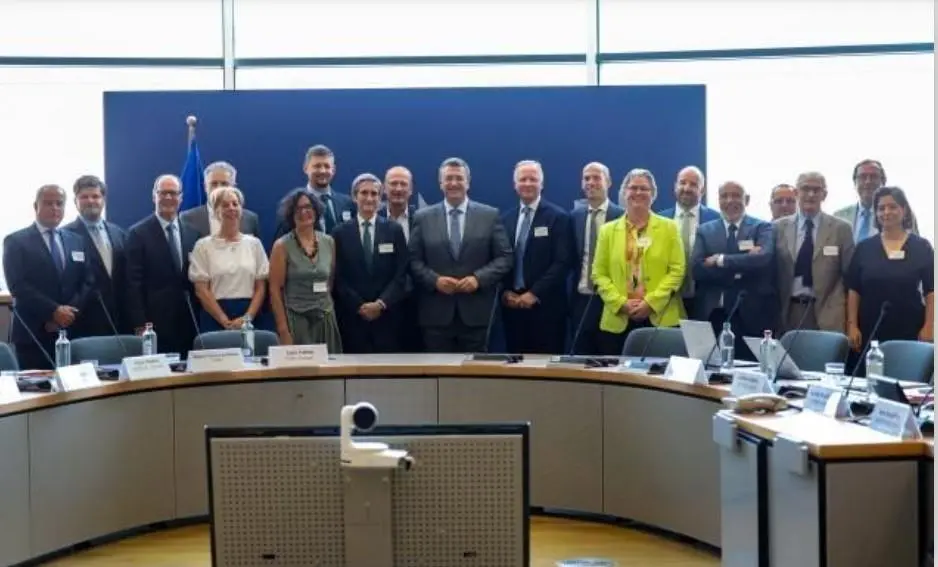
The ETA has responded to two calls for evidence from the European Commission, which intends to develop a ‘European Maritime Industrial Strategy’ and ‘European Port Strategy’, and sent out calls for evidence on both.
In answer, the ETA has said Europe must remain ‘the leader in manufacturing state-of-the-art vessels’.
“In the specific case of tugboats, they have for many years been manufactured in Europe, and European owners would purchase them in the continent,” it says.
“However, this is now on the decline due to more favourable prices in Asia. Nonetheless, most of the state-of-the-art equipment and innovation still happen in Europe. Therefore, ETA recommends targeted and comprehensive support for the shipbuilding and maritime equipment manufacturing industries.”
It lists simplified access to public and private funding, a regulatory environment that supports innovation and manufacturing, and incentives to attract shipowners to place orders within Europe.
Strategic asset
Towage, the ETA says, should be ‘explicitly recognised’ as on par with military vessels, dredgers and icebreakers as ‘strategic maritime assets’.
Vessels that are classed as such have better access to funding from the EU budget and other benefits normally available to defence vehicles.
“Harbour tugs play a critical role in safeguarding port infrastructure and ensuring operational continuity,” it says. “Their presence enhances the port’s resilience and responsiveness, making them an indispensable asset in national and regional security planning.”
If treated as such, harbour tugs will be able to access EU funds for pilot projects, retrofits, digitalisation and automation.
“Towage vessels are indispensable for the safe and efficient manoeuvring of ships and also frontline responders in emergency situations, contributing to environmental protection and maritime security,” it says. “Furthermore, towage services play a vital role as first responders in port emergencies, including fire-fighting operations, protecting both human lives and infrastructure.”
The ETA is also calling for a strategic inventory of spare parts to be set up and maintained for all strategic assets, including critical components such as propulsion systems, winches, control electronics and emissions-reduction technologies.
The European Industrial Strategy should include instruments to attract young Europeans to the industry as a whole, whether it be shipbuilding and equipment manufacture or crewing,
“It should support those already in the industry by continuing to develop both traditional and technological skills, including targeted efforts to re-skill and up-skill the workforce are essential, not only to keep pace with the digital and green innovation,” it says.
Port Strategy
Where ports are concerned, the ETA is calling on the EU to adopt a framework that balances competitiveness, environmental considerations and social responsibility.
“The European Ports Strategy should explicitly recognise the ports intricate ecosystem, acknowledging the interdependence of infrastructure, operations, and services, and of towage, in particular, as it is indispensable to port safety,” the ETA says.
“Thus, the Strategy must affirm the criticality of enabling and supporting port services, not only as operational necessities but as pillars of safety, security, resilience, and sustainability within the port ecosystem.”
It says a level playing field is vital inside and outside the EU, including ensuring a reliable and reasonably priced supply of alternative fuels to support today’s transition.
“European ports must be equipped with the necessary investment, infrastructure, and resources to serve as strategic energy hubs,” it says.
It believes the Port Strategy should include a State Aid Framework, which it says appears in other transport sectors, to support the low-emission equipment, alternative fuel infrastructure and digitalisation that will soon be mandatory but that ‘private operators and port services providers cannot shoulder alone while staying globally competitive’.
“ETA urges the European Union to ensure full alignment between the EU ETS for maritime and the global regulatory framework under development at the IMO in order to avoid carbon leakage and unfair practices,” it says.
Related Articles
 SPECIAL REPORTS
 TUGS & SALVAGE
 EQUIPMENT