![MaritimeJournal[Seawork]](https://www.maritimejournal.com/wp-content/uploads/2026/09/MaritimeJournalSeawork.svg)

Fires, strandings, wreck recoveries – busy times for salvors
‘There’s a ship parked in my garden’ was one media headline describing the 11,135dwt container vessel NCL Salten running aground near Trondheim in May.
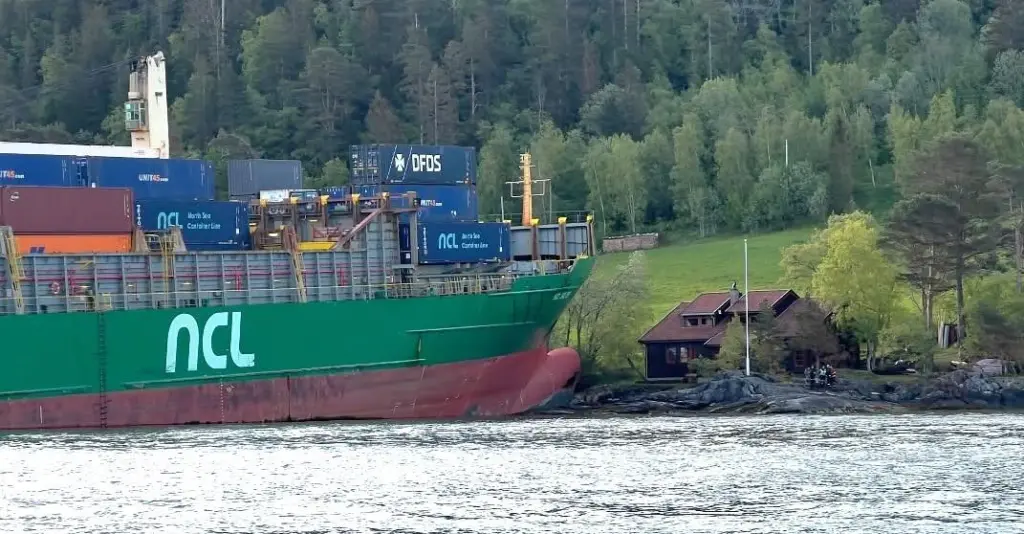
It was just one incident listed in the International Salvage Union’s quarterly round-up of members’ activities, which included five vessel fires, two groundings and four wreck recovery operations.
ISU member BOA Offshore, in cooperation with other stakeholders, was engaged to NCL Salten and after 77 containers were transferred to a barge to reduce ground reaction, BOA’s tugs Boa Balder and Boa Heimdal re-floated the vessel just five days after the initial grounding.
Maritime Journal contributor Peter Barker provides an overview of other recent salvage activities by cause.
Fire! fire!
Vessel fires present particular challenges for responders and five incidents involve two major salvors – Rotterdam-based Smit Salvage and US-based Resolve Marine.
Smit faced a complex situation when the crew of the 24,727dwt container ship ASL Bauhinia abandoned ship in the Southern Red Sea following a cargo fire and subsequent grounding.
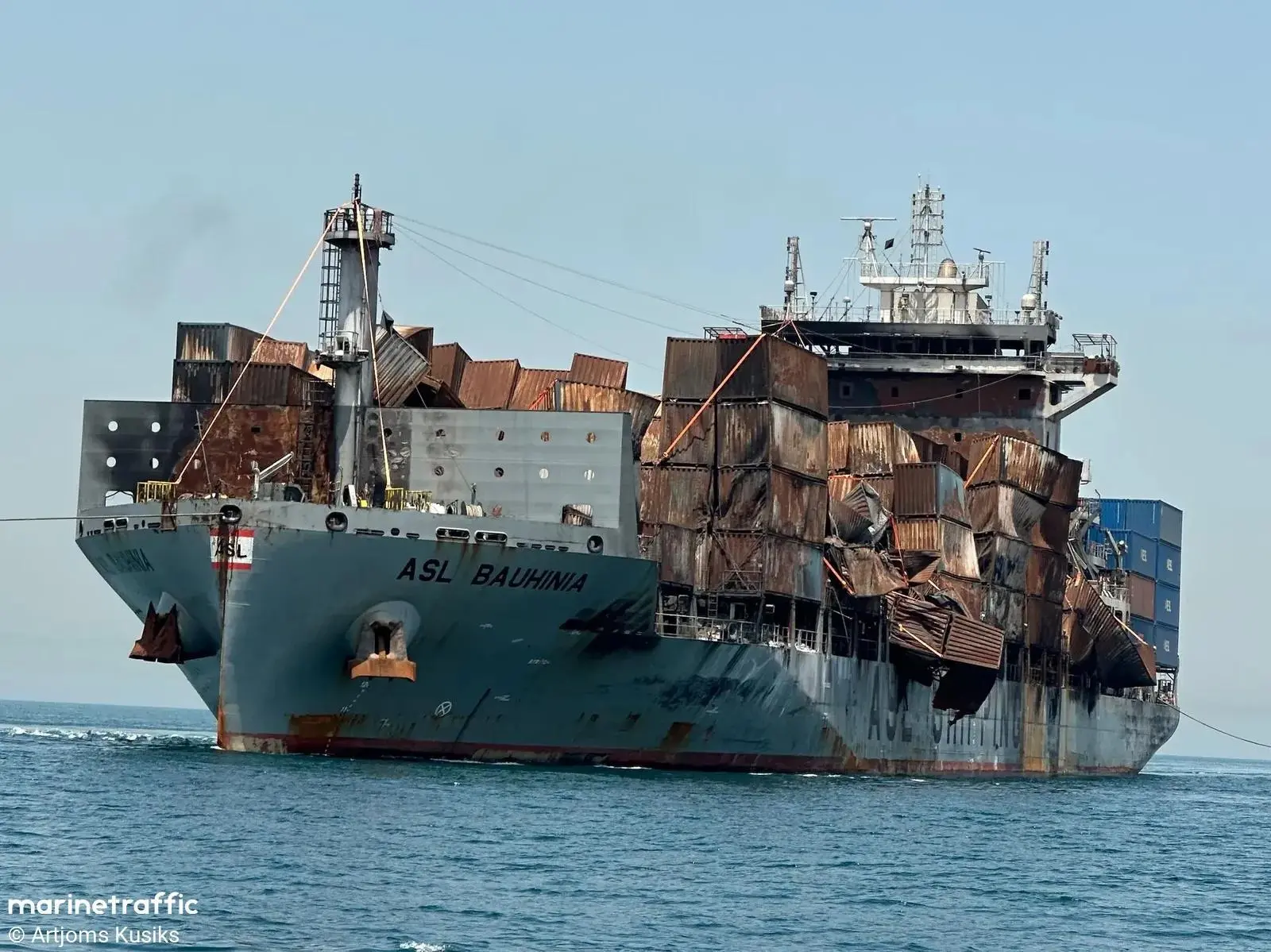
Smit had to assess the risks from Houthi rebels targeting shipping in the area along with the usual challenges such as where spraying water on the burning vessel would carry polluting debris into the sea, fire-fighting water within the vessel itself categorised as waste and costly to process.
After re-floating and relocating the ship to a safe anchorage in unfavourable weather conditions, Smit faced the familiar problem of finding a port of refuge for ASL Bauhinia for the next stage. Eventually Jebel Ali in the UAE accepted the vessel for cargo discharge.
As it was an unmanned tow, water screens were installed on the vessel to recirculate water in the holds and keep high temperatures and pockets of fire under control. Discharge operations are still ongoing at Jebel Ali.
Other similar incidents attended by Smit include an engine room explosion and fire in a cement carrier near the Bahamas, .originating from a container loaded with lithium-ion batteries on a container ship off Port Kochi, India and a fire on a bulk carrier laden with coal off Port of Nacala, Mozambique.
A marine fire-fighting team from Resolve Marine’s base in Singapore responded following an engine room fire on a bulk carrier in Chinese waters. After extinguishing the fire, a tug was sourced by Resolve and following stabilisation and tow strengthening preparations in Kaohsiung, the casualty was towed to a repair yard in Zhoushan.
Collisions and groundings
Vietnam Smit and Resolve worked together to manage the response to a collision between a container vessel and a bulk carrier on the Tòng Làu River.
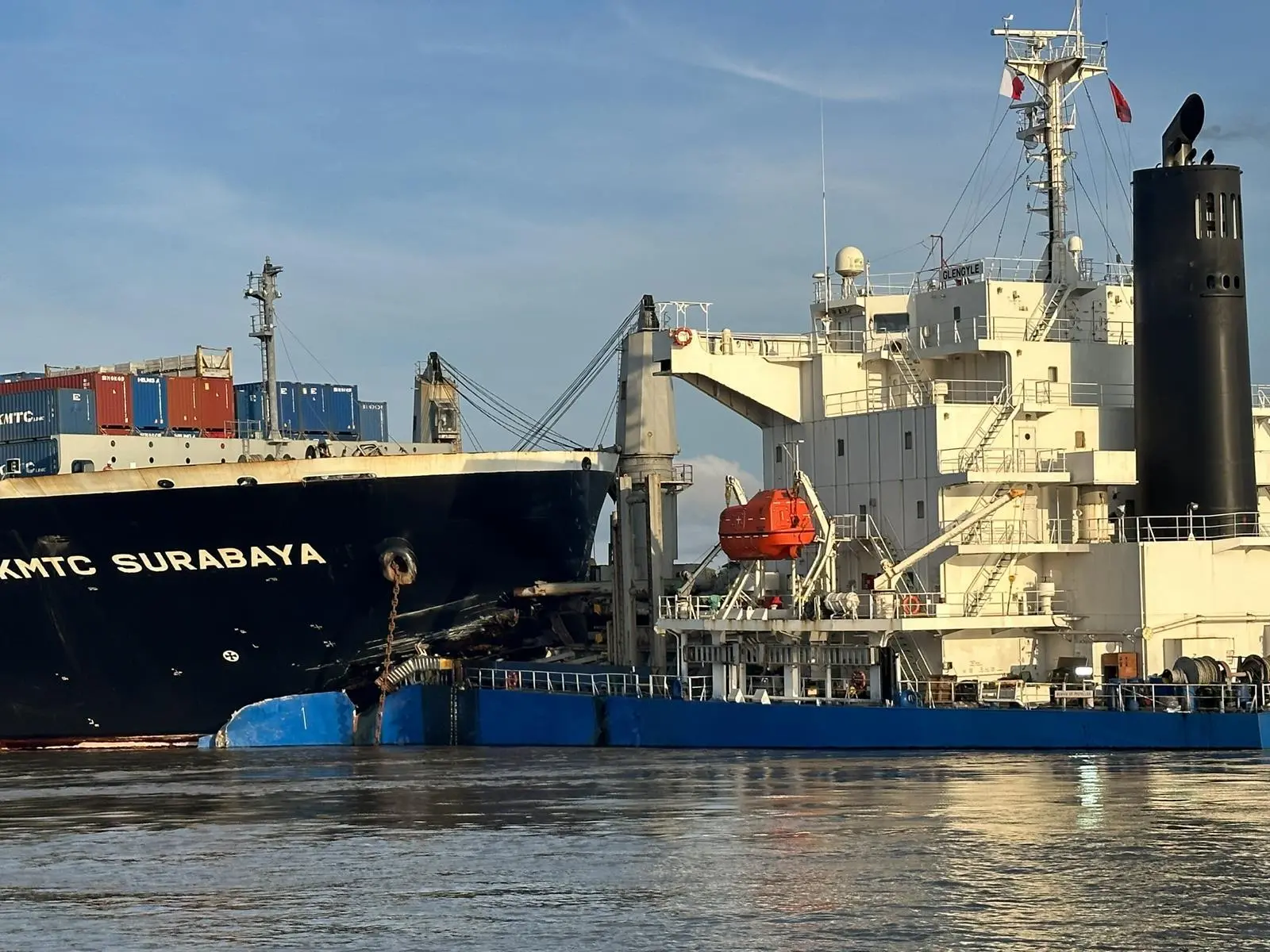
The operation to separate the vessels included laying heavy mooring buoys and employing six local tugs to stabilise the bulk carrier while the container vessel was pulled backwards. The bulk carrier’s cargo was then partially discharged, enabling it to proceed to a berth.
Another vessel grounding in Scandinavian waters involved a vessel laden with 4,600t of scrap steel, a delicate operation for Turkey’s Aras Salvage.
After the grounding on rocks near Malmö, Sweden the vessel’s double bottom ballast tanks were compromised, resulting in around 370t of ground reaction.
Simple de-ballasting or brute-force pulling posed significant hull damage risks and 700t of cargo was removed while compensating the weight reduction by taking on water ballast to ensure the vessel remained stable.
A floating crane, barges and tugs were engaged for the cargo removal, which took several days before de-ballasting and re-floating the vessel and towing it to port.
“The operation was not merely a technical challenge, it was a test of values, Aras Salvage responding not with haste, but with purpose, not with recklessness, but with readiness,” said Aras Salvage’s Naci Hoscan.
Wreck recoveries
Wreck recoveries can be long drawn-out affairs, but one incident for Donjon Marine, carried out at speed, placed the US-based salvor firmly in the world’s spotlight.
Following the tragic mid-air collision between a US Army helicopter and an American Airlines jet over Washington’s Potomac River in January, Donjon was promptly tasked for critical recovery operations.
Employing dive teams, crane and spud barges and tugs, submerged wreckage was extracted from the shallow waters for NTSB investigators. Sixty-seven casualties were carefully and respectfully recovered and positively identified.
In April, Donjon was called in following grounding and subsequent capsize of a 26m long fishing vessel off Green Island in Boston Harbour. Along with being a hazard to navigation the vessel, carrying 4,000 gallons of diesel fuel, posed an environmental threat.
Despite a large hull breach, a full lift of the vessel with a 1,000-ton crane barge was carried out, a pump system managing water removal during the vessel’s recovery onto the deck of a barge.
A similar crane operation just last month involved Ireland’s Atlantic Towage & Marine’s raising (and re-floating) of another fishing vessel from the seabed off Drogheda Port, County Louth, Ireland.
While crossing the River Plate in Argentina, also in April, a pusher tug/barge combination was caught in a severe storm causing the tug to sink, placing the barge in an ‘emergency condition’.
A salvage team from RN-Salvage managed to disconnect the barge and tow it to port, while ISU members Raúl A Negro y Cia and Servimagnus joined forces to remove the pusher tug, using the sheerlegs Magnus VI and tug Recoleta.
Related Articles
 SPECIAL REPORTS
 TUGS & SALVAGE
 EQUIPMENT