![MaritimeJournal[Seawork]](https://www.maritimejournal.com/wp-content/uploads/2026/09/MaritimeJournalSeawork.svg)






UK/Dutch sign major amphibious vessel agreement
British shipyards stand to benefit from a £2.4 billion (€2.8 billion) UK-Netherlands defence agreement for a new generation of amphibious transport ships.
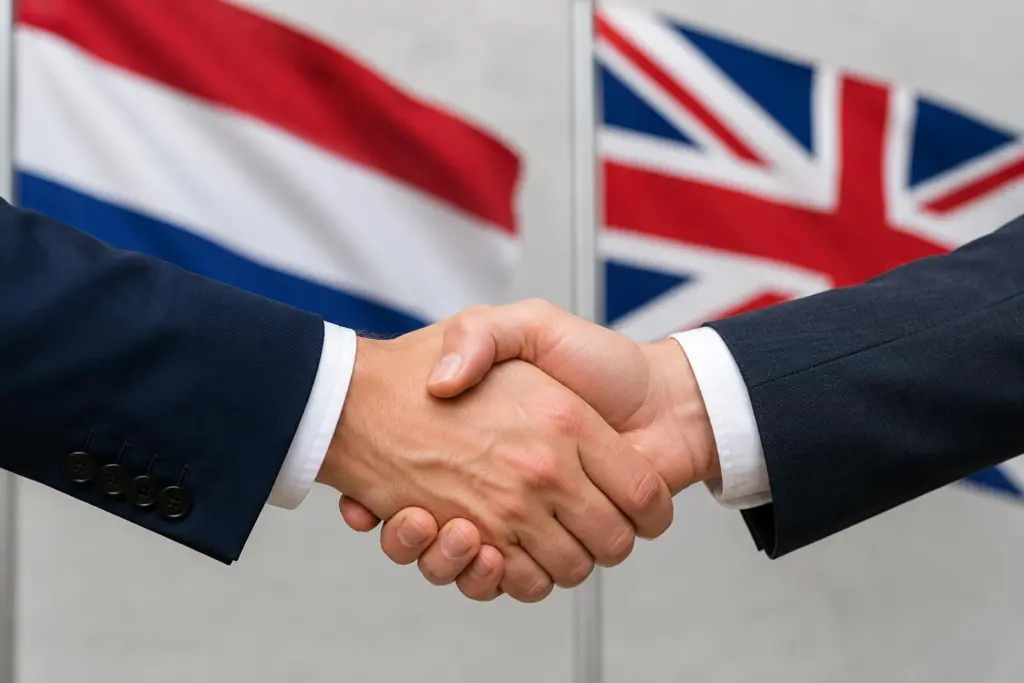
Signed by UK prime minister Keir Starmer and Dutch prime minister Rob Jetten during the NATO summit in Ankara, the partnership will see eight 160m-long amphibious transport ships built to a Dutch design, with four allocated to each navy.
The vessels will be built in UK shipyards in collaboration with Dutch industry and are expected to support hundreds of high-skilled jobs.
Although centred on a common ship platform, the agreement extends well beyond shipbuilding. Both governments describe the Amphibious Transport Ship (ATS) programme as the flagship bilateral project of an enhanced maritime partnership that is intended to underpin wider defence industrial cooperation and future maritime capability development.
The programme offers UK yards the prospect of sustained construction work while also creating opportunities across the defence supply chain in systems integration, autonomous technologies, digital engineering and long-term vessel support.
Each vessel will displace around 15,000 tonnes and will be capable of transporting troops, vehicles and military equipment, including uncrewed systems. Flight decks will be designed to accommodate current and future long-range drones and autonomous aircraft as part of the Royal Navy’s transition towards what the government describes as a ‘hybrid navy’, combining conventional warships with crewed, autonomous and uncrewed systems.
Starmer said the agreement would combine the UK’s industrial expertise with The Netherlands’ design and sea-faring experience to deliver ‘first-rate platforms for our elite amphibious forces’.
“I am incredibly proud that British shipyards will help deliver these ships, creating and sustaining good jobs here at home in the UK,” he said.
Decades of cooperation
The partnership builds on more than five decades of cooperation through the UK-Netherlands Amphibious Force, Europe’s longest-running integrated military force. The new agreement broadens that relationship by committing both nations to develop a common ship platform, align future force design and expand cooperation on autonomous systems and defence technology.
The joint declaration says operating the same class of vessel will improve interoperability, readiness and NATO’s ability to respond to crises while preserving amphibious capability for both navies. It also identifies the common platform as the foundation for deeper defence industrial collaboration, supporting sovereign shipbuilding capability, long-term industrial resilience and highly skilled employment in both countries.
Beyond the ship programme itself, the two governments have committed to closer cooperation on hybrid naval operations, integrating crewed ships with autonomous and uncrewed systems, enhanced command-and-control arrangements and future maritime air defence capabilities. The agreement also commits both nations to strengthen cooperation in protecting critical undersea infrastructure and seabed systems across the North Atlantic, High North and Arctic.
“Our forces will operate the same equipment and deploy on exercises together, so if they need to, we can fight and win together,” said UK Defence secretary Dan Jarvis.
For UK industry, the announcement follows the recent agreement to build five Type 26 frigates for Norway in British shipyards, suggesting an increasing emphasis on collaborative European naval procurement centred on UK design, manufacturing and systems integration.
Related Articles
 OTHER NEWS
 ACCESSORIES & EQUIPMENT
 SPECIAL REPORTS