![MaritimeJournal[Seawork]](https://www.maritimejournal.com/wp-content/uploads/2026/09/MaritimeJournalSeawork.svg)





Energy storage milestone for world’s largest electric ferry
The world’s largest electric ferry has reached a major milestone at Incat Tasmania’s Hobart shipyard, with one of its four battery rooms now receiving charge ahead of sea trials.
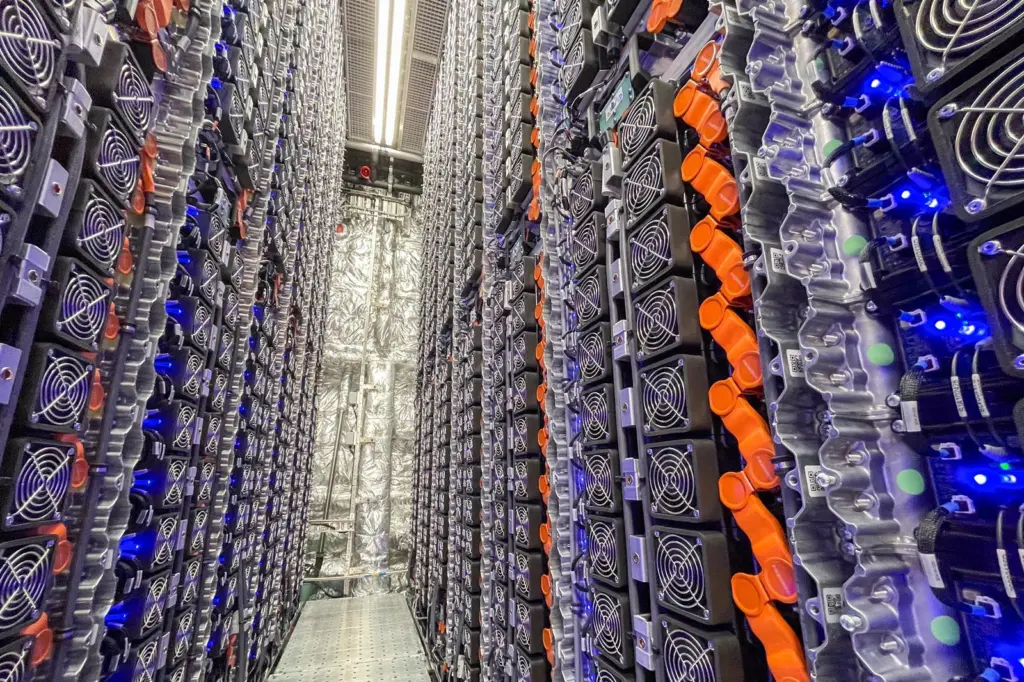
Known as Hull 096, the pioneering vessel has four battery rooms which house 5,016 battery units, around 250 tonnes in total, that will power the ferry entirely on clean energy.
The ship’s advanced energy storage system (ESS) delivers over 40 megawatt-hours of installed capacity, making it four times larger than any previous maritime installation worldwide.
“To stand inside one of these battery rooms really brings home the scale of what’s being achieved here,” said Stephen Casey, CEO, Incat.
“This vessel represents a step change for the global ferry industry – proof that large-scale, sustainable vessels are not only possible, but practical and commercially viable.”
New energy standard
The ESS, supplied through Incat’s partners Wärtsilä and Corvus Energy, will drive eight electric propulsion waterjets, setting a new standard for clean ship performance.
Each battery room has been purpose-built to supply reliable, zero-emission power to the ferry’s propulsion and onboard systems.
When completed, Hull 096 will operate for South American company Buquebus, connecting Buenos Aires and Colonia entirely on battery power.
As Mr Casey noted, every milestone “reminds us how far the industry has come” toward a cleaner, more sustainable future for global maritime transport.
He said that Incat Tasmania is helping drive the future of shortsea shipping with an advanced aluminium vessel build programme, centred on electric ferry innovation and sustainable vessel propulsion.
The Hobart-based shipyard currently has five large aluminium vessels in production.
Related Articles
 OTHER NEWS
 ACCESSORIES & EQUIPMENT
 SPECIAL REPORTS