![MaritimeJournal[Seawork]](https://www.maritimejournal.com/wp-content/uploads/2026/09/MaritimeJournalSeawork.svg)


Fleet renewal for Dutch pusher tugs
Dutch logistics operator Thyssenkrupp Veerhaven has commissioned two companies to produce designs for climate-friendly replacements of its existing pusher tug operation transporting raw materials to Thyssenkrupp’s iron and steel plant in Germany.
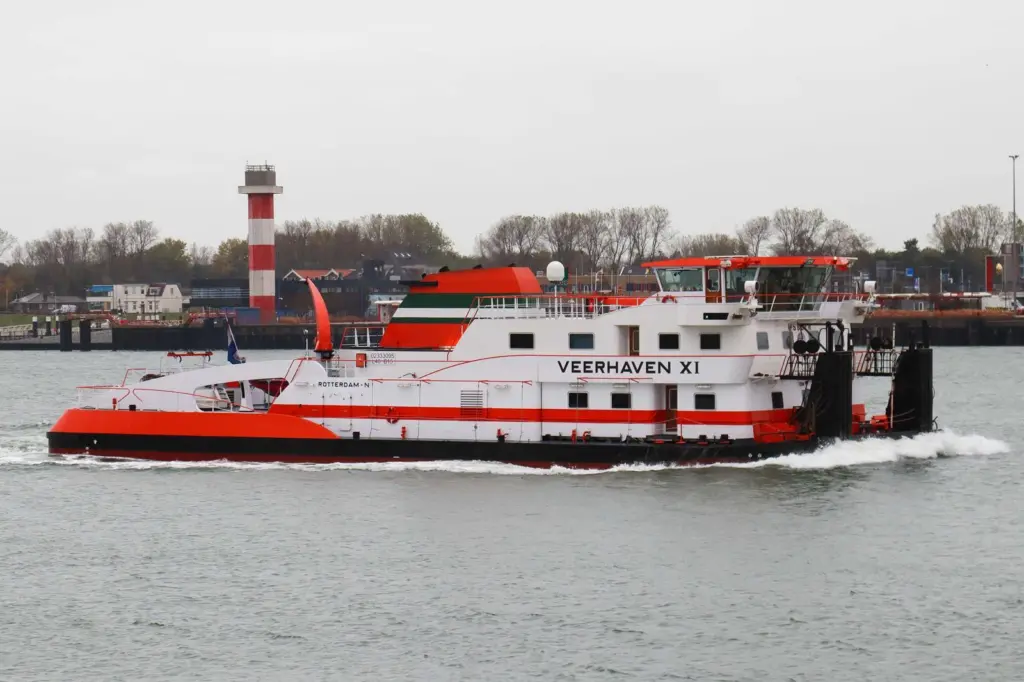
C-Job Naval Architects and Kooiman Marine Group have been commissioned to design this “next generation” of pusher tugs.
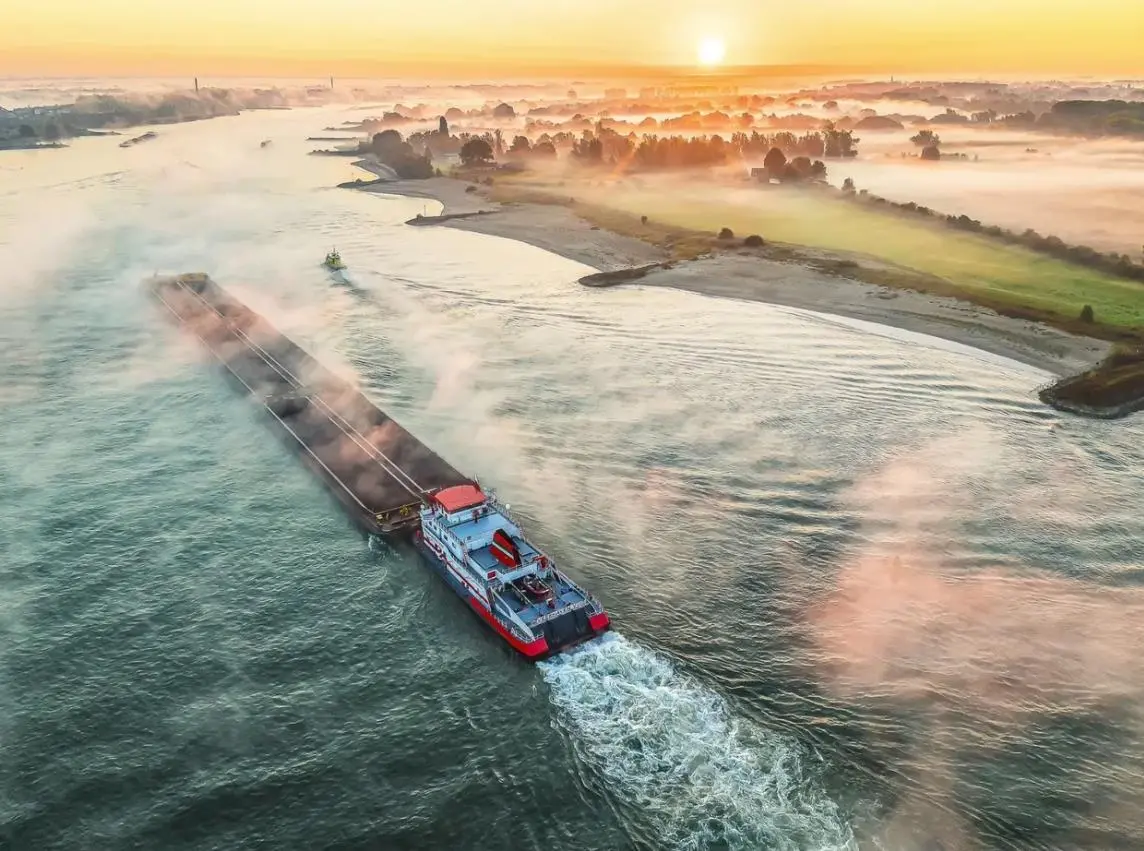
The colourful seven Thyssenkrupp Veerhaven pusher tugs are regular sights on Dutch and German inland waterways, pushing barges loaded with raw materials between Europoort in Rotterdam and parent company Thyssenkrupp Steel Europe’s iron and steel plant at Duisburg, at the junction of the Rhine and Ruhr rivers.
In what is a 24/7, 365 days-a-year operation, a typical combination of four barges is 193m long, carrying around 11,000 tons of raw material, while a six-barge combination is 269m long.
Transporting 16,000 tons on the 240km journey takes 26 hours at a speed of 9km/hr.
After de-coupling, which takes around three hours, the tug picks up empty barges for the 12-hour return journey to Europoort, where they are loaded again with raw material including coal and iron ore unloaded from bulk carriers that arrive from as far away as Brazil and Australia. Around 18 million mt of raw material are transported to Duisburg via this route every year.
Decarbonising the supply chain
The plan to replace the tug fleet is part of the steelmaker’s programme of decarbonising its entire supply chain, Thyssenkrupp Veerhaven saying it is “venturing into uncharted waters with these plans”.
“In this challenging area of inland waterway shipping, there are currently no vessels that run on environmentally friendly fuels such as methanol,” said CEO Frank Tazelaar. “We intend to play a pioneering role and, with our planned fleet modernisation, we are laying the foundation for innovative technologies that will significantly reduce our carbon footprint.”
In the past, Thyssenkrupp Veerhaven has commissioned a shipyard to build a new vessel but with this project it is taking an innovative approach in its planning process, the owner arranging for specialist design offices to prepare offers for three separate designs.
Thyssenkrupp Veerhaven says its plans to use methanol as a fuel could save around 80% of current CO2 emissions, compared to diesel.
The water level of the River Rhine has tended to dip below critical levels more and more frequently during the summer months in recent years, with implications including restricting the draught (and cargo volumes) of the tug and barges. In response to this, the planned new fleet of tugs are having to be optimised for lower water levels.
The process will involve reference vessels as well as low-water push tugs with Stage V propulsion and dual-fuel/methanol-capable variants. Following the selection process, C-Job Naval Architects and Kooiman Marine Group were commissioned to design this “next generation” of pusher tugs.
After receiving the plans, Thyssenkrupp Veerhaven will evaluate their technological and economic feasibility and as the oldest existing tug in its fleet will soon reach the end of its technical service life, it is planned to order the first “pusher tug of the future” in the near term, assuming the investment decision is positive.
Related Articles
 OTHER NEWS
 ACCESSORIES & EQUIPMENT
 SPECIAL REPORTS