![MaritimeJournal[Seawork]](https://www.maritimejournal.com/wp-content/uploads/2026/09/MaritimeJournalSeawork.svg)






INTERVIEW: Pioneering autonomous H2 USVs
The test launch of autonomous, unmanned surface vessel (USV) Pioneer has been launched by UK-based ACUA Ocean less than one year after Ad Hoc Marine Designs completed the design.
Because of its SWATH (small waterplane area twin hull) design, the 14.5m x 9m vessel is far more stable than a conventional monohull vessel, fully autonomous and also ticks the alternative fuels box with a hydrogen-electric propulsion system.
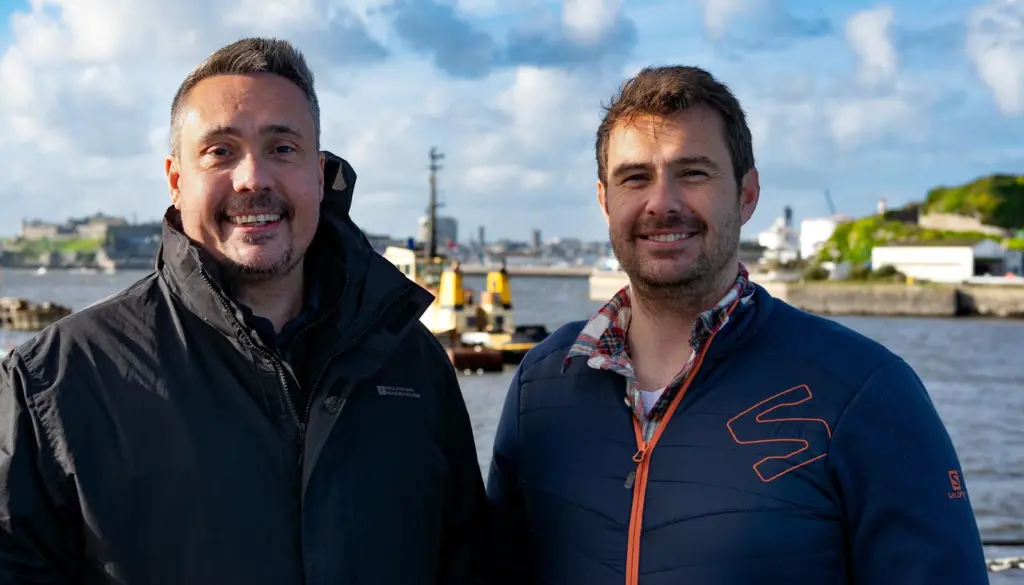
Talking to Maritime Journal about the journey to launch, co-founder Mike Tinmouth – who founded ACUA Ocean in 2021 with his brother, Neil – says the vessel was in response to surging demand for survey vessels that can operate fully autonomously in wide ocean waters.
“There are hundreds of unmanned surface vessels operating in ports, harbours, estuaries and so on, in shallow water, but the real demand we saw was for the bigger, open seas,” he says.
“The demand was for vessels that can do the really high-margin, proper offshore work, a combination of defence and security but also a lot to do with offshore renewables and subsea pipelines, light asset inspections.”
Before the Nordstream pipeline was damaged in 2022, Tinmouth says energy companies weren’t sure if there was a real threat.
“The everyone went, ‘we’ve got a problem’, and you could see massive use of all different types of vessels, both traditional crewed and uncrewed all over the Baltic and elsewhere,” he says.
With Mike’s experience in the Ministry of Defence as an innovation mentor, and his brother Neil’s time as chief operating officer with USV firm Sea-Kit (now owned by Fugro), the pair saw a market opportunity for a vessel that was more capable than what was on the markets in that size and price range.
Autonomy advantage
There are other companies out there building USVs, but they’re not the same, says Tinmouth.
“They’re absolutely phenomenal, but not fully autonomous because they are too big and have to fit Workboat Code standards, which means having a minimum crew,” he says. “They’re much larger than Pioneer and they’re very, very costly to build, own and operate.
“What we wanted to do was go towards true robotic systems, which were either remotely operated or autonomous, without any people on board. That means you can remove the bridge, you don’t need toilets and corridors and an engine room – so why not completely re-envisage it?”
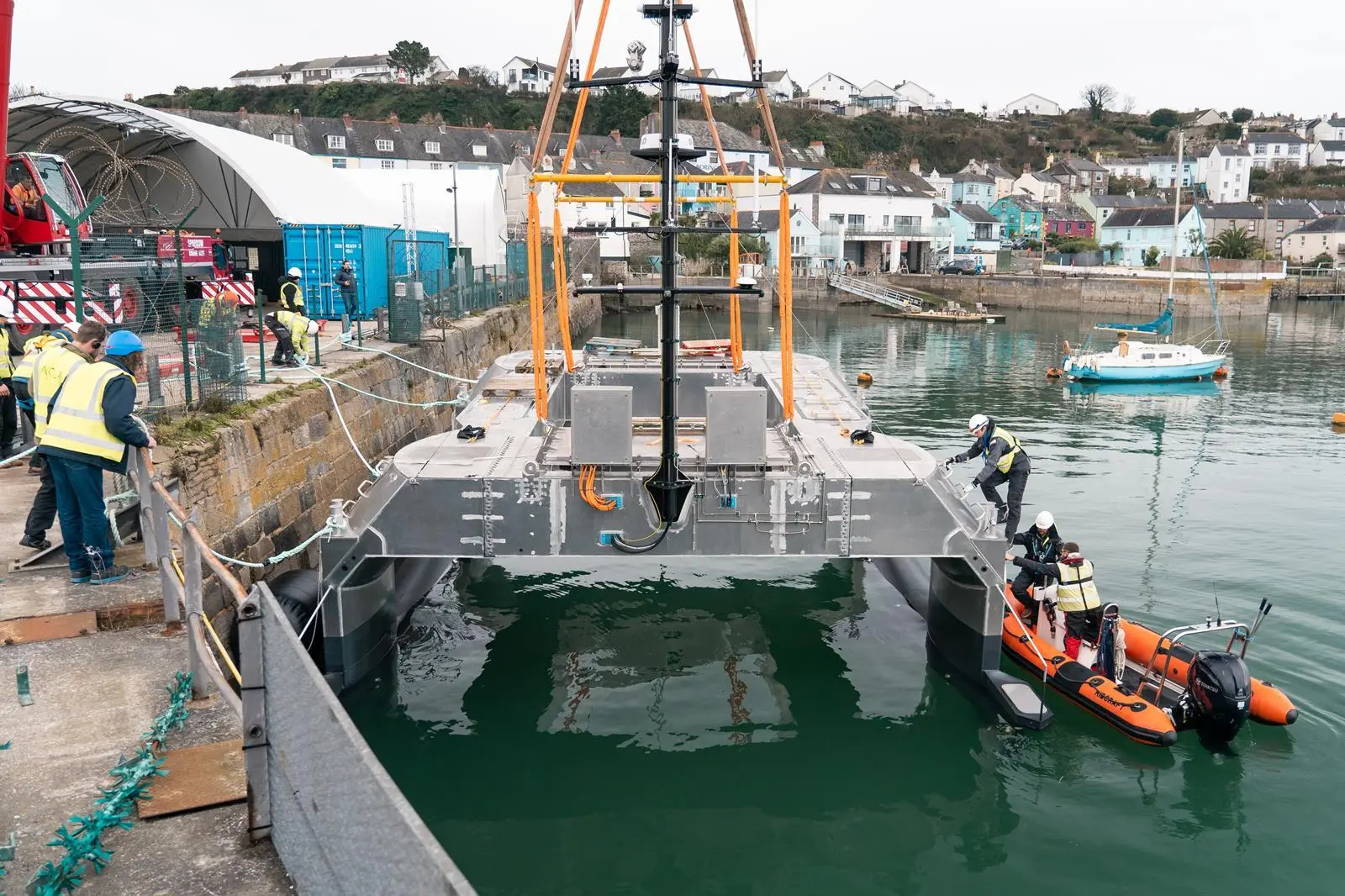
And that’s what they did – with a SWATH design to give the same sort of stability as a 220-tonne monohull vessel (Pioneer weighs in at 25 tonnes) and all the other associated savings (build cost, efficiency, and so on).
And as you don’t need crew, another of the industry’s current problems is answered.
“For us, recruiting into the maritime sector has been another massive challenge,” he says. “We’re building cutting-edge robots and in this world of robotics and automation the question could almost be do you train mariners to be computer gamers, or do you train computer gamers to be mariners?
“And we are at this inflexion point, that we’re losing people with marine ocean skills knowledge, the ship captains, and so on, but we’ve got this great generation of people who’ve grown up with digital. We still need the welders and pipe fitters and electricians, but there’s also this amazing opportunity for the very high-tech, well paid sitting in comfort, controlling a drone-type person.”
SWATH, batteries and hydrogen
At 14.5 metres in length, and with the SWATH design, Pioneer isn’t a racehorse – but for the kind of work she’ll do, speed is not a priority.
“She’s designed for persistence rather than speed, and to operate for truly extended durations in extreme sea states,” says Tinmouth. “An enabler of SWATH technology is a lot of stuff to do with battery electric, in terms of how the electrical and mechanical engineering of the vessel can work. We think the timing is perfect, SWATHs coming back into popularity because of advancements in electrical and mechanical engineering and also just the right hull form for what we wanted to do – a very stable platform, higher sea states, the middle of the ocean for long periods of time.”
The design was always going to be hybrid-electric, Tinmouth says, and for the moment, ACUA Ocean has put its chips on hydrogen as the fuel.
“We’ve actually built her for hydrogen, and that’s how she’ll be demonstrated next week – the prototype is hydrogen-electric,” he says. “The great thing with hydrogen is it acts as the range extender, so a hydrogen fuel cell powers the batteries, acts as the range extender to that electric system. But we’ve also designed it because there’s a lot of discussion at the moment on what’s going to be the fuel of the future.
“I think the answer is there’s going to be lots of fuel, and different users are going to have different requirements. For example we see a lot of interest in methanol at the moment, and there are going to be some customers and clients – whether it’s just because of a lack of infrastructure, whether it’s the training and the safety burden, whether it’s just geographically or regionally where they operate there is no hydrogen – they’re just going to say diesel is the solution for them.
“The fact that it’s a smaller vessel that’s burning a tenth of the amount of diesel – that’s good enough for what they need to do. So we’re basically trying to keep ourselves fairly agnostic for fuel sources, but we are excited by hydrogen and we do think methanol’s got some legs as well.”
Tinmouth believes there has been a shift away from concentrating on greenhouse gases themselves towards capability.
For example, he says, the main thing to break down on a diesel engine is the generator and its oily, mechanical, moving parts.
With the newer fuels, he says, it’s more of a chemical reaction where ‘you haven’t got somebody running around with a hammer and oil kit banging and keeping it together’.
With electric survey vessels, you won’t have the noise of a diesel generator, which could be crucial from a detectability perspective, nor the heat.
There are downsides – not least fuel costs, which Tinmouth says are at the moment 12 times higher for hydogen – and endurance: he says using his system would allow 20 days’ endurance as opposed to 60 with diesel; but being so trim sensitive, calculating how to balance a reducing fuel weight is essential and would add another layer of complexity to the controls. Hydrogen is so light that this is not necessary.
“There are absolutely benefits and there are engineering capability benefits as well, but cost is not one of those at the moment and that’s partly driven by scarcity,” he says. “It’s partly driven by the general hydrogen supply chain, and the UK is slightly behind the rest of Europe on hydrogen.”
Next steps
USV Pioneer will be demonstrated in London’s River Thames for the UK Department of Transport in March, followed by a busy summer.
“The summer of 2025 is really focused around working with some very exciting payload providers to integrate those in test and trial, and we’re already starting to look at future iterations,” says Tinmouth. “We see multiple use cases for this size and scale of vessel, but if you want to push the boundaries, we’re in the process of exploring what one or two of those could look like as well.
“There are currently 60 SOV offshore vessels working in the UK, and to keep pace with growth that needs to grow by 300 by 2030 – we need a five times increase. Not only is it going to cost billions to build those ships, and where are you going to build them all – and how are you going to crew them all?”
A question that autonomy could answer.
Related Articles
 OTHER NEWS
 ACCESSORIES & EQUIPMENT
 SPECIAL REPORTS