![MaritimeJournal[Seawork]](https://www.maritimejournal.com/wp-content/uploads/2026/09/MaritimeJournalSeawork.svg)






Ocean Infinity: To boldly go where no man will go again
It’s a very bold ambition: to change the entire mindset of the offshore survey sector so that in the future, vessels will be entirely unmanned.
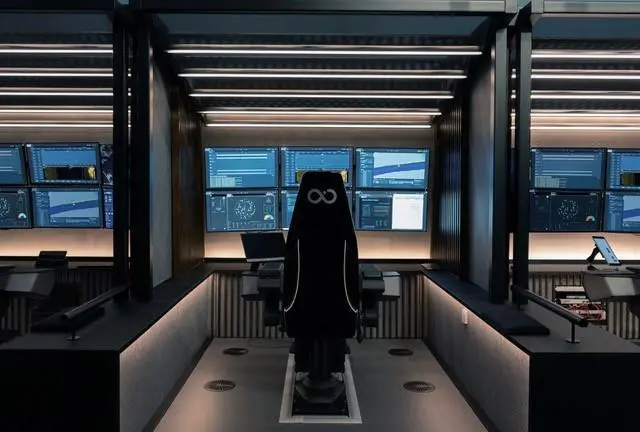
But that is the stated aim at Ocean Infinity, which has been delivering systems to control remote and subsea vessels since it was founded in 2017.
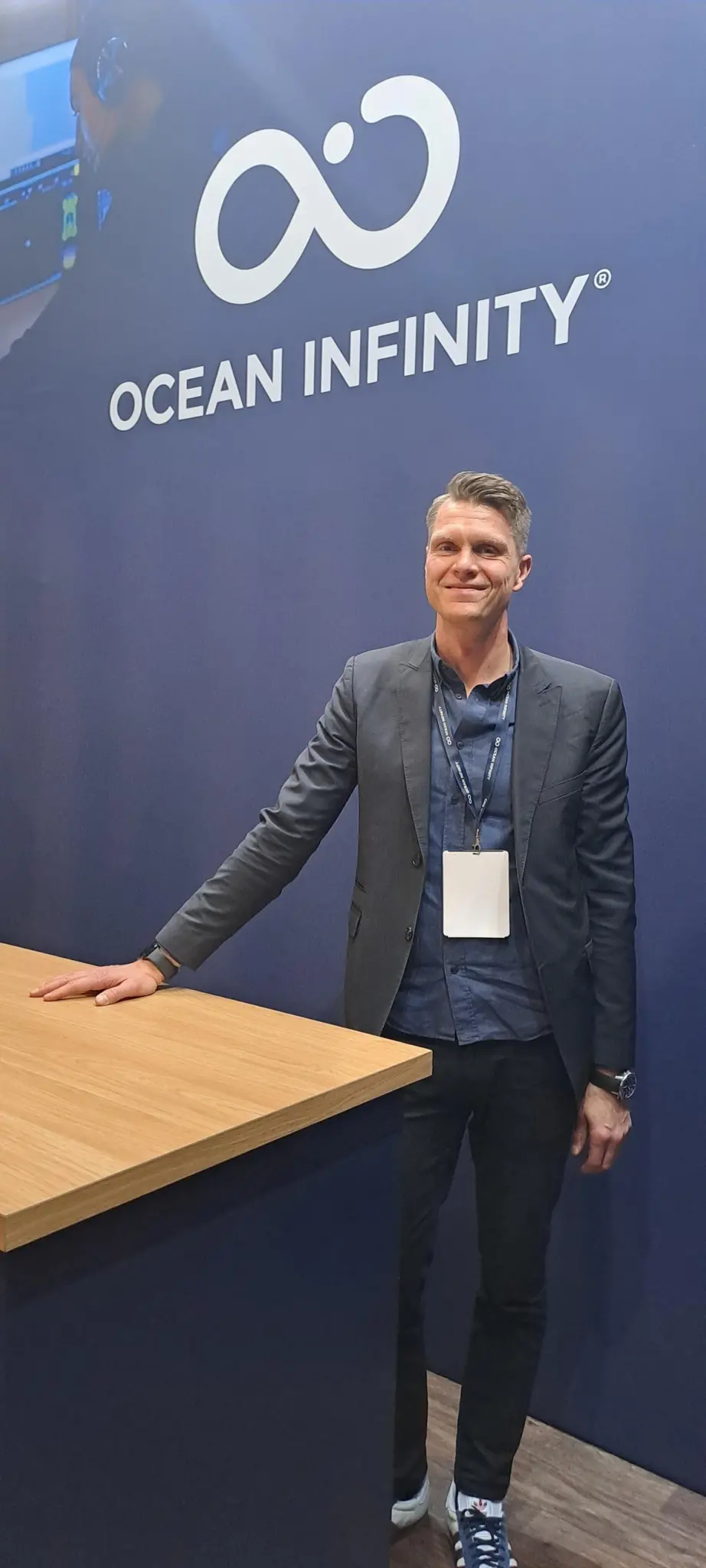
Speaking to Maritime Journal at this year’s Oceanology International conference and exhibition in London, president of Data Services Carsten Haagensen said it was a vision that sees a complete transformation in offshore work – but first it had to combat the ingrained mindset of the maritime industry.
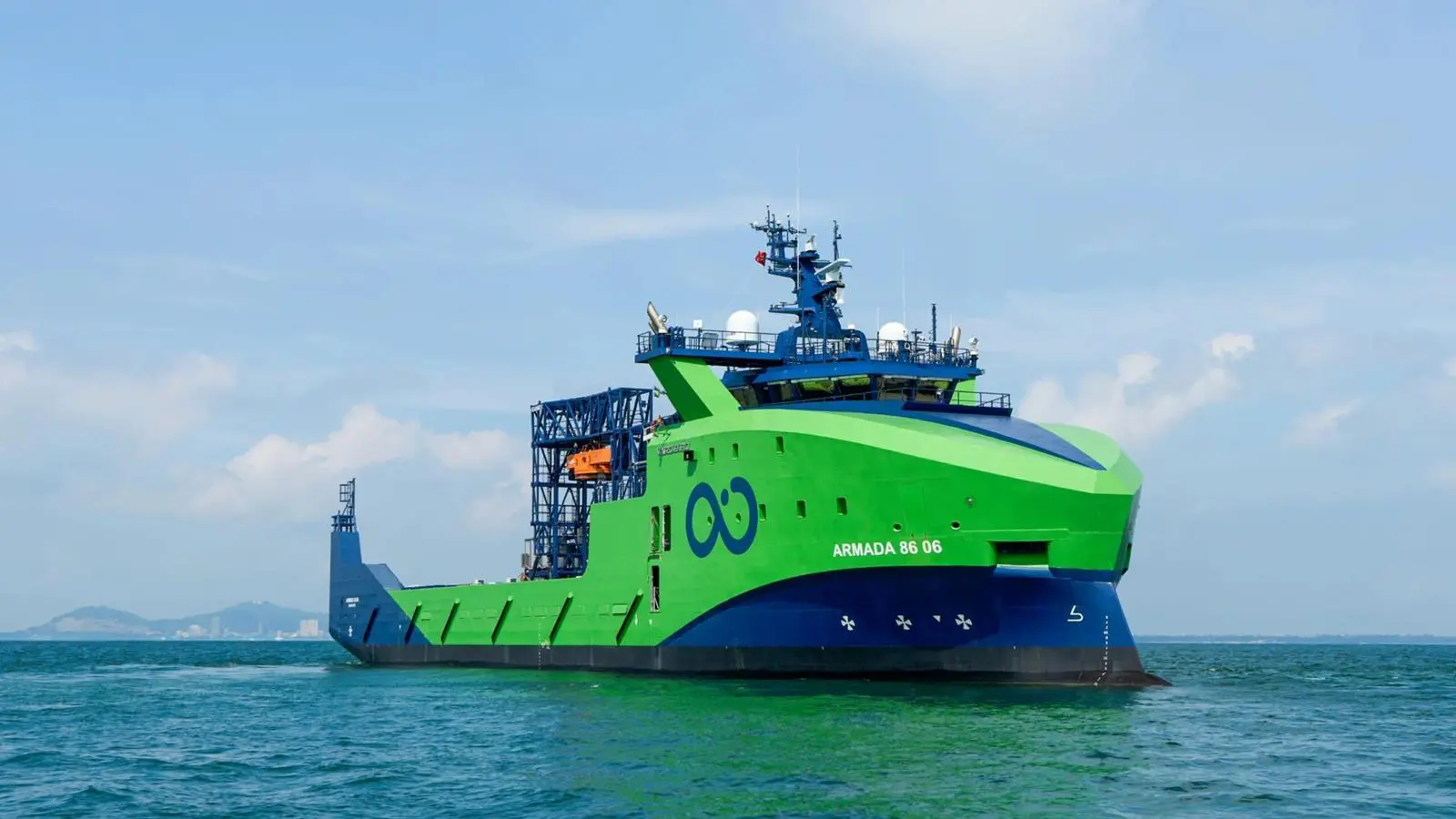
Ocean Infinity is at the forefront of a rapidly building wave of companies offering remote services, and has just delivered the final vessel in its ‘Armada’ fleet, which could be the largest in the world.
“We want to prove to the industry that there’s a different way of delivering offshore services to the world,” Haagensen said. “Because it has matured and built a framework for how we operate, such as the people we need and how many of them. We have processes, governance in place and it’s always been optimised.”
That optimisation, he argues, has become a constraint. The offshore sector – particularly survey, inspection and subsea operations – has long relied on highly standardised vessel-based models: large crews, long rotations offshore and asset-heavy operations. Ocean Infinity’s proposition is that the model itself, not just the tools within it, must change.
“We had to build this technology to prove that the rigidity of that model can be challenged,” he said. “And in that lies a host of challenges on all levels, the most benign of which is actually the technology.”
A technology company, not a contractor
Ocean Infinity, which is based in the south of England, presents itself less as a traditional offshore contractor and more as a technology-led provider of integrated ocean data solutions.
“That’s why it’s very important to stay doing what we are doing – stay as a technical company and not an offshore services provider,” Haagensen said. “It can only change if there is a whole rethink.”
A rethink that even includes the terminology for Ocean Infinity’s own vessels, which it now calls ‘platforms’.
The Armada fleet of 14 platforms ranges from 78–86 metres, and all are lean crewed and designed for remote or autonomous operations.
Alongside Armada is a growing number of USVs from 8 metres to 36 metres, currently numbering well over 20.
These platforms are designed not as standalone assets but as flexible, configurable systems. They can operate conventionally, remotely, or with increasing degrees of autonomy. They are built around payloads – robotic systems, sensors and data acquisition tools – rather than crew accommodation or traditional offshore infrastructure.
“They are platforms of utility,” said Haagensen.
Learning from other industries
Haagensen believes the offshore sector’s slow adoption of autonomy stands in stark contrast to other industries.
“So many advances have been made in other industries, for example aviation,” he says. “Nowadays, no one would think about NOT flying on autopilot, but in maritime we haven’t arrived at that point.”
Aviation has spent decades building trust in automated systems through incremental improvements, rigorous safety frameworks and regulatory alignment. Offshore, by contrast, still relies heavily on human contribution.
This is what is central to the company’s vision: a dramatic reduction in the number of people required offshore. The benefits are bound to reveal themselves, if not quite yet, eventually.
“There are fewer people offshore now,” Haagensen said. “They can see fuel consumption dropping and safety improving, with remote working.”
Reduced crew numbers mean smaller accommodation requirements, lower energy use and fewer risks associated with offshore living and working. It also opens up new ways of organising labour.
“We are offering a potential 9-to-5 job where you can be anywhere and operate and be part of this,” he says. “The capability and difference of the experience in not being offshore – that’s another mindset change, as it’s almost become an ingrained family pattern.”
The traditional appeal of offshore life appears to be waning for younger generations, he believes.
“The appeal of the oceans and living offshore seems to have diminished over time,” Haagensen says.
“Yet the importance of the ocean for generations to come is massive,” he said. “If we can enable operations in a sustainable way, we can unlock so many resources for the future.”
Building the system, not just the parts
Ocean Infinity’s approach extends beyond individual technologies to the integration of entire systems. The company develops not only robotic platforms but also the software, control systems and data pipelines that tie them together.
“We are a technology provider of systems rather than elements of the system,” Haagensen says. “It’s the entire system of delivery that excites us.”
This systems-level thinking is evident in its development of autonomous survey capabilities, including seabed mapping and geotechnical investigation. The company is working towards fully autonomous data acquisition workflows, including cone penetration testing (CPT) carried out without direct human intervention offshore.
“The ultimate aim is to have as few people engaged in the process of delivering data to our customers in the ocean as possible,” Haagensen says. “Very few people, if any, at sea.”
Regulation and pace of change
One of the most complex aspects of this transition is regulation. Autonomous and remotely operated systems challenge existing frameworks, which are largely built around human presence at sea.
Without historical data, regulators face difficulties in assessing risk and setting standards. Ocean Infinity has been working closely with authorities to address this gap, including collaboration with the Maritime and Coastguard Agency (MCA).
“We have developed a very good relationship with the MCA, who want to help so that the new way of operating is safe and compliant,” he says.
The question, however, is not just how regulation adapts, but who leads the change.
“Who should change? The regulators? The customer? We are trying to bring it to life to the entire industry, to a lot of operators.”
In practice, he suggests, transformation will require alignment across all stakeholders – technology providers, clients, and regulators alike.
Despite the disruptive nature of its ambitions, Ocean Infinity is not advocating for overnight transformation. Instead, it emphasises a gradual, evidence-based approach.
“We have a view of longevity and incremental improvements,” Haagensen said.
This mirrors the evolution seen in other industries, where automation has been introduced step by step, building trust and demonstrating value over time.
“We are starting to see people demanding it now,” he says. “Our end game is not to build the largest fleet,” Haagensen said. “It’s to change the industry outcome.”
Related Articles
 OTHER NEWS
 ACCESSORIES & EQUIPMENT
 SPECIAL REPORTS