![MaritimeJournal[Seawork]](https://www.maritimejournal.com/wp-content/uploads/2026/09/MaritimeJournalSeawork.svg)
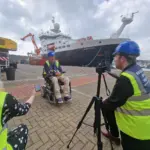


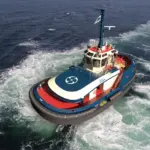


VIDEO: Last vessel in Ocean Infinity fleet delivered
The final vessel in Ocean Infinity’s 14-vessel Armada fleet has been delivered, ‘closing a chapter’ on five years’ work, says the company.
”Five years ago we said we’d build a fleet of 14 ships, designed unconventionally because speed to capability mattered – and we’ve done it, despite the many challenges along the way,” said Oliver Plunkett, chief executive officer. “What started out as a bold ambition is now a reality. These vessels are not a concept or an R&D project – they are operating today, transforming the way offshore work is done by focusing on software and technology first. We owe a huge debt of thanks to everyone involved.”
Ocean Infinity’s Armada fleet is thought to be the largest fleet of remotely operated ships in the world, representing one of the most ambitious maritime innovations ever seen.
Each vessel has a tailored suite of underwater robotic systems to collect and send data for geophysical surveys to geotechnical investigations and more, supporting any kind of offshore project anywhere in the world.
Remote, lean-crewed and autonomous ship operations are playing a more extensive role than ever before in the offshore wind, search and salvage, defence and environmental industries offshore.
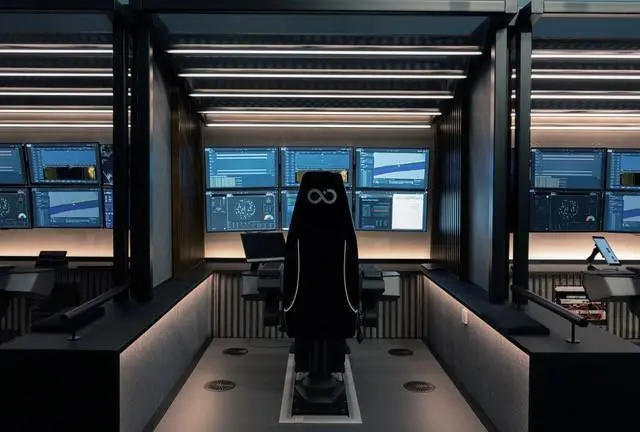
They are being operated at remote control centres like Ocean Infinity’s in Southampton, which Maritime Journal has visited and could be a 22nd-century video gaming centre, with multiple booths complete with armchairs, screens and consoles where operators have control of the fleet at their fingertips.
Its one answer to the increasingly difficult challenge of a chronic lack of seafarers as many reach retirement age and fewer young people seem interested in joining the industry.
Ocean Infinity’s final delivery, an 86-metre class following the 78-metre class in 2023, brings the number of vessels in live operation up to 12, with the remaining two following close behind, the company says.
Related Articles
 OTHER NEWS
 ACCESSORIES & EQUIPMENT
 SPECIAL REPORTS