


Marine data in tomorrow’s remote and autonomous world
Marine technology company Ocean Infinity talks about data management in operations where more and more remote and autonomous vessels are being deployed.
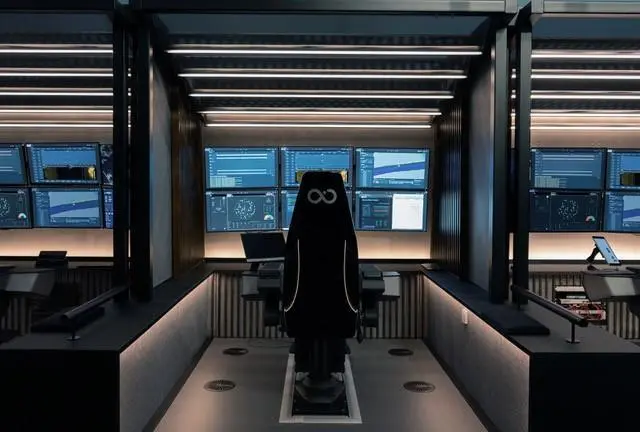
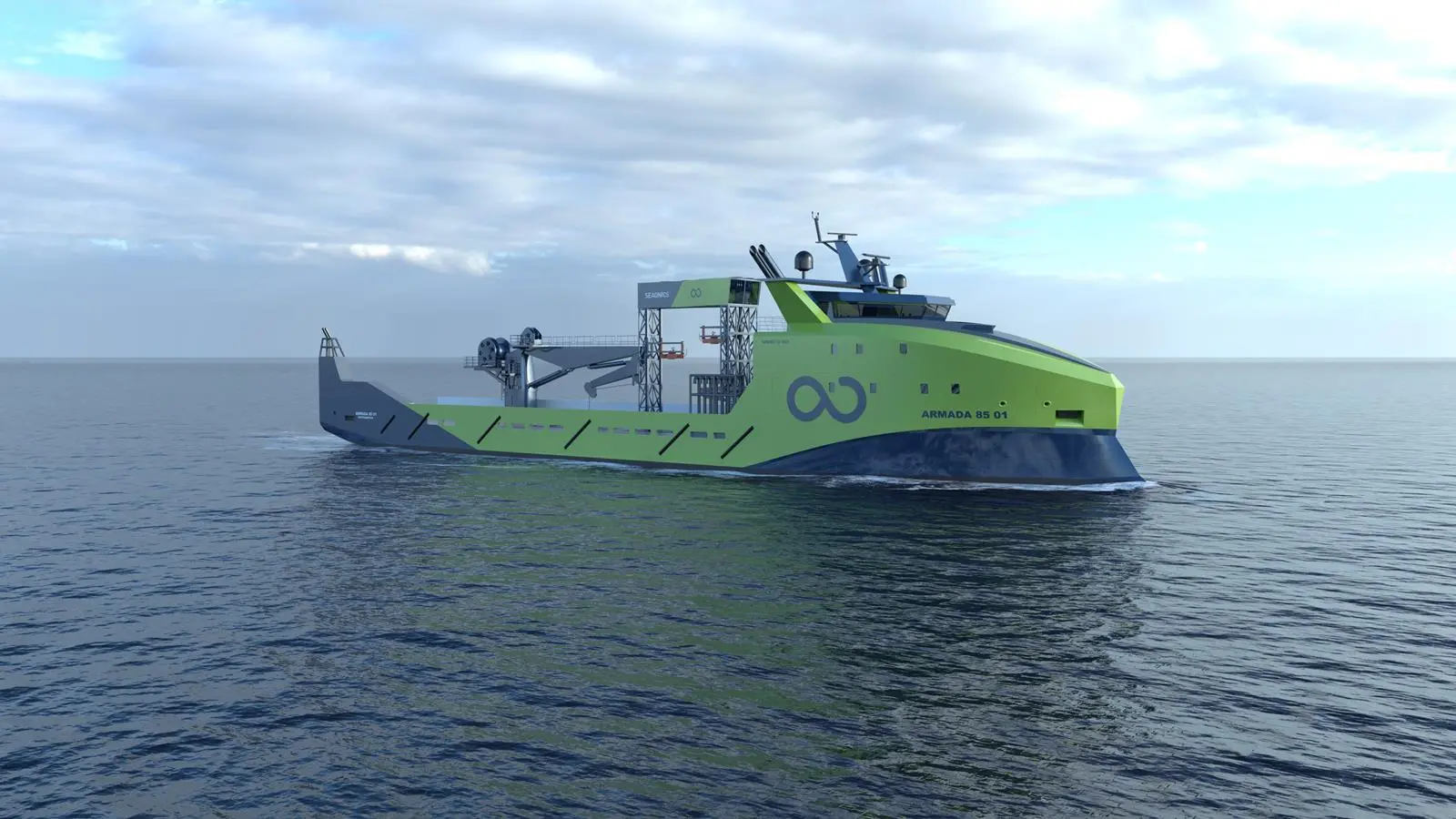
Ocean Infinity’s Armada fleet, currently in build, is set to be the largest fleet of remotely operable ships in the world, representing one of the most ambitious maritime innovations ever seen.
Remote, lean-crewed and autonomous ship operations are playing a more extensive role than ever before in the offshore wind, search and salvage, defence and environmental industries offshore.
This shift is not only revolutionising the way ships are operated but also driving and being driven by significant advances in data management and data handling.
A sea of data
Ocean Infinity’s data experts gather and process valuable subsea geophysical, geotechnical, bathymetric, environmental and acoustic data and imagery.
The company expects remote and lean-crewed operations to overtake conventional crewed operations, but the amount of data generated in such operations is staggering. The data journey for conventional operations already involves extensive onboard data processing and quality control procedures, but with the advent of remote operations, Ocean Infinity’s data experts can now perform data QC and processing from onshore locations. This approach significantly alters the data journey and still allows real-time analysis.
Data Innovation manager André Reinlert says this extends beyond data output to the client, such as hydrographic survey data, to encompass information generated by the vessels themselves.
“This includes vessel telemetry data and prognostic health management data, providing valuable insights into vessel behaviour, weather conditions and more that we need when operating remotely,” he says. “The integration of these diverse data sources is crucial for improving operational efficiencies, enhancing data quality, and planning future endeavours.”
Bottlenecks and priority data
While the increasing volume of data presents opportunities, it also means bottlenecks. One lies in the transmission of data from vessel to shore station with limited bandwidth. The need to prioritise critical data makes this stage a challenge.
Data analyst Tom Bowden says distinction must be made between valuable insights and raw data. It is essential to identify the data segments that hold the most value and optimise their transmission while filtering out lower priority data. This process ensures efficient use of limited bandwidth and minimises the time spent sifting through less pertinent information.

To address these bottlenecks, Ocean Infinity is driving a movement of the data processing load from shore to the vessels themselves, and processing on the AUV/ ROV itself, ultimately even in a sensor within the vehicle.
“As these technologies develop, our data processing is filtering ever further down the journey towards the source of the data,” says Bowden.
Quality reference products
During an Ocean Infinity offshore operation, the company uses a suite of systems to optimise data flow, storage and analysis.
The process involves the continuous cleaning and filtering of incoming data, applying protocols to compensate for noise, and producing QRPs (quality reference products), usually every 20 minutes during a data-gathering operation.
The resource Ocean Infinity has put into data quality control has been something of a priority because with traditional crewed vessels, there is direct human interaction with the data collection and processing. Obviously erroneous data are usually spotted and flagged up quite quickly. However, in the case of remote and autonomous ships, there is a greater need for automated, efficient, robust and scalable data quality control.
A requirement for seamless data transfer has led to the development of advanced communication systems and protocols in all fields of life, not just offshore.
Looking ahead
Ocean Infinity envisions the integration of innovative technologies that will propel remote maritime data collection. One such technology is the deeper orchestration of automated systems, offering centralised control and real-time monitoring of diverse operations. This highly advanced management system can seamlessly deploy and track the progress of tasks across multiple platforms, ensuring efficiency and adaptability.
“Our data-gathering platforms will operate with a vastly increased level of autonomy and collaboration,” says Smith. “For example, we are planning for our AUVs to be collaborating in position correction, so position drift noted by one will be corrected by all. This way we won’t need a Mission#2 to fill in the data gaps created by some position drift in Mission#1.
“We are also working on dynamic re-tasking. This would mean an AUV that finds a potential UXO (unexploded ordnance), for example, could re-task itself to gather a body of the highest possible resolution data in that area, then terminate its current assignment and return to the mothership to report. This level of collaboration could mean that the remaining AUVs would ‘know’ to adjust their survey grids to pick up the potential gaps left by the first.”
The overarching mission is not solely focused on remote operations but aims at transforming the maritime industry with rremotre lean-crewed and autonomous ship operations the norm.
Related Articles
 MARINE CIVILS
 MERGERS & ACQUISITIONS
 OTHER NEWS