![MaritimeJournal[Seawork]](https://www.maritimejournal.com/wp-content/uploads/2026/09/MaritimeJournalSeawork.svg)


UK start-up launches drone fleets to guard oceans
Online Oceans has raised £4 million (€4.6 million) to deploy autonomous surface vessels for persistent maritime surveillance, from subsea cable protection to anti-submarine warfare.
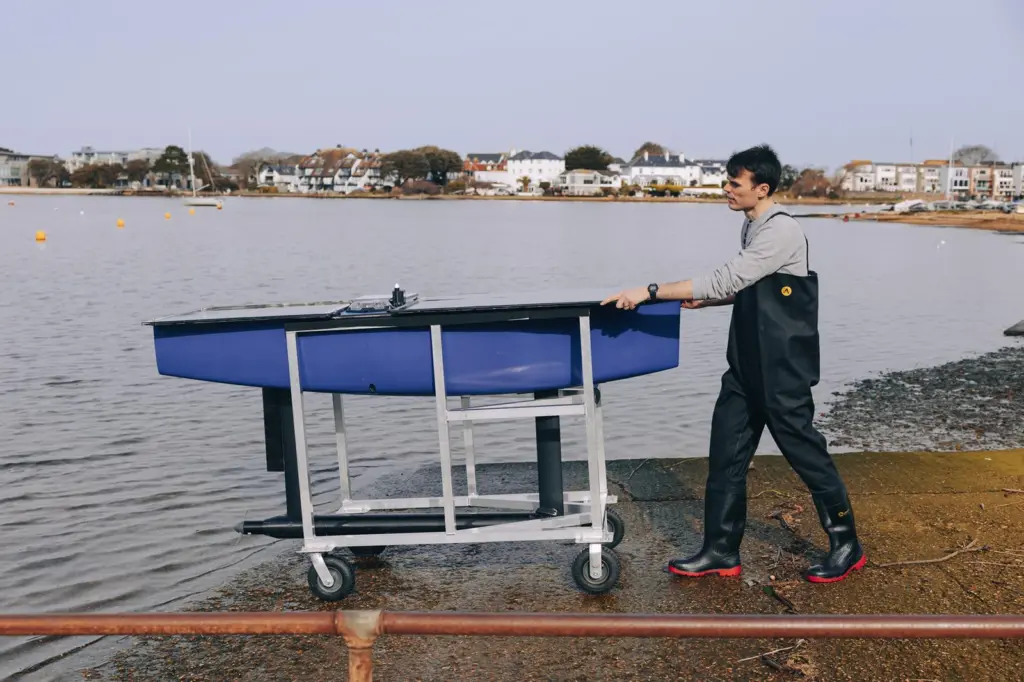
The money will be used to bring a new generation of low-cost, solar-powered autonomous surface vessels to defence and security markets, promising to solve one of the most persistent problems in maritime domain awareness: how to monitor vast stretches of water continuously, affordably and without crews.
Online Oceans, founded in early 2025 and head-quartered in London, has developed a two-part system built around its Scout autonomous surface vessel and Tether, a cloud-based command-and-control platform.
The funding round was led by Seraphim Space and includes participation from Peter Rive, co-founder of SolarCity, and Frank Thieser and Florian Seibel, founders of drone intelligence company Quantum Systems, along with Koro Capital.
Scout: Designed for fleet-scale deployment
At the heart of Online Oceans’ offering is Scout, a compact, solar-powered autonomous surface vessel engineered for long-endurance deployment at scale.
Unlike high-end autonomous platforms designed for individual missions, Scout has been conceived from the outset for operation in dense fleets – multiple vessels deployed simultaneously across different locations, maintaining continuous coverage rather than conducting expensive, one-off sorties.
Solar propulsion gives Scout the endurance characteristics needed for persistent monitoring missions, removing the fuel logistics and associated costs that constrain conventional vessels. The design philosophy prioritises low unit cost, enabling the kind of high-density deployments that would be economically prohibitive with traditional autonomous systems or crewed ships, says Online Oceans.
The vessel can carry a range of sensor payloads suited to different mission profiles. For anti-submarine warfare and subsea domain awareness, Scout supports passive acoustic monitoring, using hydrophone arrays to detect acoustic signatures from submarines and uncrewed underwater vehicles (UUVs) operating beneath the surface.
For surface intelligence, surveillance and reconnaissance (ISR), the platform integrates optical sensing and passive acoustic systems capable of detecting aerial threats at distance, as well as monitoring surface vessel activity.
Tether: Managing fleets in real time
Scout is paired with Tether, Online Oceans’ cloud-based command-and-control software, which allows operators to manage entire fleets, assign missions, monitor asset positions and access sensor data feeds in real time.
The platform is designed for scalability, enabling a small operations team to oversee numerous vessels deployed across geographically dispersed areas simultaneously.
Tether also forms the commercial backbone of the company’s business model, aggregating data from persistent fleet deployments to create the foundation for recurring software and data revenues.
Applications: From subsea cables to border security
The range of applications Online Oceans is targeting demonstrates the breadth of the maritime security challenge, the company says.
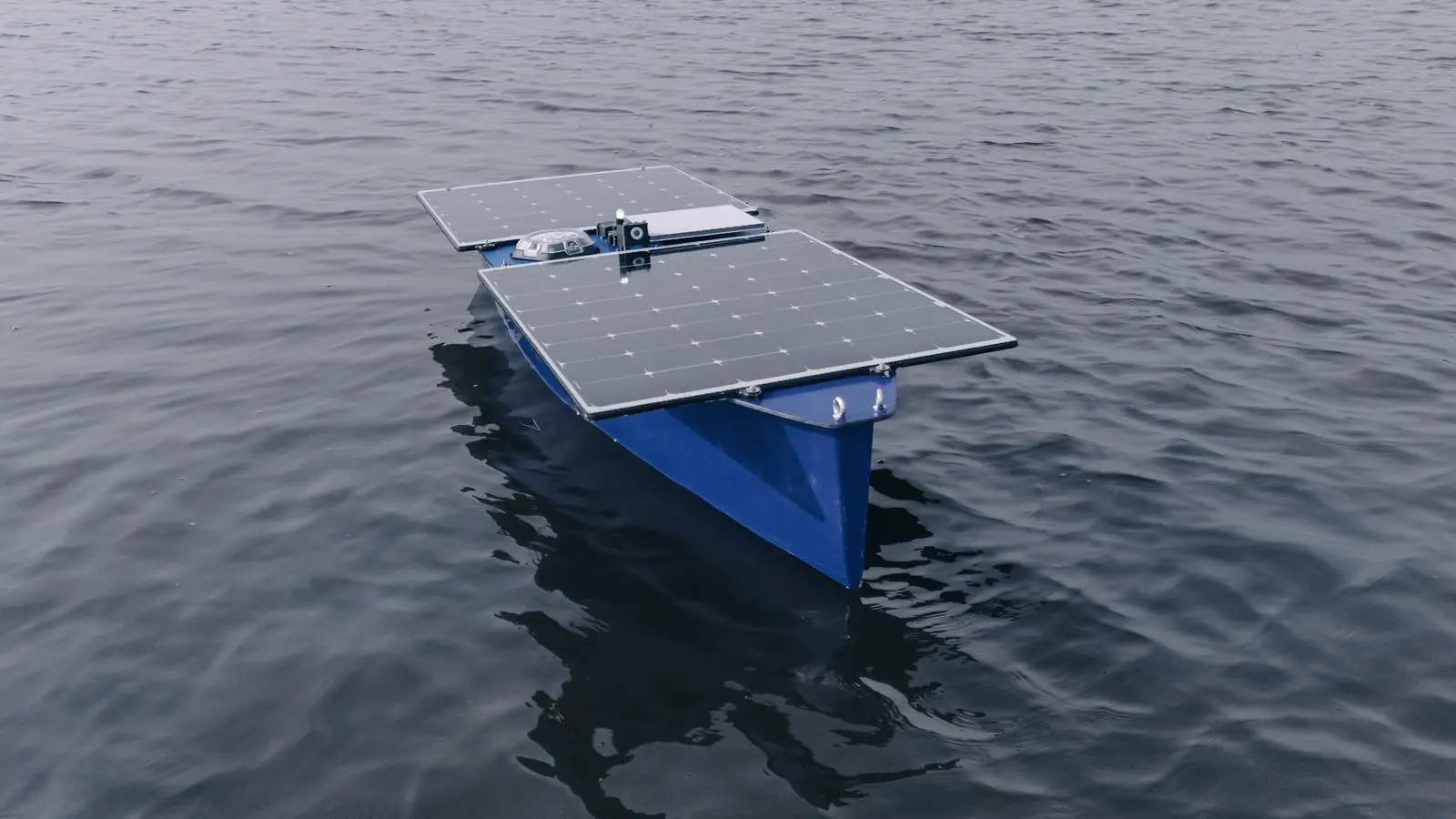
Attacks on subsea infrastructure have pushed governments to seek more persistent monitoring of offshore assets. Scout fleets can be stationed around such infrastructure, providing round-the-clock acoustic and visual surveillance.
In border security and counter-narcotics roles, fleets of Scouts provide the kind of wide-area, persistent coverage that sporadic patrol vessel deployments cannot.
The system’s AIS spoofing detection capability is particularly relevant, with persistent optical monitoring combined with AIS cross-referencing allowing anomalies to be flagged in real time.
The company is also in active discussions about deployments in the Gulf, where missions under consideration include early warning of incoming aerial threats through acoustic and optical sensing, passive acoustic monitoring for submarine and UUV detection, and broader surface ISR.
Speed of execution
Founded by George Morton, who brings maritime engineering and defence experience, and Alistair Douglas, who leads command-and-control software development, Online Oceans has moved from first builds to production ramp in just over a year.
The company has secured initial customers across defence, maritime domain awareness and ocean data markets, begun first data sales, and has reportedly sold out its first months of production ahead of commercial deliveries.
The new capital will be directed at scaling manufacturing and supporting customer deployments.
With European governments acutely aware of the vulnerability of their maritime flanks, and defence budgets under pressure to deliver more capability for less cost, the timing could not be better.
Related Articles
 OTHER NEWS
 ACCESSORIES & EQUIPMENT
 SPECIAL REPORTS