




Offshore energy storage collaboration begins
An offshore energy storage start-up has established a collaboration agreement with Subsea 7 to develop offshore energy storage solutions.
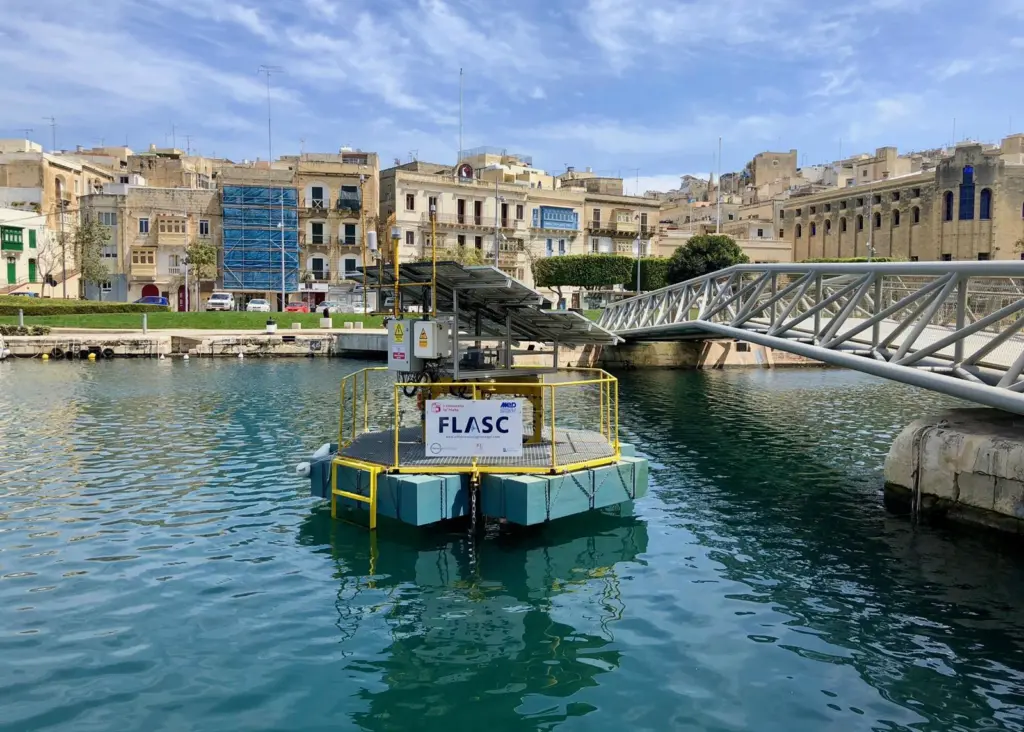
This collaboration between FLASC and Subsea 7 combines the ‘concept definition capabilities’ and Hydro-Pneumatic Energy Storage (HPES) system expertise of FLASC with the subsea solutions, technologies and experience of Subsea 7 towards the commercialisation of offshore HPES.
The companies will develop solution classes based on FLASC’s core technology, targeting a number of use-cases: from conventional grid-connected wind farm applications to decarbonisation initiatives in the offshore oil and gas sector. The parties will also jointly pursue early-stage implementations of these solutions within Subsea 7’s (near) future projects.
Daniel Buhagiar, co-founder and CEO of FLASC, said: “We truly believe that sustainable co-located energy storage will be crucial to unlocking the full potential of offshore renewables.”
He added: “This collaboration with Subsea 7, a global leader in the sector, is a major milestone in the process of taking our innovative energy storage solution from a proven concept to a versatile commercial product.”
FLASC’s HPES concept combines pressurised seawater with compressed air to create an efficient, large-scale energy storage device that can be applied across a wide range of offshore applications. The technology leverages existing infrastructure and supply chains, along with the marine environment itself as a natural heatsink, resulting in a safe, reliable and cost-effective solution. The first working prototype was successfully tested in 2018.
Thomas Sunde, VP strategy and technology of Subsea 7, said FLASC’s HPES solution offers a competitive and more sustainable alternative to Li-ion battery farms.
By Rebecca Jeffrey
Related Articles
 ACCESSORIES & EQUIPMENT
 MARINE CONSTRUCTION
 POWER & PROPULSION