



Politicians assess renewable energy
Politicians are assessing renewable energy in Scotland ahead of the COP26 UN Climate Change Conference.
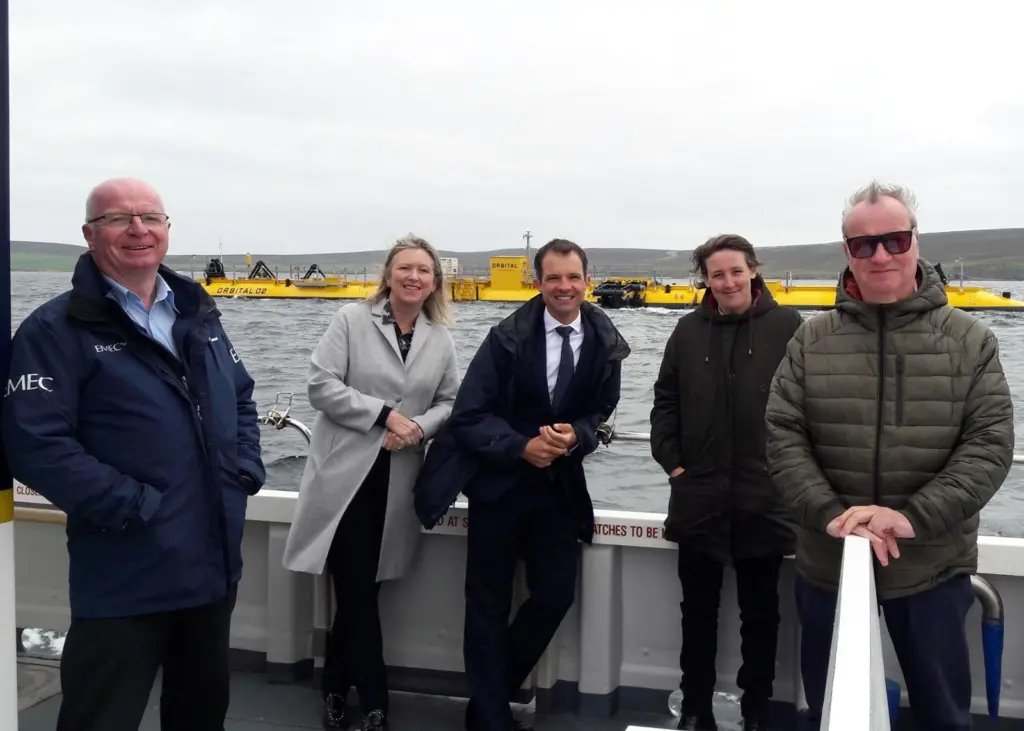
Members of the House of Commons Scottish Affairs Committee visited the European Marine Energy Centre (EMEC) in Orkney last month as part of their evidence gathering. A report on their findings will make recommendations to UK Government this summer ahead of November’s COP26 in Glasgow.
Neil Kermode, managing director, EMEC said: “We have tested more than 30 different wave and tidal technologies in Orkney, giving us valuable experience and insight into the existing UK supply chain and importantly, the economic potential for Scotland and the UK. Marine energy’s predictability offers energy system resilience, and quality job generation provides valuable economic opportunities for maritime communities. Internationally, there’s huge UK export potential as a global marine industry leader.
“However, to deliver these benefits, the sector urgently needs positive signals from government, and we hope the Committee members can help amplify our message which is calling for dedicated support for wave and tidal energy to be part of the UK’s green economic recovery.”
Five Committee members went to EMEC’s tidal test site where they saw two tidal energy devices on site: Orbital’s O2 device, which was developed with around 80% UK supply chain content; and Magallanes’ ATIR device, a Spanish company bringing inward investment via technology demonstration at EMEC’s world leading facilities.
Members were also introduced to Orkney’s hydrogen infrastructure, showing how marine renewable energy can contribute to the generation of green hydrogen for energy storage, transport and use in Orkney’s hydrogen economy.
The Committee held an oral evidence session which saw representatives from EMEC, Orbital Marine Power, Aquatera and Orkney Islands Council provide evidence to the Committee on how Scotland’s renewable energy potential could be harnessed most effectively.
By Rebecca Jeffrey
Related Articles
 ACCESSORIES & EQUIPMENT
 MARINE CONSTRUCTION
 POWER & PROPULSION