


Scottish lighthouse upgraded to LED lighting
A Scottish lighthouse has been up upgraded to LED lighting in order to achieve more energy efficiency and lower maintenance costs.
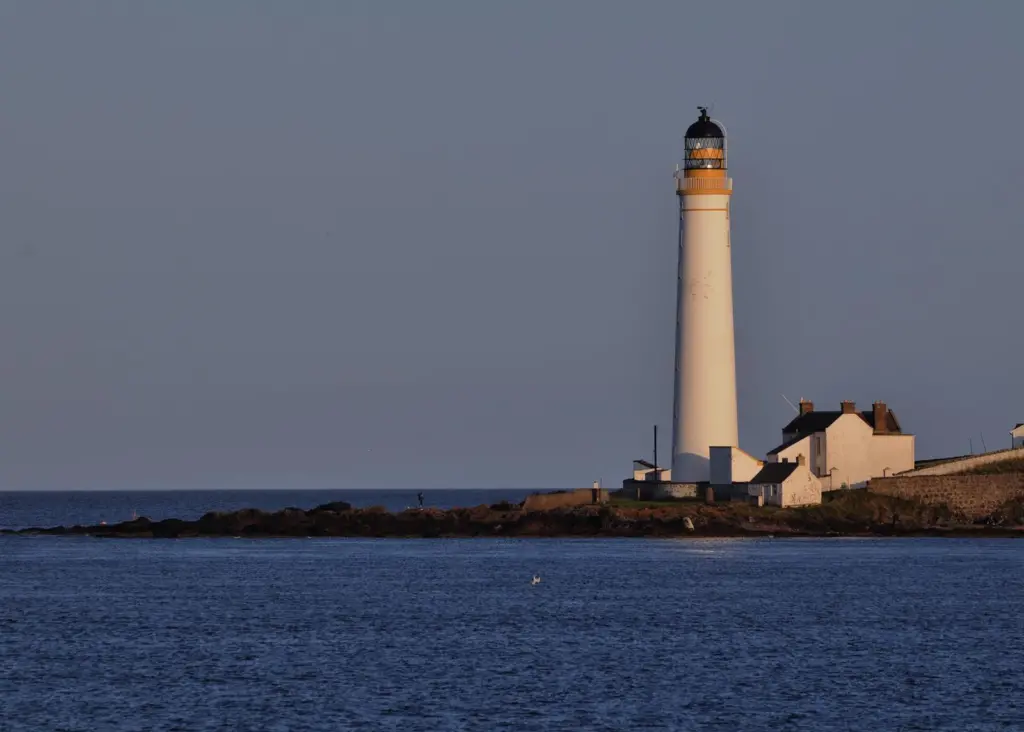
Scurdie Ness has been equipped with a new low powered charging system and latest generation LED optic Sealite SL-300-1D5.
“During the 1980’s sites located within easy connection to continuous power supplies, such as Scurdie Ness, were installed with light sources consisting of rotating sealed beam light arrays,” said Fiona Holmes from the Northern Lighthouse Board (NLB).
“The same lamps are used for diesel locomotives. We’re undertaking a rolling programme to remove this optic system from all of our stations.”
Energy saving
She said that the main reason the decision was taken to switch to LED was to save energy.
Because they are rugged, robust and shock‐resistant with no mechanical moving parts, they also require less frequent servicing.
Other benefits include the fact that LEDs can be grouped together to substantially reduce the probability of total lamp failure.
Lighthouses continue to be a vital part of the mix of Maritime Aids to Navigation providing inshore and channel navigation, spatial awareness, back-up for Global Navigation Satellite Systems (eg GPS), marking out danger and hosting sector/leading/directional lights, AIS base stations and other AtoN.
Scurdie Ness was opened in March 1870 at the rock-bound shore stretching between the Bell Rock and Girdle Ness, the scene of previous numerous shipwrecks and great loss of life.
The lighthouse, which is listed as a building of architectural/historic interest, was converted to automatic operation in 1987.
The NLB together with Trinity House and Irish Lights, are the General Lighthouse Authorities for the UK and Ireland. NLB is responsible for the waters around Scotland and the Isle of Man – a coastline of around 10,000km which includes 790 islands.
By Anne-Marie Causer
Related Articles
 VESSELS
 MARINE CONSTRUCTION
 VESSELS