![MaritimeJournal[Seawork]](https://www.maritimejournal.com/wp-content/uploads/2026/09/MaritimeJournalSeawork.svg)






Five tugs named in a host of firsts for Sanmar and Canada
Five tugboats were named at Turkish shipbuilder Sanmar’s shipyard in Istanbul this week, with a host of ‘firsts’ to celebrate.
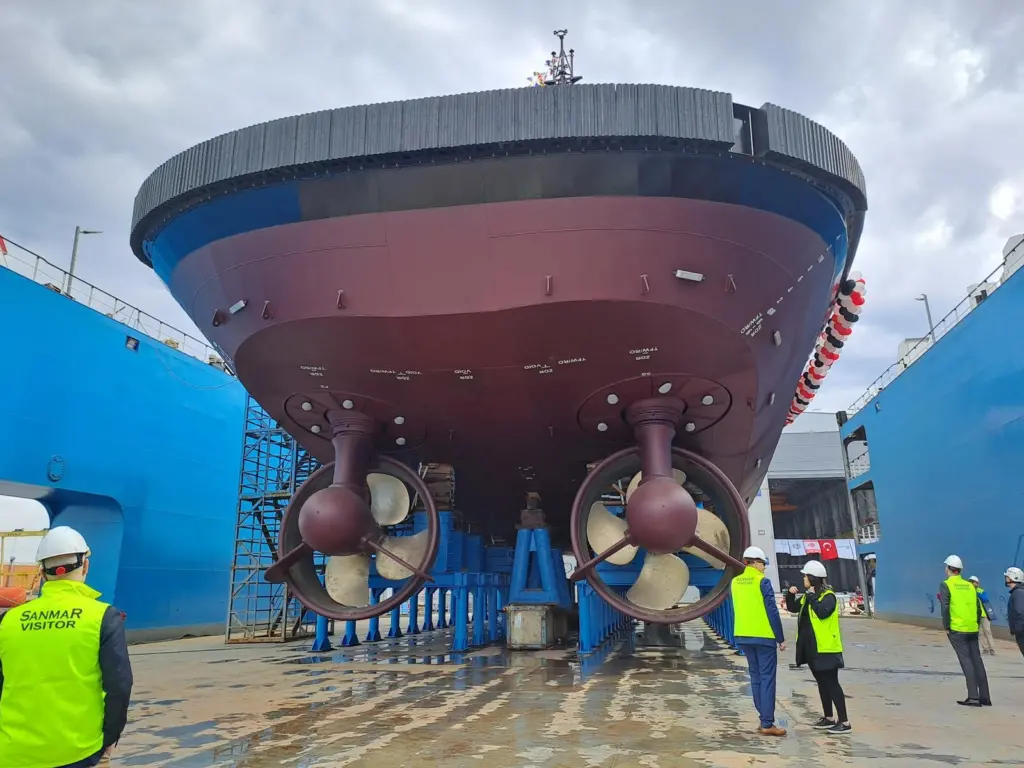
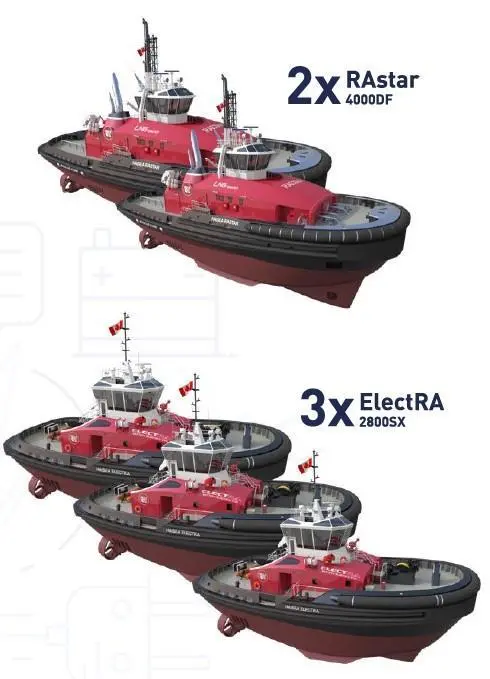
Two of the vessels are 40.2m x 16m dual-fuel LNG tugboats – the first for Canada, and the first built by Sanmar.
The other three are smaller, 28m fully electric tugs – they have diesel generators for back-up, but primary propulsion is batteries, in another first for Sanmar and for Canada.
All vessels were designed by Canadian naval architects at Robert Allan, which designs all of the tugboats that Sanmar manufactures.
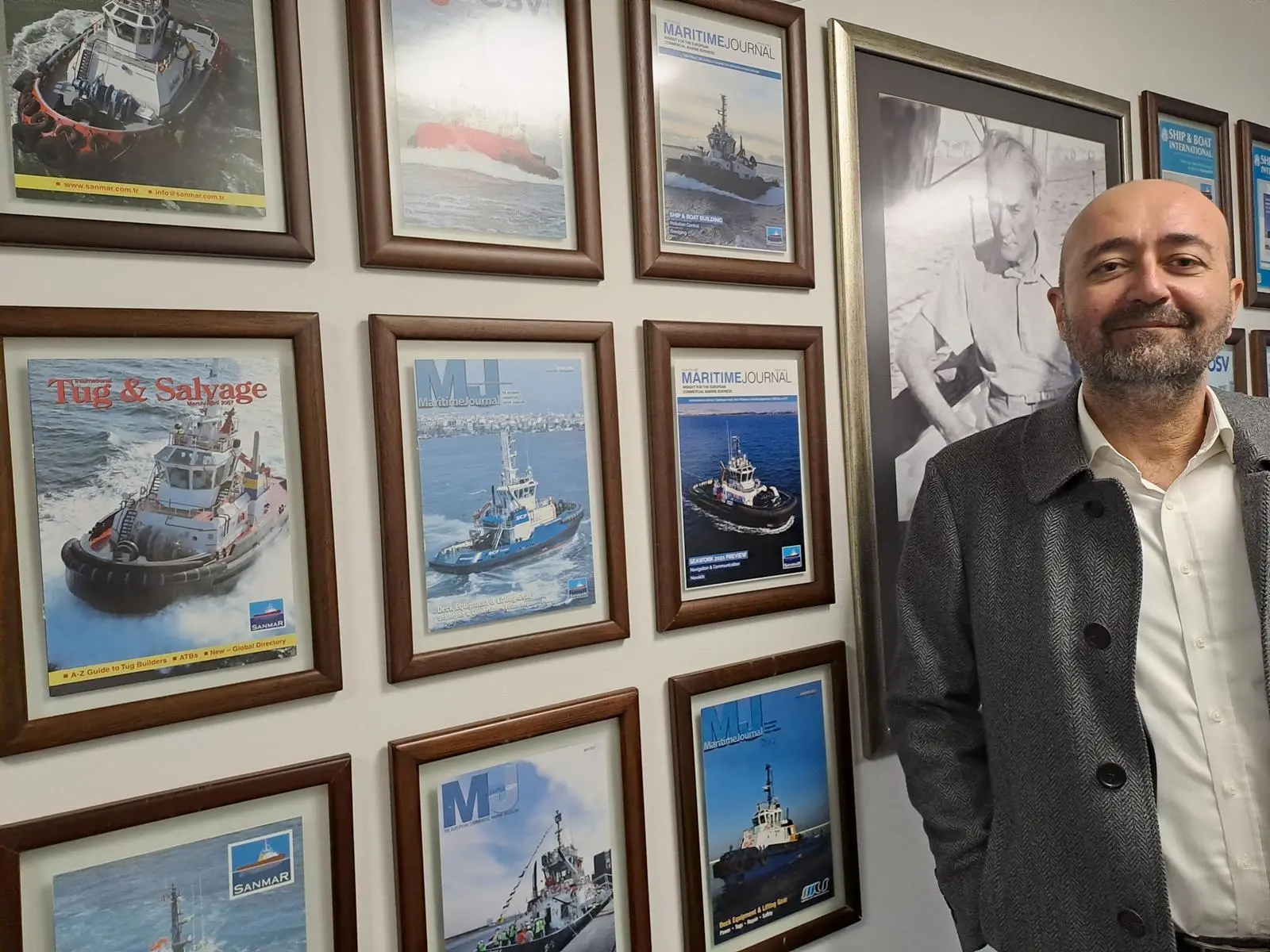
“This is a landmark day for Sanmar,” said Sanmar co-founder and chairman Ali Gürün, who took guests on a tour of both of Sanmar’s shipyards in Istanbul – the older one at Tuzla and a new one with brand new offices at Altinova. “We are building the biggest tugboats in our history. They will operate in Kitimat harbour, which will be the next export terminal for LNG from Canada. Because it’s an export terminal for LNG, our clients decided to have LNG-fuelled boats for their escort operations and fully electric boats for their harbour operations.”
The five vessels were ordered as a result of a joint venture named ’HaiSea’ between shipyard owner and shipbuilder Seaspan and the Haisla Nation, an indigenous Canadian community in Kitimat, British Columbia, where LNG Canada, which is 40% owned by Shell along with Petronas (25%), PetroChina (15%), Mitsubishi (15%) and Kogas (5%), has its LNG production plant.
The two large LNG-fuelled RAstar 4000-DF escort tugs with 100tbp will be Canada’s most powerful escort tugs. They will contain 57m3 of LNG along with 324m3 of diesel, and will be used to escort liquefied natural gas carriers from LNG Canada’s production facility 159nm up the Douglas Channel to port, where they will switch to smaller, fully electric tugboats to carry out the harbour operations.
New tug berth facilities have been built by Bridgemans Kitimat Joint Venture, which has installed marine piles, floating docks and a breakwater at Kitimat harbour.
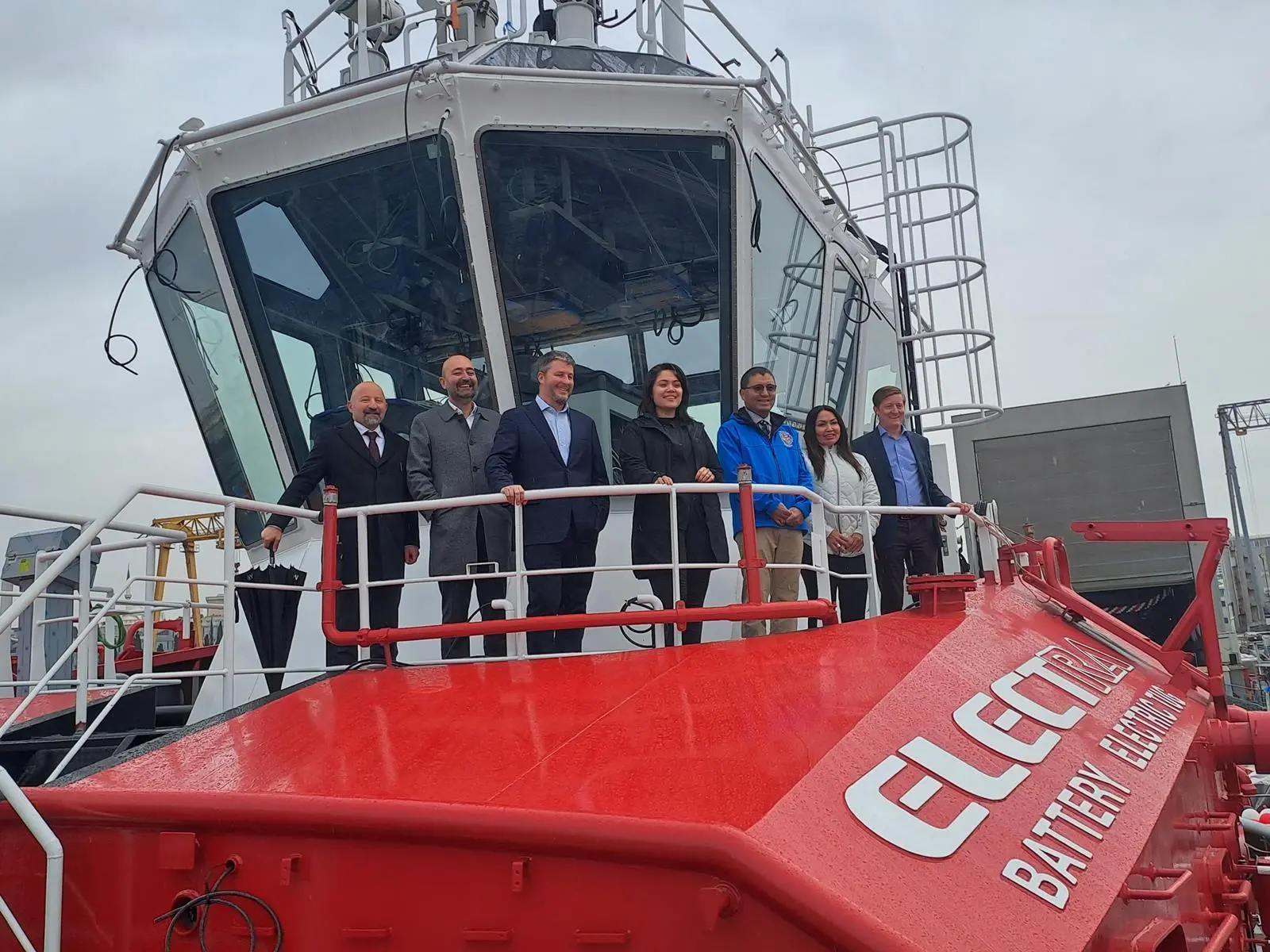
The three electric tugs, ElectRA 2801, 2802 and 2803, have 6000kWh of battery capacity and can recharge in four hours. At the harbour they will charge using cheap, clean electricity generated by vast hydropower resources in the area.
Uniqueness
“There are still only a dozen LNG tugs in the world because it’s complicated and expensive,” said Robert Allan CEO and president Mike Fitzpatrick. “These are unique in being LNG fuelled and quite large. Forty metres is big for escort ship-handling tugs just over 1,000 tonnes. The LNG means it has to be bigger to still work well.
“They will escort the tankers 159nm in and out of the fjords and when they get into the terminal the smaller ones will do the docking and normal work. The smaller ones are really unique in the world in that they are battery electric. We do quite a few battery-electric boats, but the other ones all have between 1500-2500kWh. These have 6000kWh of batteries.”
Fitzpatrick says that although a battery tug could cost as much as twice the price of a conventional tug, the order book is not showing any reluctance among owners.

“With the contracts we’ve got in the last 12 months, only 39% of them have been straight diesel,” he said. “Some are diesel with after treatment but it’s now at the point that more than half of them are doing something. A lot of the owners we deal with are going above and beyond because they can see where they’ve got to go. Svitzer, for example, is trying everything because they’re looking for a path to get to carbon neutral somewhere down the road – they know it’s coming.
“The economics will hopefully follow, but right now the technology is there for tugs to have lower emissions.”
The LNG escort tugs were named Hai Wamis, after the first settler to the Haisla Nation area in British Columbia, and Hai Kolombo, after the spirit of a white bear.
The three battery tugs were named Hai Warrior, Hai Weegit and Hai Brave. All names were chosen by people in the Haisla community.
The intention at the time of writing is to sail all five boats to Canada, with the addition of diesel tanks to the battery tugs for the voyage. Delivery of the first one is scheduled for July.
Related Articles
 OTHER NEWS
 ACCESSORIES & EQUIPMENT
 SPECIAL REPORTS