![MaritimeJournal[Seawork]](https://www.maritimejournal.com/wp-content/uploads/2026/09/MaritimeJournalSeawork.svg)




Foiling ferries to make Isle of Wight return
A quarter of a century after the last hydro-foiling ferry took people to and from England’s Isle of Wight, a new vessel with a new foiling design is being added to the service.
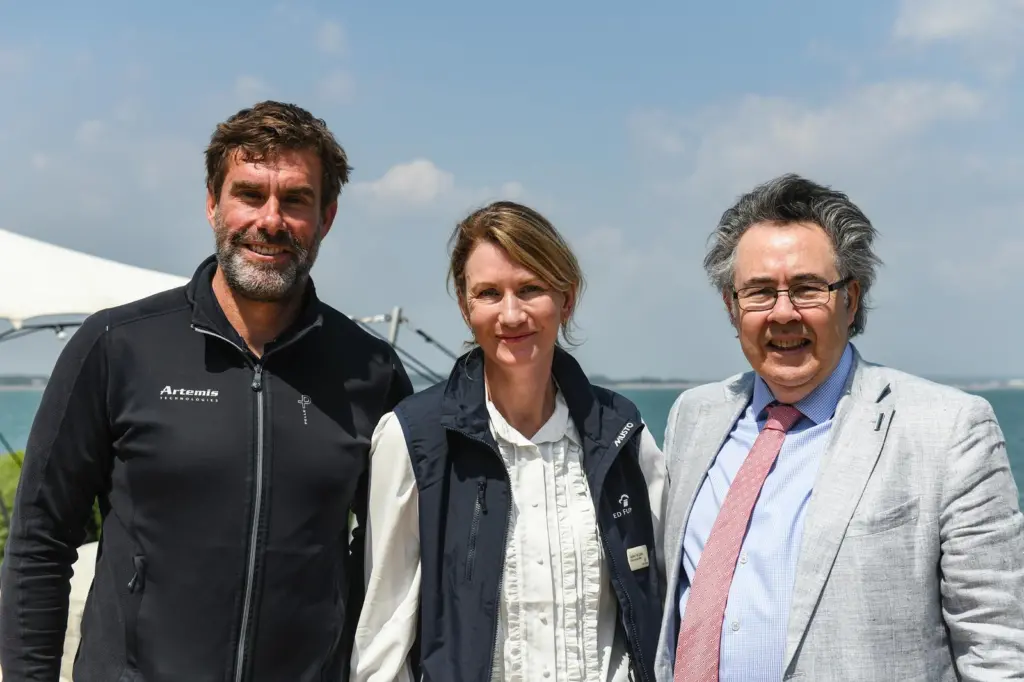
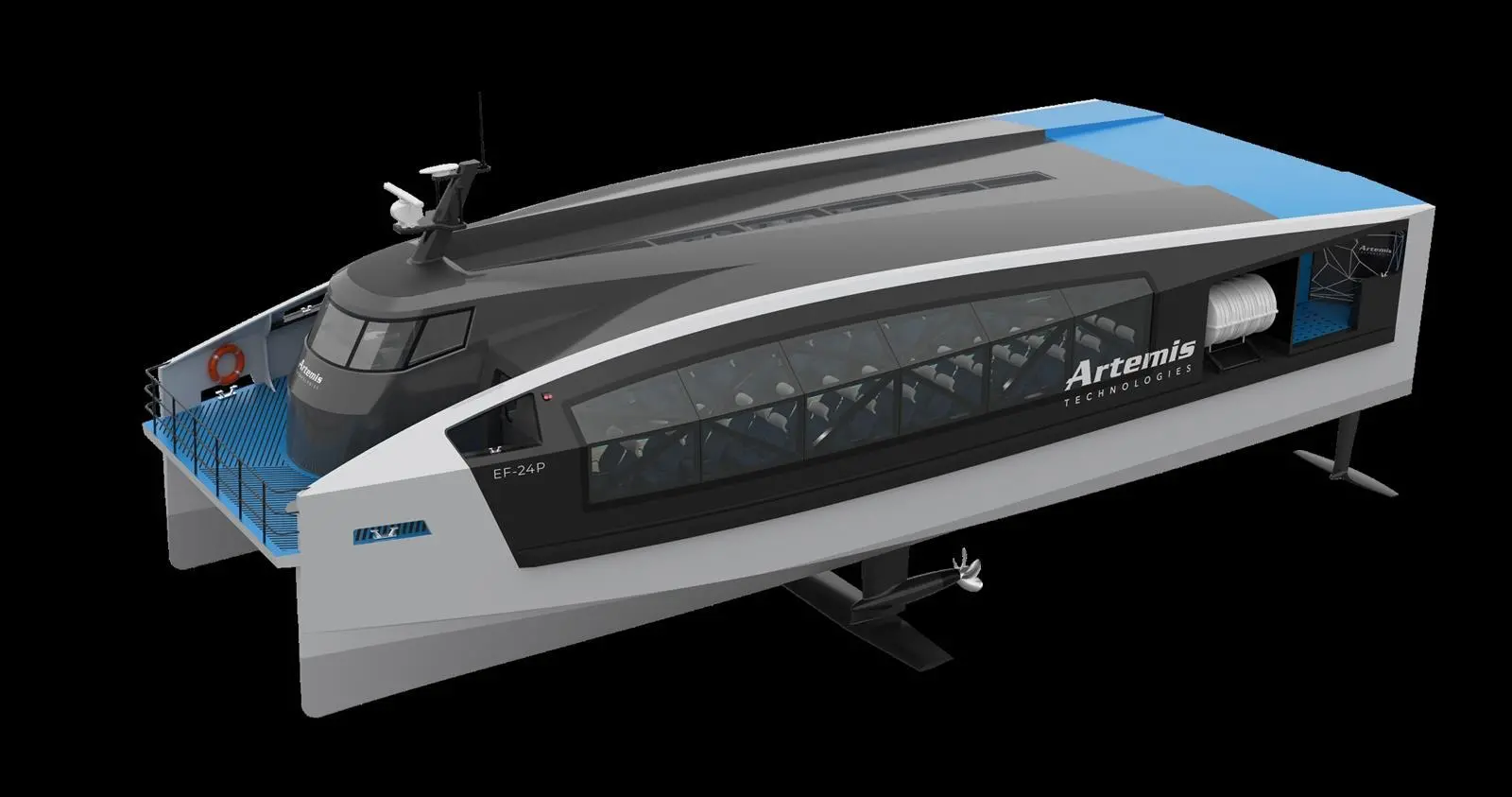
The EF-24 Passenger, an aluminium catamaran powered completely by batteries and propelled by Artemis Technologies’ foiling technology, will be integrated into Red Funnel’s foot passenger fleet within a year, Red Funnel CEO Fran Collins said.
Red Funnel, which in its December 2023 accounts posted losses of £195,000 for the year and outstanding loans of £124,000, operates two high-speed waterjet Red Jet passenger catamarans across the Solent between Cowes and Southampton, on the mainland.
As part of the company’s mission to decarbonise and operate a green service, they will be added to – and then ultimately, the aim is, replaced – by the Artemis Technologies boats, which are designed to take 150 passengers.
At an event held at the Royal Yacht Squadron on the island, a demonstration vessel just 12 metres in length showcased the technology to guests.
The ferry that will join Red Funnel later this year is in build in Turkey, CEO Iain Percy said, but all of the technology is home grown – even the batteries.
Artemis Technologies also supplies the charging infrastructure with every boat – in this case, a battery system will be installed onshore and be powered from the grid. The ferry will hook up to the battery system to charge.
Efoiling technology
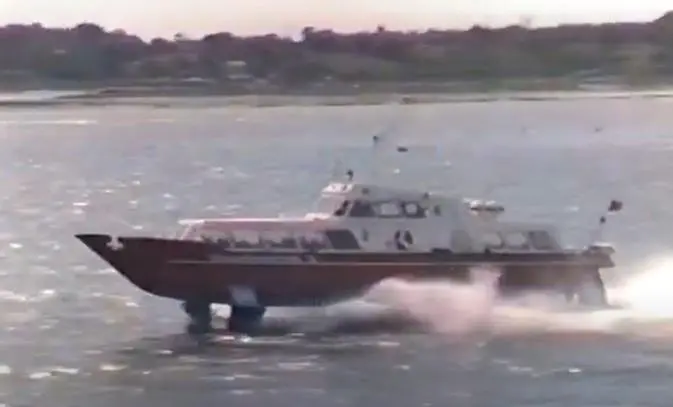
The earlier foiling ferry, the Shearwater, was different in many ways, not least because of the shape of the foils, which were V-shaped, said Percy, and didn’t eliminate much drag.
They were discontinued for economic reasons and also because the waterjets were coming online to compete. The last one finished its final voyage in 1999.
“It’s before my time, but I believe technology had moved on, with the high-speed passenger jets that industry took on,” said Red Funnel CEO Fran Collins. “Since then we’ve seen fuel prices go up, and there wasn’t the pressure to decarbonise at that point. Passenger jets have been really good in a catamaran design, but now it’s time to revisit that and look at other options.”
Artemis Technologies proved its eFoiler technology at a London Shipping Week event in 2022, when it launched the Pioneer of Belfast, a fully electric workboat with two batteries with a total 300kW in the centre of the boat.
The new ferry will be twice as long and three times as wide as the Isle of Wight demo vessel, with two retractable high-aspect ratio hydrofoils aft, which also act as the rudder and primary steerage system, with independent propulsion units and thrusters for low-speed manoeuvring.
In the centre of the catamaran two shafts hang below the hull, attached to each other horizontally so they act like a wing, providing propulsion with a self-cooled, ultra-high power density, electric drivetrain, Artemis Technologies says. It also has a collision avoidance system that identifies submerged or semi-submerged objects.
Ride height is managed by a flight control system, which prevents the vessel from slapping down onto the water once speed has reduced and it comes off its foils.
The batteries, Percy says, are made at Artemis Technologies’ facility in Belfast.
“We needed a certain voltage, a higher voltage because the wires go down to the foil,” he says. “It was the same with drivetrains – we had a specific need for certain technologies that didn’t exist. We also wanted to up the safety standards as well. Energy density is very important, weight is as well, so we were forced into developing a lot of our own systems, the same with the submerged pod drive that’s putting out 650 kilowatts – again, it’s pretty novel technology.”
Red Funnel future
It won’t be possible to make car ferries foiling vessels, but the company has had designs done for new diesel-electric vessels, Fran Collins said.
“We’re really keen to decarbonise the car ferries, and very clear that we’re up for investment at the moment for the new fleet,” she said. “We’ve got the designs done. It is feasible that they could be fully electric, but not possible because there isn’t the electricity infrastructure on the mainland.
“Because it’s a lifeline service, we’ve made the decision that they will be diesel-electric hybrids, but they will be built to be retrofitted when new technology becomes available. Either that will be the provision of electricity, and we need 8MW for that, or it will be a hydrogen fuel cell, or something else.”
When Collins was asked about Red Funnel being in the red to the tune of some £300 million, she said she could not comment on commercial aspects of the business.
“What I will say is that we have been really clear that we’re seeking investment into new tonnage, that the business is in a strong position, that we’re doing what we’ve been doing for 163 years and will continue to do so.”
Islanders can expect the EF-24 Passenger to be on the timetable within 12 months, Collins said.
Related Articles
 OTHER NEWS
 ACCESSORIES & EQUIPMENT
 SPECIAL REPORTS