


Groundings, fires, breakdowns – busy start to 2024
Europe’s marine salvors have reported a busy start to 2024, dealing with ship groundings, fires and engine breakdowns along with minimising pollution from plastic pellets washing ashore in Spain.
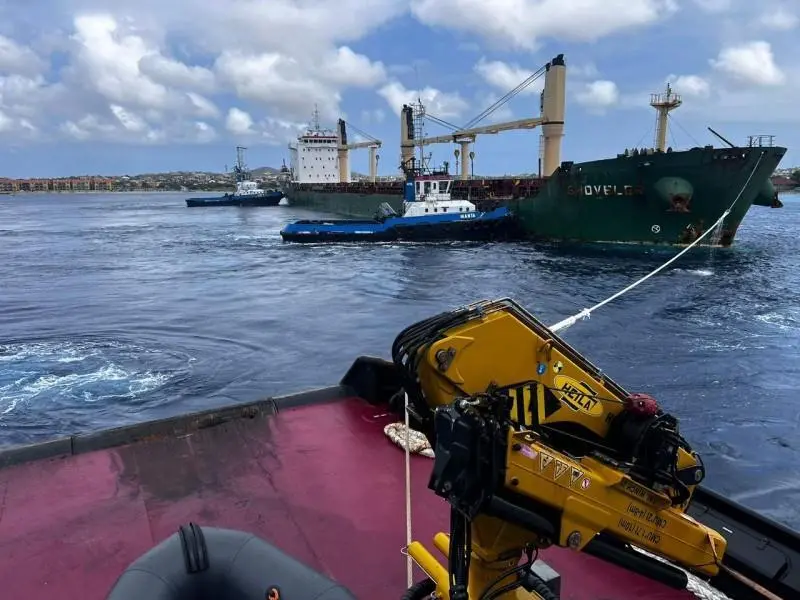
Tsavliris is a well-established global salvage contractor and the Piraeus-based company was tasked when the bulk carrier Shoveler, laden with 28,000t of wheat, suffered an engine room fire some 55 miles southwest of Puerto Rico while on passage from Canada to Venezuela. The 85tbp tug Plip Fos mobilised from Martinique and established a towing connection, the convoy arriving safely at Caracas Bay a week after the initial alert.
Late in 2023, another bulk carrier, the Gazibey laden with 9,900t of potassium chloride granulated fertiliser encountered main engine failure in adverse weather conditions around 60 miles off Falmouth, UK.
Tsavliris despatched the 312tbp tug ALP Striker to assist and the vessel was towed to a sheltered position in Falmouth Bay, where it remained under towage connection for several days until the engine problems were rectified.
Following trials, escorted by the tug, Gazibey’s passage to Bayonne, France continued with towage, escort and standby services provided by ALP Striker. The following day the ship was safely berthed at Bayonne, the operation completed 11 days after the initial call.
Rapid response
A rapid response by Multraship Salvage and URS Nederland resolved a potentially complicated situation when the fishing vessel Cindy VLI 25 ran aground at high tide on the easterly breakwater of the Outer Harbour at Flushing.
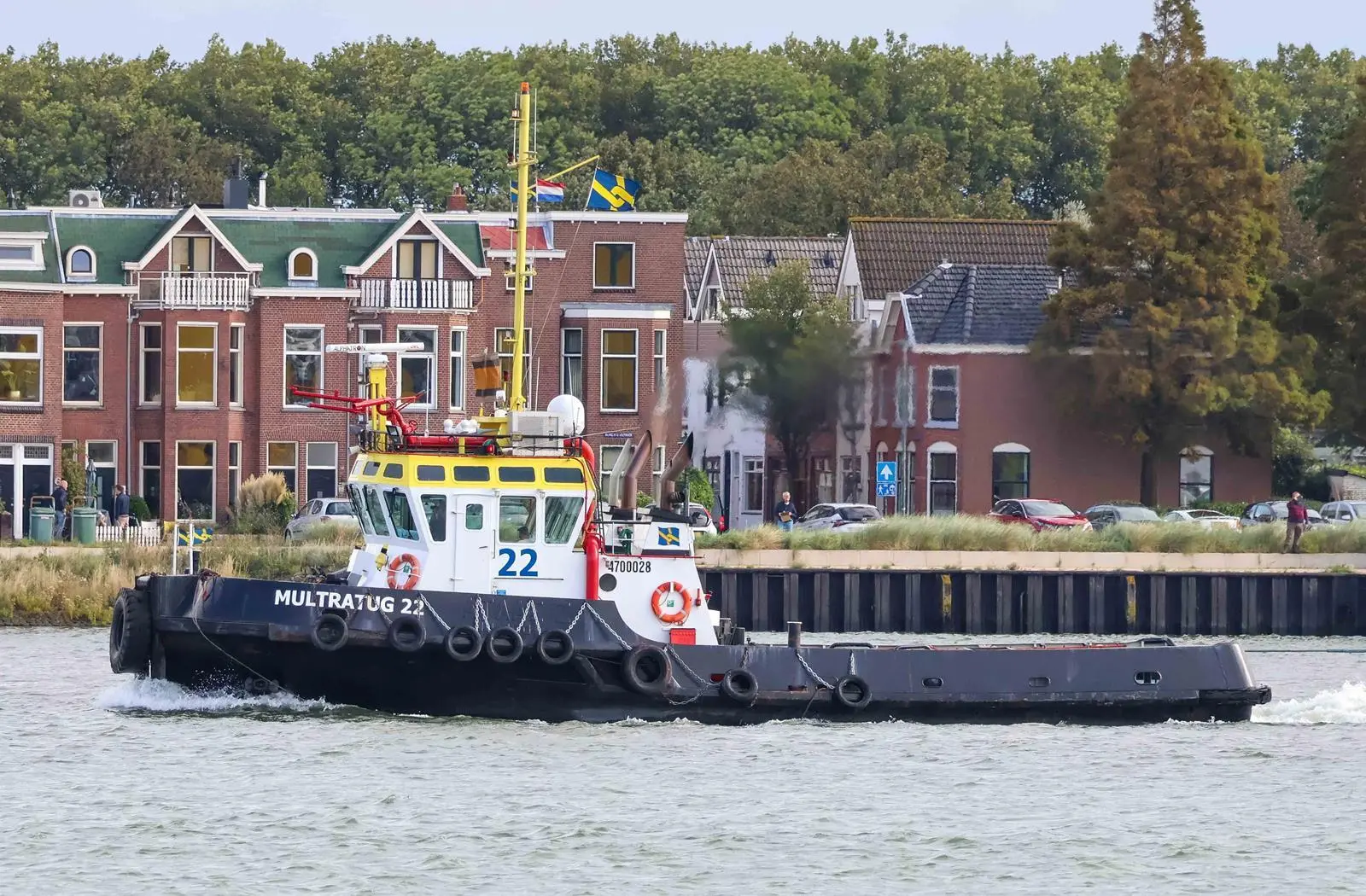
Tugs VB Triumphante, Multratug 9 and Multratug 22 responded and a tow line was quickly established with the vessel refloated and escorted back to the Outer Harbour, where it was safely berthed.
Global coverage of the Netherlands-based Smit Salvage was evident in a period when it responded to four different incidents.
A potentially serious pollution threat arose when a laden 317,713dwt VLCC grounded on a reef on the Indonesian side of the Singapore Strait. No hull damage was reported but uncontrolled vessel momentum due to tidal change presented the risk of a breached hull, and Smit despatched a salvage team from its Singapore response centre.
Four days later the vessel was refloated by three local partner tugs and redelivered to its owners at a nearby anchorage.
Vessels grounding in Argentina’s Parana River are not unusual and Smit responded when a bulk carrier partially laden with wheat suffered such a fate. A salvage team and tug were mobilised and after an initial refloating attempt failed, two additional tugs were called in and the bulk carrier was refloated after 48 hours.
In the same month, a backhoe dredger started to capsize off Algiers and Smit was contracted to remove pollutants from the vessel with support from fellow ISU member Multraship. At the time of writing Smit was making preparations to salvage the vessel.
Meanwhile in Borneo, Malaysia a large team of Smit experts are busy with the second season of wreck removal of an offshore structure in 90m water depth, the operations expected to last well into summer 2024.
Plastic pellet pollution
Spanish Ardentia Marine’s salvage activities include exclusive suppliers of marine emergency response services for the country’s Salvamento Maritimo (SASEMAR), and its expertise was called for in responding to a plastic pellet spill originating from a shipping container that had reached the shores of Galicia.
The response included mobilising teams to monitor beach conditions and facilitating recovery of the pellets.
Ardentia also reported providing comprehensive oil spill prevention services for major Spanish clients including more than 3,000m of oil boom as well as multi-skimmers and oil transfer services.
Athens-based Five Oceans Salvage (FOS) was established in 2006 and says it is “the offspring of a visionary team of specialists who bring together over a century of combined experience with solid know-how and innovative ideas”.
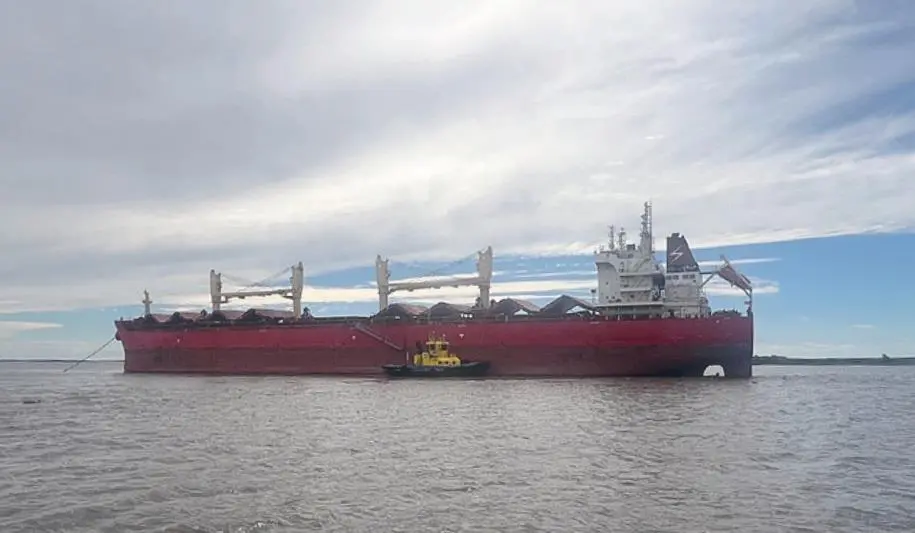
As with other salvors, its operations are worldwide and it was recently tasked when the 63,000dwt bulk carrier Steel C grounded while in ballast condition off Nueva Palmira in Uruguay. Demonstrating that expertise is as important as having the appropriate hardware, FOS mobilised a local salvage master as first response along with a local tug, while a senior salvage master and a salvage team mobilised from Athens.
After submitting the relevant plans and documentation needed for obtaining the salvage permit without delay and after the team from Greece arrived the following day, Steel C was successfully refloated.
Related Articles
 OTHER NEWS
 MARINE CIVILS
 AUTONOMOUS VESSELS & TECHNOLOGY