

Marine People welcomes new firm to the family
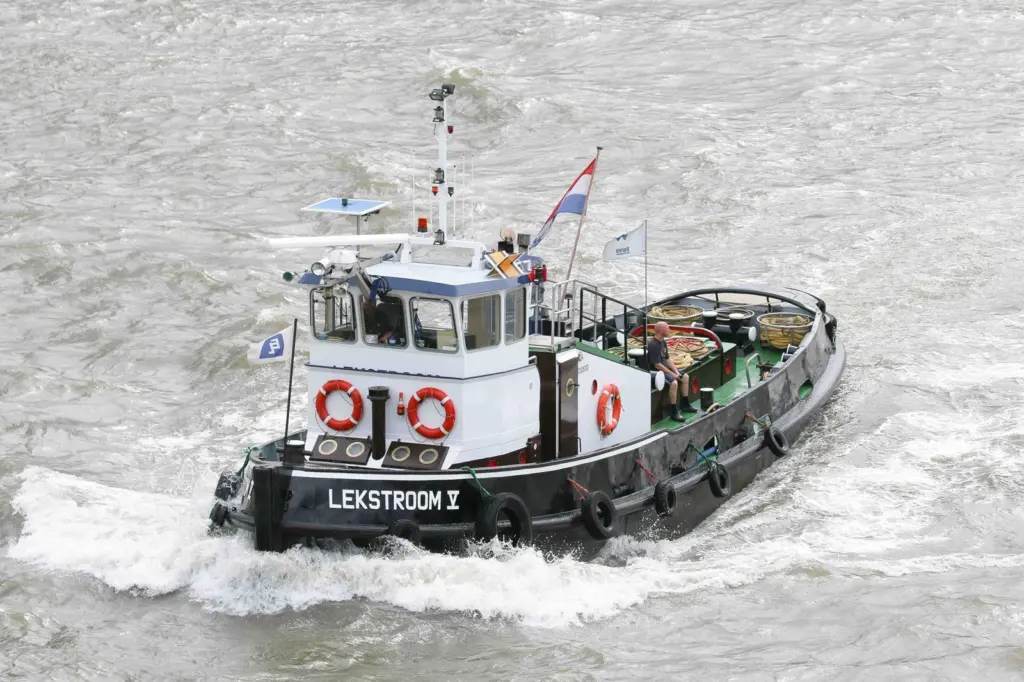
Lekstroom Transport, one of the Netherlands oldest tug and pontoon owners, has become the third partner operating under the name of Marine People, joining two of Rotterdam’s major marine service providers – HEBO Maritiemservice and Bonn & Mees.
The floating sheerlegs of HEBO and Bonn & Mees are part of Rotterdam’s maritime furniture and in July 2023 they joined forces under the banner Marine People, still 100% owned by the families of the founders of both companies.
Reflecting the words of HEBO that Marine People aims to ‘grow further and maintain the best in the market’, its acquisition of Lekstroom adds another partner to the long-established companies that boast generations of experience with an interesting collection of vessels, some of which are more than 50 years old.
Rich Lekstroom history
Lekstroom was founded in 1898 by Willem Daniel Eerland Sr. His son Jan succeeded him followed by grandson Pieter, who along with wife Netty led the company for more than 40 years before selling their company to Marine People.
The name ‘Lekstroom Transport’ will continue to exist (as with HEBO and Bonn & Mees) and operate independently within the Marine People group, but with different management.
“The buyer attaches to the name because it radiates reliability and solidity,” says Lekstroom. “We have known HEBO Maritiemservice as a reliable competitor for many years. That builds trust.”
Lekstroom’s founder focused on tugs, but World War 2 presented the opportunity for his son to expand the fleet of pontoons to allow transports not suited for conventional inland vessels, with its vessels operating as far inland as Austria and Switzerland.
Lekstroom’s current fleet includes two tugs and around 15 pontoons, and a reflection of how family-owned companies avoid the occasional, and probably unintentional, neutral world of publicly owned companies is where most of the pontoons are named after the children, grandchildren and great-grandchildren of the founder.
Rotterdam’s heavylift giants
The amalgamation of Bonn & Mees and HEBO brought together two maritime service providers whose vessels are well known to the people of Rotterdam in particular.
While HEBO is a relatively young company by comparison, it has quickly become established with impressive expansion of a diverse fleet of vessels operating in various markets, including emergency response, salvage and pollution control in the Netherlands and beyond.
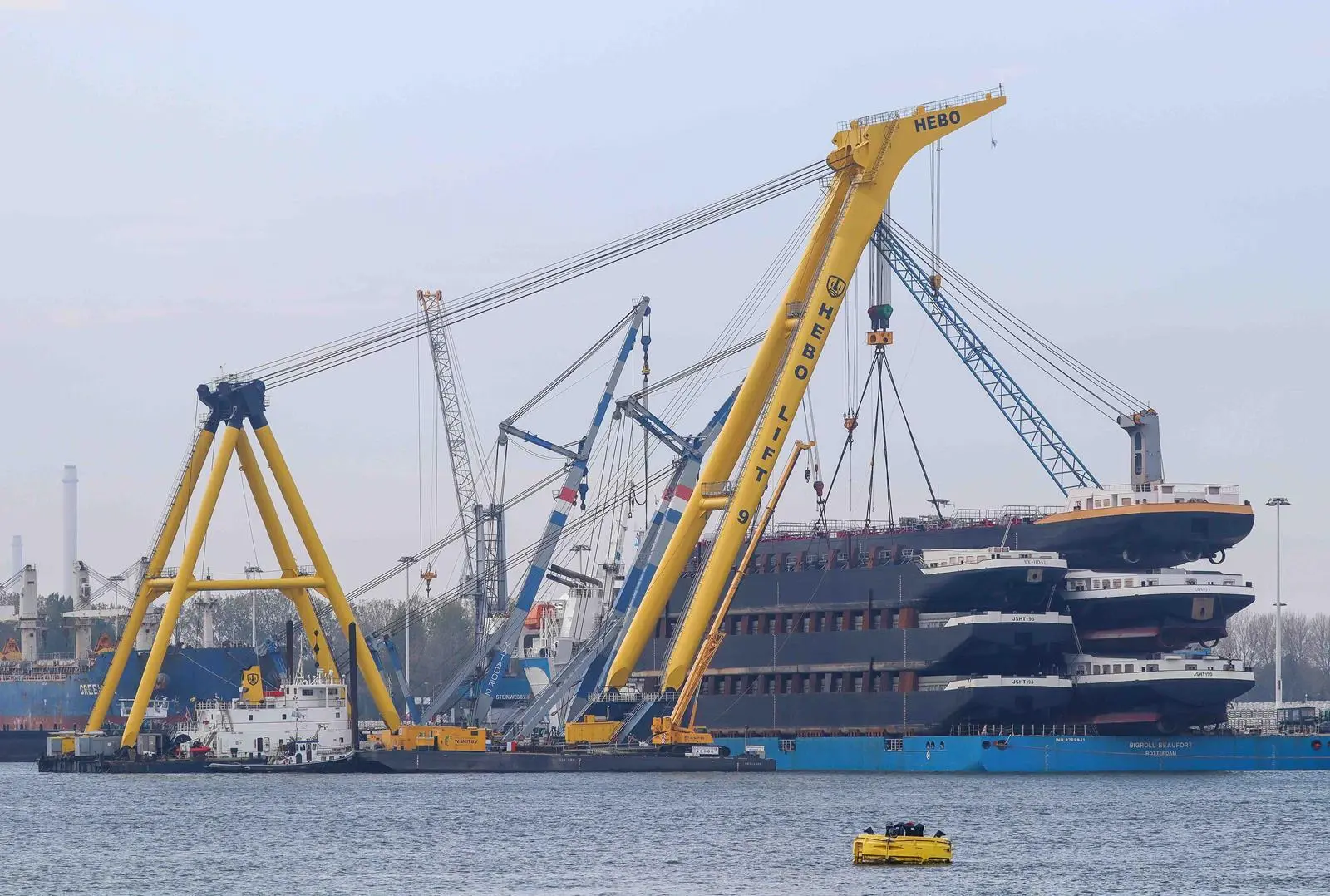
Looking at its floating cranes/sheerlegs, HEBO lists nine vessels ranging from the 50-ton crane capacity Hebo Lift 1 to its largest, the 2,200-ton capacity Hebo Lift 10, a vessel with a famous history working globally as Taklift 4 with Smit Salvage.
HEBO’s wide range of services demands an equally wide range of vessels, and beyond the floating cranes mentioned here there are more than 60 other craft in its fleet.
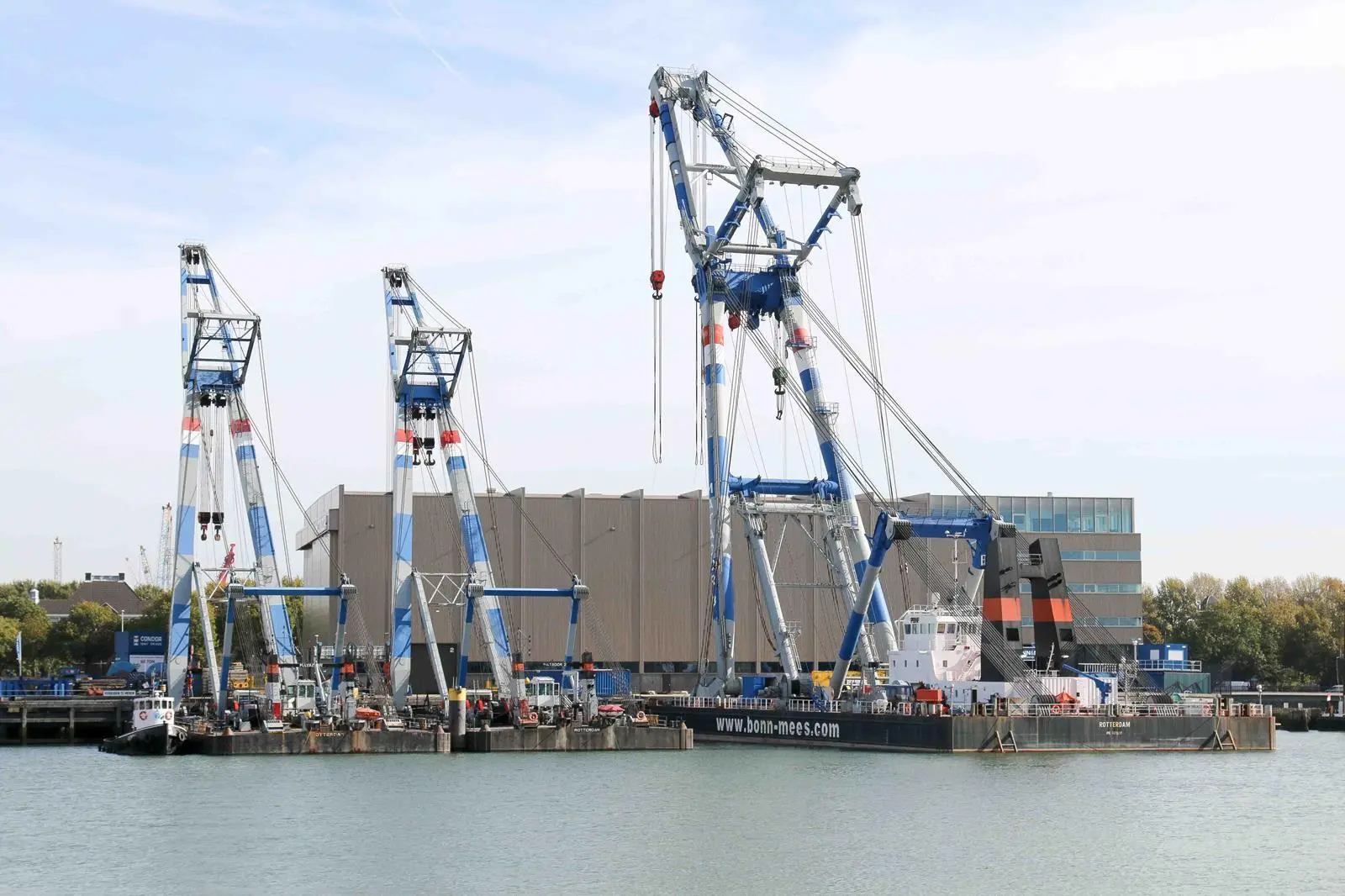
In contrast, Bonn & Mees may only have three floating sheerlegs (two classed as inland) and two attending tugs, but with more than 130 years of experience will enhance the Marine People portfolio, its sheerlegs often working in conjunction with those of HEBO.
The sheerlegs Matador, Matador 2 and Matador 3 are non-propelled but manoeuvring thrusters provide a degree of autonomy, the largest Matador 3 capable of lifting up to 1,800 tons.
The two attending tugs are of particular interest. The 1967-built Jan Leenheer is a very early tractor tug, having previously operated for Smit International and Boskalis. It is the usual choice to accompany the Matador cranes when they venture beyond the piers at the entrance to Rotterdam.
Pieter L, while at the age of 60 years, just three years the junior of Jan Leenheer and a product of De Haas Shipyard Maasluis, is a suitably representative part of the long history of Dutch inland towage.
With news of the joining of forces of HEBO and Bonn & Mees, the question was asked locally – will the Matador’s be painted yellow or will HEBO’s cranes turn blue? Indications at this stage are that each of these three companies will retain their individual identity under Marine People.
Time will tell if these instantly recognisable parts of the Netherlands’ maritime history and fabric retain their recognisable identities or, as has happened with other similar amalgamations, over time adopt similar liveries.
However in the generations to follow, they will in turn be recognised for their own value and heritage.
Related Articles
 OTHER NEWS
 MARINE CIVILS
 AUTONOMOUS VESSELS & TECHNOLOGY