


Under construction at a German shipyard CIG is what is claimed to be the first fully electric car ferry designed for inland waters.
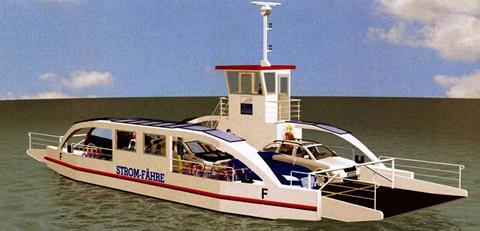
This new ferry will operate a service across the River Moselle in western Germany carrying both cars and passengers. It will operate entirely with electric power with adequate battery power to maintain the service each day supplemented by solar panel charging.
The ferry is double ended with a vehicle ramp at each end. The pontoon hull has been optimised in shape for minimal resistance but is designed to be both robust and to require minimum maintenance costs. A recess at each corner of the hull is designed for accommodating the four sail drive propulsion units that are contained within the depth of the hull.
The vehicle deck has two lanes, each one accommodating three cars or vans. There is a passenger shelter on one side with the raised pilot house amidships on the other side. Toilet and crew facilities are located under the pilot house. The styling is completed with arched arms that embrace both sides of the ferry. These arms are used as mounting points for solar panels which together with additional panels on the pilothouse top can produce 5.4 kW to top up the batteries.
This ferry is under construction at the Central Industry Group and it is one of the subsidiary companies in this group, Kräutler Elektromaschinen, that is providing the propulsion systems. The four steerable saildrive units are powered by 20 kW electric motors. The steering of each propulsion unit is coordinated by a single joystick control that will allow the ferry to be precisely controlled when manoeuvring against the river current and when docking.
The batteries that supply the sole propulsion power are lithium polymer units with a total capacity of 252 kW hours. These are located within the hull of the ferry and can give the ferry a maximum speed of 13 km per hour but the normal operating speed of the ferry will be half this speed in the interests of reducing power consumption.
The overall length of the ferry is 28 metres and the beam is 8.9 metres combined with a draft of under 1 metre. The design has been developed to meet ZSUK Zone 4 requirements of the German authorities.
The Central Industry Group has focussed on electrically propelled tourist vessels for operating on rivers and inland water waterways up till now. The new car ferry, which will be delivered this year, is their first unit of its type and the yard expect it to develop considerable interest as a green and quiet solution for ferry operations in towns and cities.
By Dag Pike