![MaritimeJournal[Seawork]](https://www.maritimejournal.com/wp-content/uploads/2026/09/MaritimeJournalSeawork.svg)




Expanding tug fleet for River Thames work
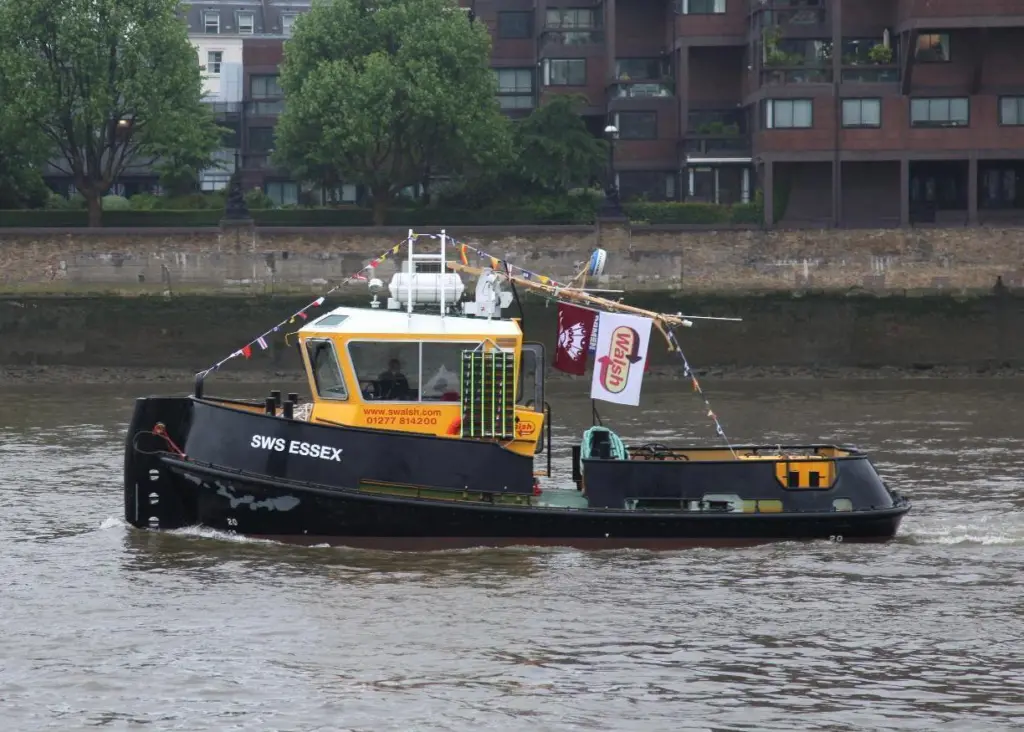
Essex UK based construction contractor S Walsh & Sons Ltd (SWS) has recently been expanding its marine management division, buying new and adapted vessels to serve on a variety of projects on the River Thames in and around London.
With headquarters at Brentwood the company also has riverside facilities at Tilbury, Barking and Silvertown, and uses discharge sites at Pitsea, Rainham and Mucking. It runs a fleet of 62 trucks carrying mainly construction waste and recycled aggregates by road, which have now been augmented by the river fleet that shifts up to 10,000 tons of bulk cargo material per day, equivalent to approximately 450 HGV loads.
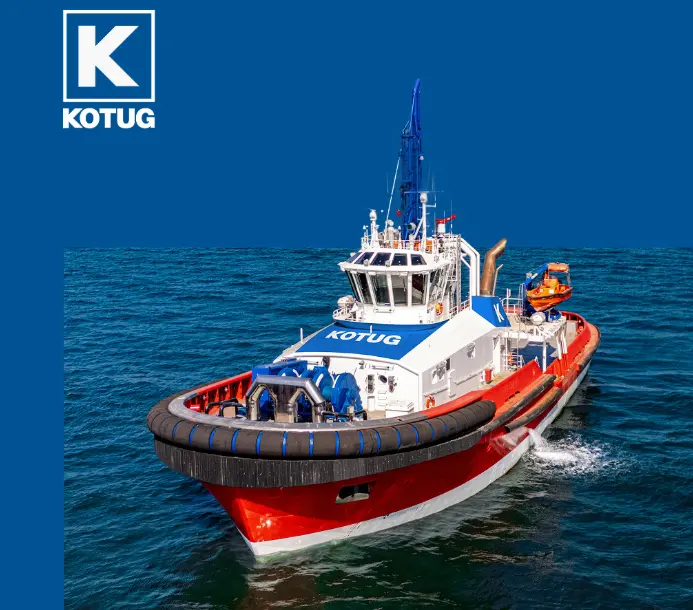
The company’s fleet of tugs and barges currently includes SWS Essex, a newly built Damen Stan tug 1205 delivered earlier this year, six smaller tugs and workboats and two of Cory’s ex-lighterage tugs, General Vlll and Merit. These are due to be replaced by two more brand new Damen 1606 Stan tugs, which are on order from the Dutch builder. These 16m vessels deliver 894 bkw (1,215 bhp ) with a running speed of 11 knots and a bollard pull of 16 tons.
The new tugs will fulfil a new contract with Cemex that will see tug and barge traffic delivering recycled aggregates up through the London bridges to Vauxhall and Fulham, using a fleet of nine 550dwt barges. The material will come from the company’s aggregates washing plant at Barking, which is the largest in Europe.
SWS also operates the 57m motor barge SWS Thurrock (ex Green Transient), which was purchased after the Green Barge company ceased trading at the end of 2011. In September the refurbished vessel started removing 100,000 tons of spoil and demolition waste from a construction site at Fulham wharf in West London.
Other construction jobs the firm is contracted to include the Crossrail project, from which it is helping to remove soil that is being delivered to the new wetland site at Wallasea Island on the River Crouch, and the Lots Road high-rise development at Chelsea, due to begin soon.
Marine manager Mark Robinson cites the new Thames Freight Standard, developed by the PLA and MCA, as an impetus to using larger vessels on the Thames. He claims the pending Thames Tideway project to build a ‘super sewer’ under London has shown there are not enough barges on the River to handle the expected demand and he sourced craft from Prague in the Czech Republic. Further bureaucratic restrictions mean that Dutch type barges, such as SWS Thurrock, need to be coded Category 2 when working past Gravesend.
SWS is signatory to the new Thames Training Alliance and crews need to be qualified to BML level.
By Graeme Ewens
Related Articles
 SPECIAL REPORTS
 TUGS & SALVAGE
 EQUIPMENT