![MaritimeJournal[Seawork]](https://www.maritimejournal.com/wp-content/uploads/2026/09/MaritimeJournalSeawork.svg)




Recent past informs marine safety future
1987 was a momentous year for shipping. Not only was the Maritime Journal launched, it coincided with a period of significant change for maritime legislators.
On 6 March 1987 the passenger ferry Herald of Free Enterprise sank with the loss of 193 lives. The resulting crisis of confidence within the maritime community was not dissimilar to the crisis of confidence experienced by the BBC today. The subsequent Formal Investigation into the circumstances of the tragic loss changed much of the maritime landscape and created institutions and practices which we take for granted today.
The Marine Accident Investigation Branch was created as a direct consequence of the disaster. It became apparent at the Formal Investigation that the body responsible for setting maritime regulation, the Surveyor General’s Organisation (SGO), was also responsible for investigating accidents. A new consensus emerged that the shipping community would be better served with an impartial entity investigating any mishap, including highlighting any deficiencies in the regulations imposed on ships.
The SGO did not fare well in the subsequent analysis of the regulatory framework, with some criticism of the skill set of senior management of the organisation. Within seven years the SGO was replaced by the Marine Safety Agency. This in turn was merged with the Coastguard on 1 April 1998 to become the Maritime and Coastguard Agency.
The Herald of Free Enterprise and the Marchioness, a Thames river passenger vessel which in 1989 collided with the dredger Bowbelle with the loss of 51 lives, also had a profound effect on corporate manslaughter law. After both tragedies the press asked the inevitable questions. How could it happen? Who was to blame? And whilst in some cases blame was apportioned to some individuals, the law was subsequently changed to fully consider the role of large companies involved in the operation of vessels and those who directed and managed them.
The Herald of Free Enterprise disaster also drove changes to international safety standards with the redesign of Ro-Ros, particularly with respect to enhanced stability requirements. Following further passenger Ro-Ro disasters, most notably the m.v. Scandinavian Star and the m.v. Eastonia, the introduction of codified safe operating practices became the International Safety Management System (ISM) system we know today.
So what is likely to happen to the regulation of shipping in the next 25 years? There are some historical trends which may point to the future. At global level, the International Maritime Organisation (IMO) remains the leading authority for defining world maritime standards.
25 years ago the Organisation was referred to as IMCO. The ‘C’ stood for ‘consultative’ and it was noticeable that since this term has been dropped the IMO has taken on more of a policing role. In 1987 it would have been unheard of for IMCO to audit a sovereign government’s maritime affairs.
Today, Flag States can voluntarily ask for such an audit. The incentive for the Flag is a better grading of their vessels for Paris MOU Port State Control purposes. There is debate at IMO to make these Flag State audits mandatory. How Flag Sate administration defects found at audit will be handled by IMO, and possibly sanctioned by the international community if necessary, will be an interesting development. It may be likely that some of the 170 member states to IMO cease to be full participants, especially if they have under-developed administration systems and little tonnage trading internationally.
Another trend for Flag States is the reduction in their traditional function, i.e. an organisation staffed with government officers. Increasingly, governments are opting to franchise out Registry functions to commercial business. This does not necessarily mean a reduction in standards, in fact many ‘open registries’ have excellent safety records and uphold the highest operational standards. Whether traditional Flag States continue to lose more tonnage to these commercial organisations will be interesting to see.
A further trend at IMO is the increase in attending non-governmental international organisations which have been granted consultative status. Their voice and influence over equipment standards is unlikely to reduce.
The Kyoto Protocol acknowledged that CO2 emissions from international shipping cannot be attributed to any particular national economy, therefore IMO is presently responsible for the regulation of greenhouse gases for shipping. There has been debate over whether the IMO is the correct body to set these standards. However it is inevitable that whoever is responsible for this role in the future, the introduction of market based mechanisms will be considered in order to provide a fiscal incentive for the maritime industry to invest in more energy efficient technology. The offsetting of growing ship emissions will also need to be considered in the light of growth projections of human population and world trade.
Whilst ships of the future will be more energy efficient, the type and specialist function of ships are unlikely to significantly change. In the two decades of the 1960s and 1970s, ships became significantly more specialist, with new types including container ships, heavy lift, LNG/LPG, Ro-Ro and many different types of tanker. The size of ships also grew.
Over the last 25 years there have been fewer vessels that use inefficient or disproportionate amounts of fuel, including commercial hovercraft, steam ships and WIG’s. In the near future ships will get slower not faster, as we have seen in the container market, due to higher energy costs. Despite the trend for naval architects to regularly launch drawings of their latest concept to great aplomb, few designs make it into production or beyond a niche geographical market.
One Royal Navy Captain once famously commented that ships sinking are as inevitable as sunrise and sunset. But whilst the development of shipping legislation in the next 25 years is not certain, we can rest assured that the Maritime Journal will be there to record it.
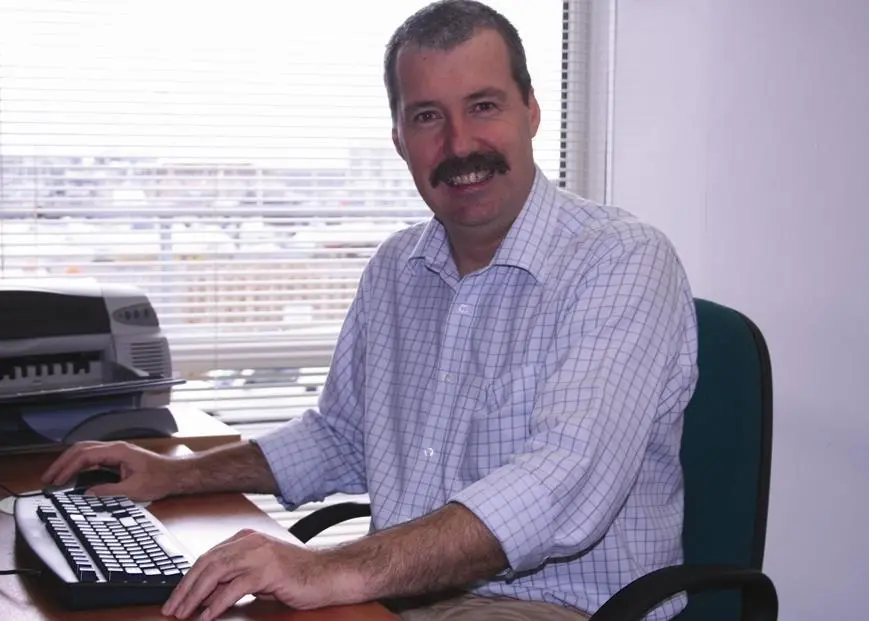
By Captain Richard Eastham
Related Articles
 ACCESSORIES & EQUIPMENT
 ACCESSORIES & EQUIPMENT
 ACCESSORIES & EQUIPMENT