![MaritimeJournal[Seawork]](https://www.maritimejournal.com/wp-content/uploads/2026/09/MaritimeJournalSeawork.svg)



Dynamic navigation for high speed craft
FRC International launched the innovative ‘DYNAV’ dynamic navigation system for high speed craft at Chalmers University Maritime Department, Gothenburg, Sweden on 29 October 2013.
The DYNAV launch event enabled attendees from Scandinavia and Europe to come together with the objective of improving seafarer safety, operational performance and interoperability on fast craft. Professional sector organisations represented included search and rescue, navy, military, coast guard, law enforcement, maritime pilots, maritime legislators, training organisations and boat builders.
DYNAV Manager was presented by Captain Fredrik Forsman of Chalmers University / Swedish Sea Rescue Society and Dr Trevor Dobbins, technical director of FRC International. The one day course gave decision makers a concise overview of this next generation, resilient navigation system. Attendees were introduced to the development of dynamic navigation and the robust methodology that underpins the system. These standardised navigation procedures are designed to enhance safety, operational effectiveness and support interoperability between maritime units.
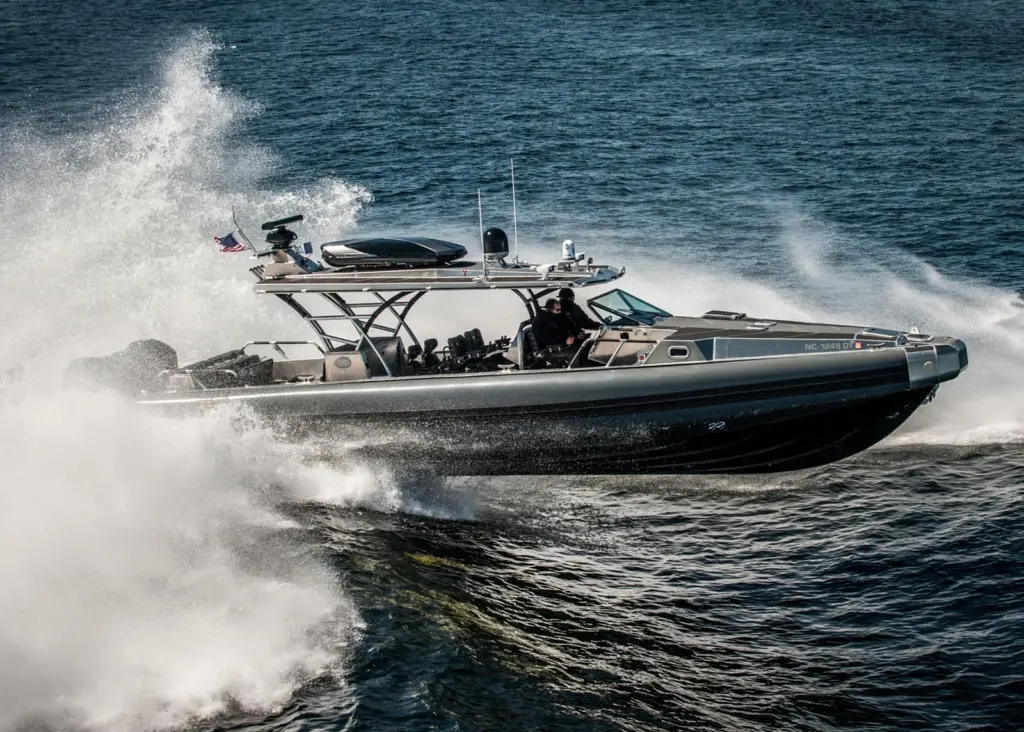
Operating fast craft close to coastlines places a high workload on the driver and navigator. They have to work as a team to avoid shallow areas, natural features, energy platforms and other vessel traffic. These tasks are made more difficult by poor weather and adverse sea conditions
The introduction to DYNAV included a demonstration utilising three separate full bridge simulators. These simulators are monitored from a control centre. Each bridge can accommodate helmsman, navigator, commander, communications plus supporting crew in a fully equipped bridge. These sophisticated simulators deliver a 180° external view with the ability to alter sea conditions, visibility and day/night for each scenario.
DYNAV Manager attendees were divided into groups then assigned a bridge simulator. This highlighted fundamental differences between pre-planned conventional ‘ship’ navigation and the rapidly changing situations in ‘high speed craft’ operations. Conventional navigation scenarios included planned port entry that commences with pilot vessel rendezvous at a known time and defined position. In this situation the navigation is essentially a countdown of timing and course changes to an expected outcome. Each group then ran a simulated SAR mission with a rapidly evolving rescue scenario set in the challenging environment of the Swedish archipelago.
Many professional planing craft operations, ranging from wind farm support to law enforcement, are dynamic situations that require appropriate responses, often due to the changing nature of the task. As maritime operations become more challenging, professional crews need to perform their tasks with spare cognitive capacity to avoid incidents and their consequences. Riding on the knife edge of success or failure is unacceptable at sea.
The DYNAV dynamic navigation system recognises that with increasing boat speed ‘navigation’ is an ever increasing challenge that has to be met in order to maintain an acceptable level of safety for crew and vessel.
For further information www.frc-int.com
Related Articles
 ACCESSORIES & EQUIPMENT
 ACCESSORIES & EQUIPMENT
 ACCESSORIES & EQUIPMENT