![MaritimeJournal[Seawork]](https://www.maritimejournal.com/wp-content/uploads/2026/09/MaritimeJournalSeawork.svg)






Trinity House lights up maritime safety
A light float, operated by Trinity House, has been equipped with a methanol-powered fuel cell as part of a navaids trial to ensure they are kept fully operational prior to drydock and repair.
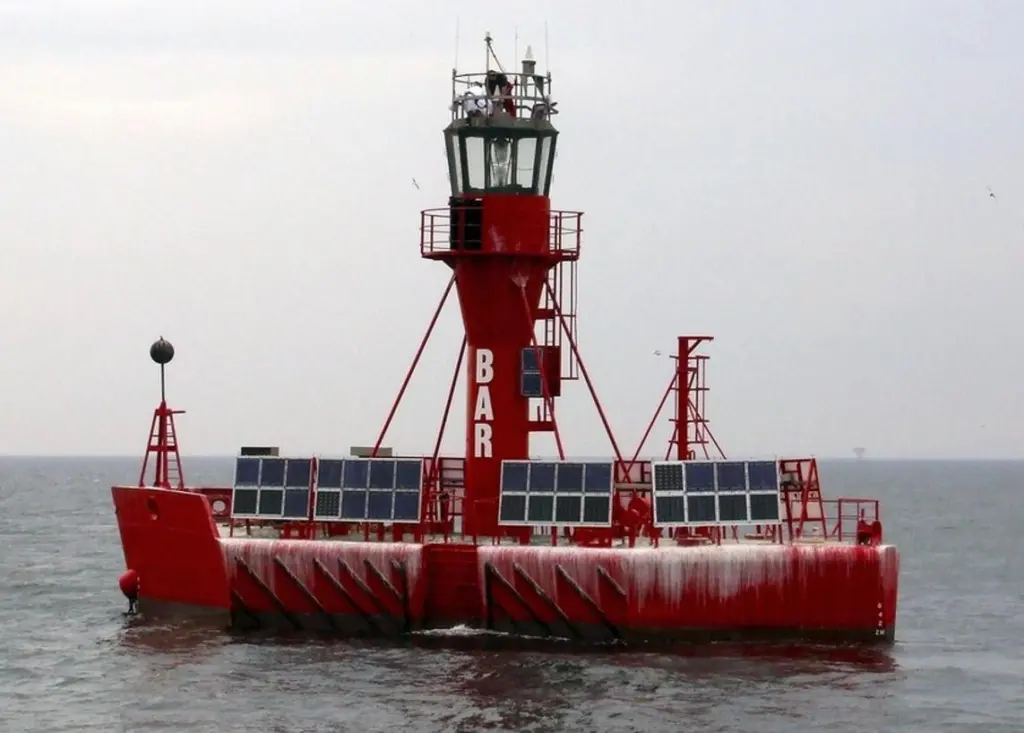
The Light Float 2 (Bar) is an unmanned boat-like structure located on the Liverpool bar at the start of the Mersey.
“We were alerted to a gradual drop in the batteries’ capacity, indicating that they were probably coming to the end of their life and that the solar PV panels fitted to the light float simply weren’t providing enough charge during the winter months. We immediately arranged to have the batteries re-charged using a portable generator but this proved inefficient, time-consuming and costly,” said Peter Dobson, engineering manager, Trinity House.
Supplied by Fuel Cell Systems, the EFOY Pro 2400 Duo (110W) fuel cell ensure the light float’s batteries are kept fully charged. This provides a constant source of power for the navaids – a main light with a 12 nautical mile range and a radar transponder.
“In order to meet the standards set by the International Association of Lighthouse Authorities (IALA) of 99.8% availability, for category 1 ATONs, we required a remote power solution that would allow the light float to operate effectively before its scheduled summer maintenance in dry dock following six years at sea,” Mr Dobson explained.
“Should the batteries fail this would result in us having to divert one of our vessels from its routine buoy tender maintenance schedule to recharge the batteries in situ which could take two to three days. However, the fuel cell operated flawlessly, keeping the batteries in a nominal charged state, allowing the ATONs to be kept operational,” he added.
Light floats are often used in water where strong streams or currents occur, or if greater elevation of the light source is required to aid visibility for mariners.
Now, Trinity House will carry out further fuel cell trials, and if successful, will look integrating the technology, where possible, as part of the hybrid energy mix to power additional navaids throughout England, Wales and the Channel Islands.
By Rachael Doyle
Related Articles
 ACCESSORIES & EQUIPMENT
 ACCESSORIES & EQUIPMENT
 ACCESSORIES & EQUIPMENT