![MaritimeJournal[Seawork]](https://www.maritimejournal.com/wp-content/uploads/2026/09/MaritimeJournalSeawork.svg)


Learning the ropes in a digital age: Inside Multraship’s tug training
 Part of our special report
Tugs, Towing and Salvage – Tackling New Challenges · September 2026
All 7 features
Part of our special report
Tugs, Towing and Salvage – Tackling New Challenges · September 2026
All 7 features
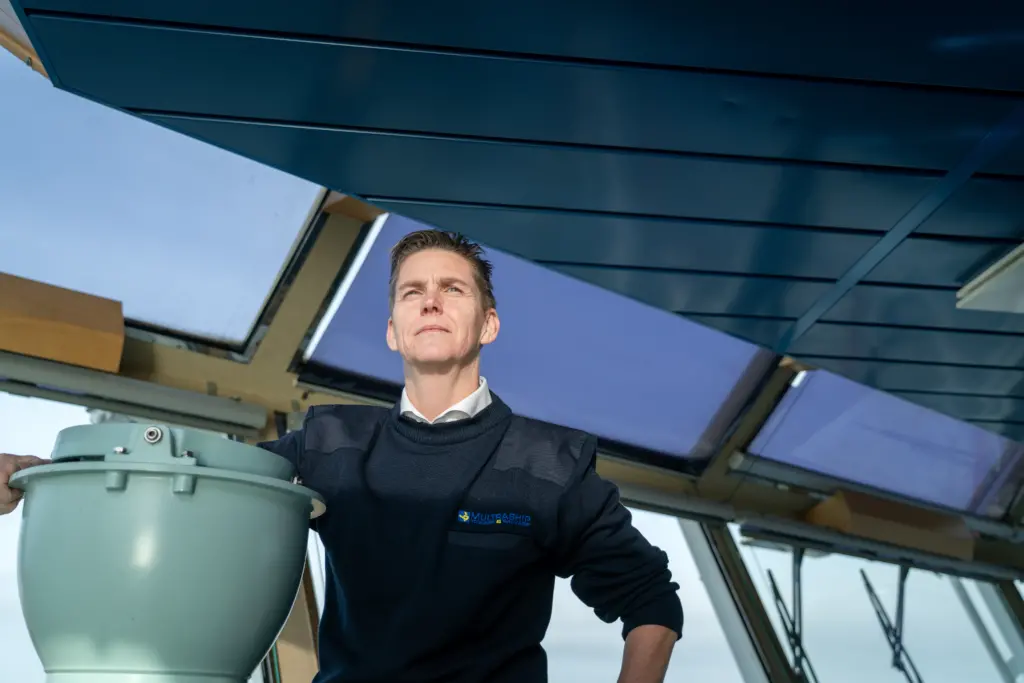
As the role of tug crews and masters evolves with more challenging and complex operations, the next generation of seafarers are using modern digital simulation techniques in combination with at-sea experience to build their competence levels quickly and effectively.
Competence has always been one of the foundations of our industry. It underpins safe operations, gives clients confidence and helps maintain high standards across every operation. Traditionally, it has also been something we have found relatively straightforward to define. Sea time, qualifications, practical experience and technical ability have long been the benchmarks by which capable tug professionals are judged.
Those measures remain just as important today. Without sound technical knowledge and practical experience, there is no substitute for the judgement that comes from working at sea and learning from experienced colleagues. As I look at how our industry has changed over the past 20 years, it is important to ensure that our definition of competence evolves alongside it.
The role of a tug master has changed considerably over the past two decades. Modern tugboats are more sophisticated, their propulsion systems are increasingly advanced and the operations they support have reached new levels of complexity.
Working at Multraship, which has been providing everything from harbour towage operations to supporting large-scale marine and offshore infrastructure projects, such as the Fehmarnbelt Tunnel in Denmark and the Princess Elisabeth Island in the North Sea, I’ve realised that effective vessel handling is only one part of becoming an effective tug master.
The ability to remain calm under pressure, communicate clearly, make sound decisions when circumstances change unexpectedly and lead a crew with confidence is just as important as technical competence during complex maritime operations. Technical expertise forms the foundation of safe and effective vessel handling, while leadership and judgement determine how that expertise is applied when situations develop in unexpected ways. A successful operation depends on the combination of both. Qualifications and training records demonstrate professional capability, but it is often the ability to translate knowledge into decisive action, while maintaining the trust and focus of the crew, that distinguishes good operators from exceptional ones.
Passing experience between generations
It can be assumed that the most experienced tug master will naturally become the best mentor for the next generation. Sometimes that is true, but not always. The ability to explain complex decisions, encourage confidence, provide constructive feedback and help someone develop their own judgement is a skill in its own right. Developing the next generation of tug masters requires more than passing on technical knowledge. It demands experienced people who are willing to coach, challenge and support those coming through the industry.
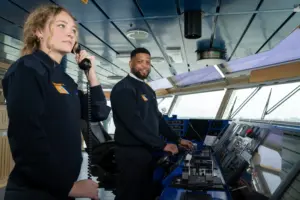
This matters even more today because the people joining our profession will bring different strengths from those who came before them.
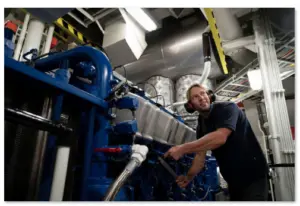
When I first entered the industry, engineering knowledge was largely mechanical. Today, modern engines and onboard systems for tug and salvage vessels rely heavily on electronics, software and digital diagnostics. A good engineer still needs a strong understanding of machinery, but they also need to be comfortable working with technology that evolves throughout their career.
At Multraship, we are seeing that many of our younger recruits have grown up using digital technology and approach new systems with more confidence. They bring fresh perspectives that complement the experience of more established colleagues.
Equally, no amount of digital confidence can replace the judgement that comes from years of practical experience. Understanding how a tug behaves in changing conditions, reading a situation before it develops or knowing when something does not feel quite right are qualities that can only be developed over time.
The future of our industry does not lie with one generation or another, but in the collaboration between them. Fresh perspectives, digital skills, experience and judgement all have a role to play. Together, they create stronger teams and better outcomes.
Simulation as a learning environment
Training has an increasingly important role to play, but perhaps not for the reasons we often discuss. When people talk about digital training simulations, they often start with the technology. I think that’s the least interesting part of the discussion.
A modern simulator is simply another learning environment. Its real value lies in the opportunity it creates for discussion, reflection and coaching. That is also the thinking behind Multraship’s investment in its new Simulator and Training Centre as it creates a space where crews can safely explore complex operational scenarios, challenge decisions and learn from experienced trainers before applying those lessons at sea. Experienced trainers can pause a scenario, explore why a particular decision was made, consider alternative approaches and encourage trainees to think critically before repeating the exercise in a safe and supportive environment. In many respects, the learning happens after the exercise, when different decisions are explored and challenged. That is where judgement is developed.
None of this diminishes the importance of practical experience. There is no substitute for working onboard a modern tug vessel, learning from experienced crews and operating in real conditions. The real strength lies in combining simulator training with onboard learning. Each reinforces the other, helping mariners develop the confidence, judgement and decision-making skills required for increasingly complex operations.
Preparing for the unexpected
The objective isn’t to replace experience at sea. It’s to ensure that when someone joins an operation, they’ve already thought through challenging situations, discussed different approaches and developed a better understanding of how they might respond when circumstances change.
It also creates opportunities to rehearse situations that crews may encounter only occasionally during their careers. Some of the most demanding manoeuvres are, fortunately, rare, but that also means there are fewer opportunities to learn from direct experience. Simulation allows those scenarios to be practised repeatedly in a realistic but controlled environment, giving crews the chance to refine their judgement before they encounter them in real operations.
The strongest safety cultures I have seen are those where people feel able to ask questions, discuss mistakes openly and learn from one another. Organisations often talk about continuous improvement, but that can only happen when people feel comfortable admitting they do not have all the answers. Developing competence is not simply about teaching someone how to complete a manoeuvre correctly. It is about creating an environment where they continue learning throughout their career.
That’s why I believe we need to broaden the way we think about training competence. Experience at sea, professional qualifications and technical expertise will always remain fundamental, but they should not be the only measures by which we judge our people. Leadership, communication, decision making, curiosity and a willingness to keep learning have become just as important in today’s tug industry.
The future of our industry depends on developing people who can think critically, lead with confidence and are always learning.

Related Articles
 SPECIAL REPORTS
 SPECIAL REPORTS
 SPECIAL REPORTS