
World’s biggest wind farm poised to request fourth deadline extension
Continuing technical issues at Dogger Bank wind farm are seeing the project poised to apply for a fourth extension to its completion deadline.
Dogger Bank A’s 1.2GW capacity was expected to be substantially available by the end of the first quarter of 2027, with the remaining capacity expected during final commissioning by the end of the third quarter.
Yet the reality is that Dogger Bank A, off the northeast English coast, is still grappling with turbine problems, repair work and commissioning delays, leaving the project facing another extension to its deadline.
In its November 2026 interim results, project partner SSE confirmed that additional work was needed on some turbines installed during the initial Dogger Bank A installation.
The UK government’s latest documentation on Dogger Bank A identifies continuing technical issues, including major component exchanges, turbine remediation work, resource constraints and vessel availability. These have contributed to delays in commissioning and the transfer of offshore transmission assets.
The government has proposed extending the project’s transmission licence exemption until April 2027 to allow further time for the outstanding work.
“Dogger Bank A Offshore Wind Farm has previously experienced unforeseen and significant technical issues linked to blade failures,” the UK government says. “In 2024, DBA suffered two separate blade failures which slowed construction while investigations were undertaken to identify the cause of the faults. A separate blade failure at a wind farm in the United States using the same type of wind turbine as DBA also paused turbine installation at DBA while a root-cause investigation was undertaken.”
The scale of the financial exposure facing the turbine manufacturer was already evident in its 2024 annual report, when GE Vernova recorded $900 million in incremental contract losses across two offshore wind projects during the third and fourth quarters of 2024.
Contractor opportunity
For specialist contractors, however, the additional engineering requirements represent potential commercial opportunities.
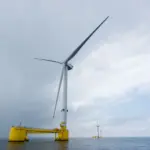
Offshore services company Ventum, for example, confirms it has supplied technicians to support GE Vernova’s generator coil exchange work on Haliade-X turbines at the project.
Major component replacement and turbine remediation will need specialist lifting and installation equipment, offshore support vessels, access systems, rope-access technicians, electrical engineers and logistics providers.
The scale of the potential market is also attracting attention elsewhere in the industry. Great British Energy announced in September 2026 that it was exploring the development of a UK Major Component Replacement (MCR) Hub to support floating offshore wind. Its work recognises that replacing major turbine components requires specialist equipment and infrastructure, and that accessible maintenance and repair capabilities will become increasingly important as the sector expands.
Accessing and replacing major components is an issue across the entire offshore wind industry, and whether the supply chain can supply what’s needed is a growing question.
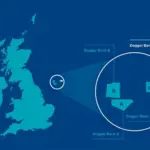
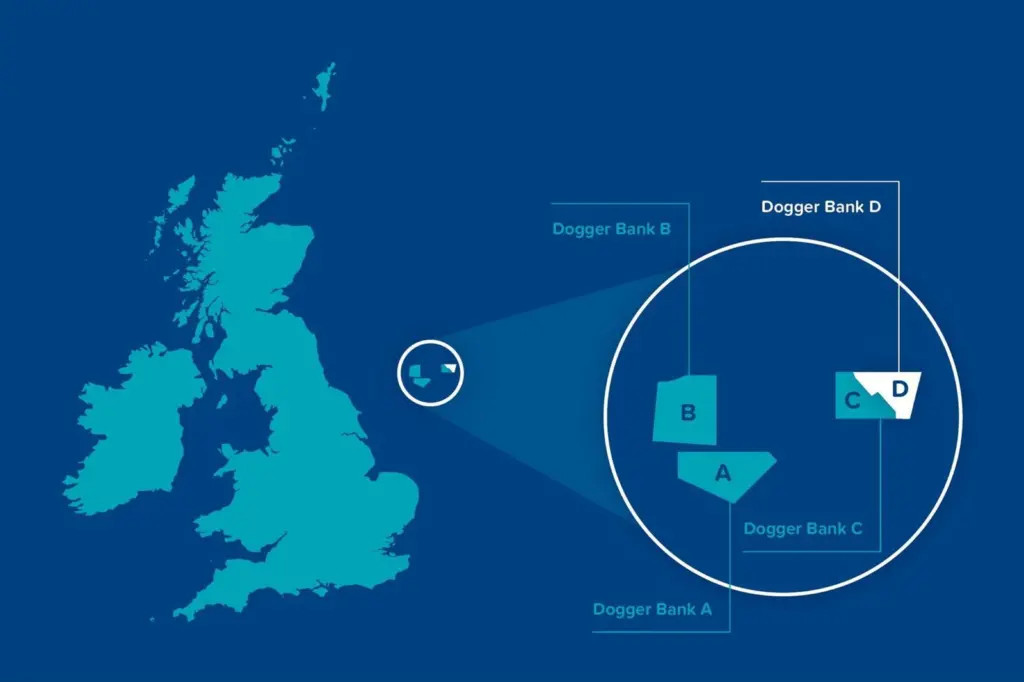
Dogger Bank will be the world’s largest offshore wind farm when completed. It comprises three phases – Dogger Bank A, B and C – each with a generation capacity of 1.2GW, giving a combined capacity of 3.6GW.
It is being developed by a joint venture between SSE Renewables (40%), Equinor (40%) and Vårgrønn (20%), with SSE leading construction and Equinor taking responsibility for operations.
Related Articles
 MARINE RENEWABLES
 VESSELS
 AUTONOMOUS VESSELS & TECHNOLOGY