


Automated dock management cuts costs
Marine terminal operators must optimize dock usage and cargo transportation efficiency in a complex environment involving many oceangoing and inland vessels and a large number of activities, writes Dean Rosenberg, president of PortVision.
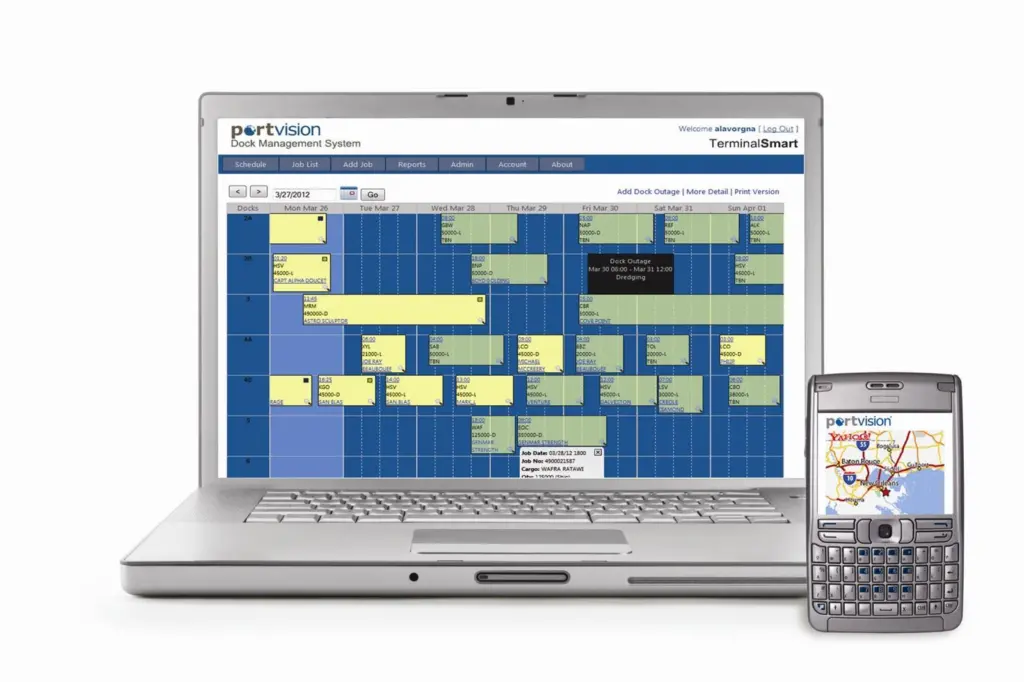
Dock management has traditionally been a paper and spreadsheet based operation, spanning job scheduling, real-time operations, activity logging and demurrage analysis and reporting. Now, these operations can be consolidated into one automated, end to end marine terminal optimization solution that integrates dock management with AIS based vessel tracking, management and analysis.
The three key components of an automated dock management system are collaborative job scheduling, activity logging and back-end reporting.
Collaborative job scheduling provides the shared ability to create jobs and view details. Many people can access the same data, from the corporate office negotiating a charter contract to a refinery team managing operations. Collaborative job scheduling also eliminates the risk of actions or decisions based on inaccurate data. Everyone has identical information about actual events, from ‘to be nominated’ (TBN) place holders to formal nomination, notice of readiness (NOR) tender, and real-time events.
The activity logging function should include the ability to capture vessel ETAs, arrivals, and activities including ‘all fast’, ‘transfer started and stopped’, ‘surveyor called’, and ‘inspection performed’. The system must be flexible enough to support real life business processes. Workflow can be further automated through email notification to key personnel, vendors, and other stakeholders.
Finally, the system’s back-end reporting function should include key features that streamline reporting. One of the most cumbersome tasks typically has been demurrage forecasting and reporting.
Most terminal operations manually enter ‘Statement of Facts’ (SOF) data about dock and vessel activities, which an agent signs on behalf of the vessel owner and combines with information from the captain’s log to provide to the customer. An automated system captures these delays with a specific dollar dimension. For instance, every time pumping stops, users can log a delay code and reporting data. At the job level, these systems provide parameters for demurrage calculations including the approved allowance and billing rate. This enables customers to proactively predict and validate any impact on the balance sheet and correlate the necessary data related to potential disputes.
Another important back end reporting function is detailed dock performance analysis. A comprehensive dock management system should allow users to derive intelligence from captured activity logging data. In addition to providing bigger picture, operation wide utilization reporting and analysis that would be difficult, if not impossible, with manual systems, this also enables users to perform multi-dimensional analyses such as the time required for certain tasks when performed across various cargo types.
Automated dock management systems deliver advantages throughout the operational chain of command. Down on the dock, operators have an easy to use, web based system for scheduling all dock activities and cargo transfer operations, while reducing the potential for errors associated with traditional manual/paper systems. And at the corporate office, management has real-time visibility to all dock activities and how they affect marine operations and overall terminal and plant efficiency and profitability. They also can better assess and reduce risk through real-time monitoring of dock utilization, vendor performance and demurrage dynamics, and root cause analyses of delays.