
Electric drive system for azimuth thrusters
On display at Europort this year, Torqeedo and Italdraghe have jointly developed an outboard, retractable electric propulsion system for commercial vessels in inland and urban waterways.
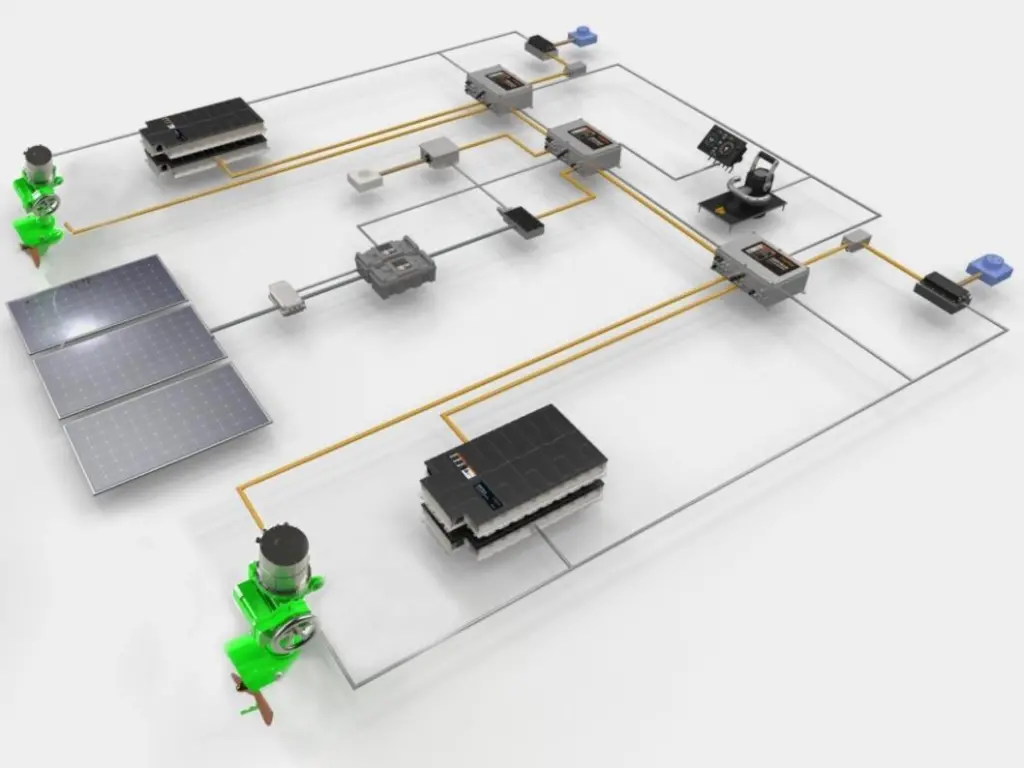
The system combines Torqeedo’s Deep Blue high-voltage electric power system and Italdraghe’s steerable azimuth thrusters. It is designed to provide emission-free power and directional thrust ideal for manoeuvring on environmentally sensitive waterways.
Torqeedo’s award-winning and highly efficient Deep Blue system, integrated with Italdraghe’s azimuth thrusters, delivers continuous power of 50kW and peak power of 65kW. The propellers can rotate up to 360° degrees, and the drive units have a 600mm depth regulation for operation in shallow water and can be tilted up to 60° degrees for maintenance without the need for deinstallation from the boat.
Torqeedo is supplying a 50kW Deep Blue electric motor/inverter, which integrates with the Italdraghe thruster. The Torqeedo system also includes one or more Deep Blue high-capacity lithium-ion batteries, shore power charger, system management unit for energy and power management and a touch-screen display and throttle.
The Deep Blue lithium-ion batteries, depending on the number installed, can provide 80kWh to 1 MWh output. They meet IEC 62619 and IEC 62620 requirements, making them suitable for use in EU inland vessels subject to ES-TRIN (European Standard laying down Technical Requirements for Inland Navigation vessels) standards. A DNV-GL type-approved battery variant is also available for offshore applications.
“There are many commercial applications that can be electrified very economically by using this concept. Our focus is to keep the total cost of ownership low by offering a solution on a system level, including design-in, service, maintenance and remote diagnostics. This makes electrification as easy and safe as possible for the shipyard and the fleet operator,” explains Matthias Schubert, director project sales for Torqeedo.
Schubert observed that most commercial fleets in European cities are powered by decades-old marine diesel engines. Their CO2 emissions are not in line with the international goals to reduce global warming, and human health is also at risk. Electrification of commercial fleets in inner-city waterways can be accomplished easily and cost-effectively, since vessel speeds are limited – resulting in lower battery discharge rates and they typically operate only 8 to 14 hours per day, leaving plenty of time for overnight charging.