





Drones tested in real-life search and rescue scenarios
The UK’s Royal National Lifeboat Institution (RNLI) and the Maritime & Coastguard Agency (MCA) have run a special event to test the use of drones in a variety of real-life search and rescue scenarios.
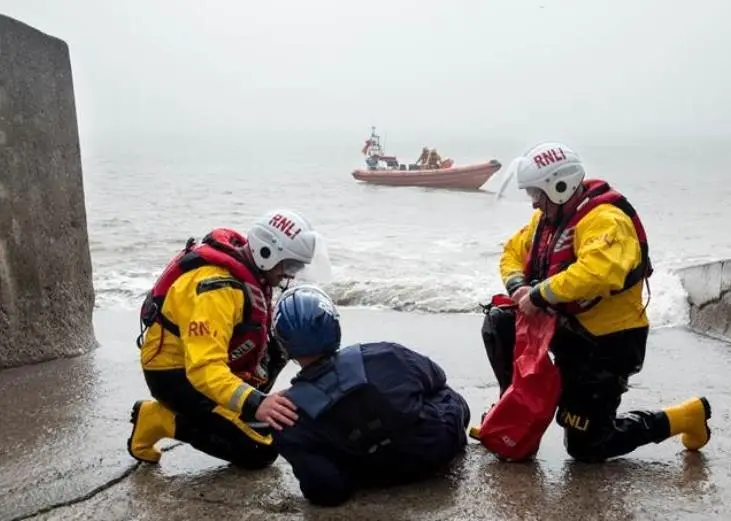
The week-long event took place along a stretch of coastline at St Athan, Wales, with a selection of drones being used in four different search and rescue scenarios to explore how they could be used to help save lives in the future.
The scenarios tested are a shoreline search for a casualty, an offshore search for multiple casualties in the sea, a mud rescue and a communications blackspot where a drone is required to relay information between rescue teams and a casualty on a cliff.
Particular attention has been paid to how drones can work together with existing search and rescue teams and assets, with RNLI lifeboats and an HM Coastguard search and rescue helicopter featuring in rescue scenarios, to enhance lifesaving capability and reduce risk to rescue teams.
Hannah Nobbs, from the RNLI’s Innovation Team, said: “The aim of this event is to provide realistic scenarios and an authentic operating environment to explore the use of drones in multi-agency operations. We hope this will allow us to understand the benefits and limitations of their use in search and rescue activity.
“This week-long test event is the culmination of around two years of work, where we’ve explored the use of drones in collaboration with key search and rescue partners and industry experts.
Phil Hanson, Aviation Technical Assurance Manager at the MCA, said: “It’s too early to comment on how we will move forward from the trials but one thing we all agree on is that drones cannot replace helicopters, coastguard rescue teams or lifeboats. However, it is entirely possible that they could be an additional tool to use in search and rescue.”
A variety of drones have been used in the scenarios, including rotary platforms that offer stability for electro-optic and thermal sensor payloads, a tethered drone and fixed wing platforms that are runway or catapult launched. Participating industry partners included Lockheed Martin UK, Scisys and the University of Bath.
By Jake Frith
Related Articles
 ACCESSORIES & EQUIPMENT
 ACCESSORIES & EQUIPMENT
 OTHER NEWS