





Ørsted to develop North English port as wind hub
The northern English Port of Tyne says Danish energy giant Ørsted will develop up to thousands of square metres which will be fundamental in building Hornsea 3, part of the world’s largest offshore wind farm.
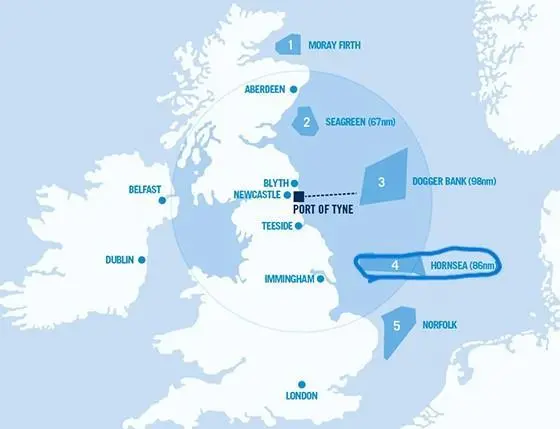
The announcement comes just a couple of weeks after the port said £150 million (€173 million) would be spent on upgrades support the offshore wind industry and other manufacturing, but that will be on the north side of the River Tyne whereas the Ørsted development will take place on the north side.
“Ørsted will use the site to marshal secondary steel components for the project before each unit is loaded onto the Wind Orca, a state-of-the-art jack-up vessel owned by Cadeler, ahead of setting off to the Hornsea 3 site,” said a spokesperson.
Hornsea 3 is costing £8.5 billion (€9.7 billion) to build, and is predicted to generate enough electricity to power more than 3 million homes, according to Ørsted.
The Port of Tyne is one of the UK’s biggest deep-sea ports, with 13m deep berths that will be essential for the installation of 197 wind turbines 160km off the Yorkshire coast.
Severfield, a UK structural steel contractor, and Smulders, a multidisciplinary construction firm located on the River Tyne, will fabricate and supply secondary steel components.
“Ørsted’s decision to base its marshalling operations at the Port of Tyne marks another significant milestone for the North East,” said Matt Beeton, chief executive officer at the Port of Tyne. “It represents a clear vote of confidence in the infrastructure, skills and capabilities we have developed at the Tyne Clean Energy Park.”
“Ørsted’s vision is to create a world that runs entirely on green energy and the dedication of skilled workers all over the UK, including at the Port of Tyne, will help make that happen,” said Senior Project Director, Hornsea 3 at Ørsted.
Related Articles
 ELECTRICAL SYSTEMS
 ENVIRONMENT
 ENVIRONMENT