



Alternative fuels: A conference report
A stand-out moment of the Seawork 2025 conference agenda this year was the second day session on Future fuels – Real world applications and industry learnings.
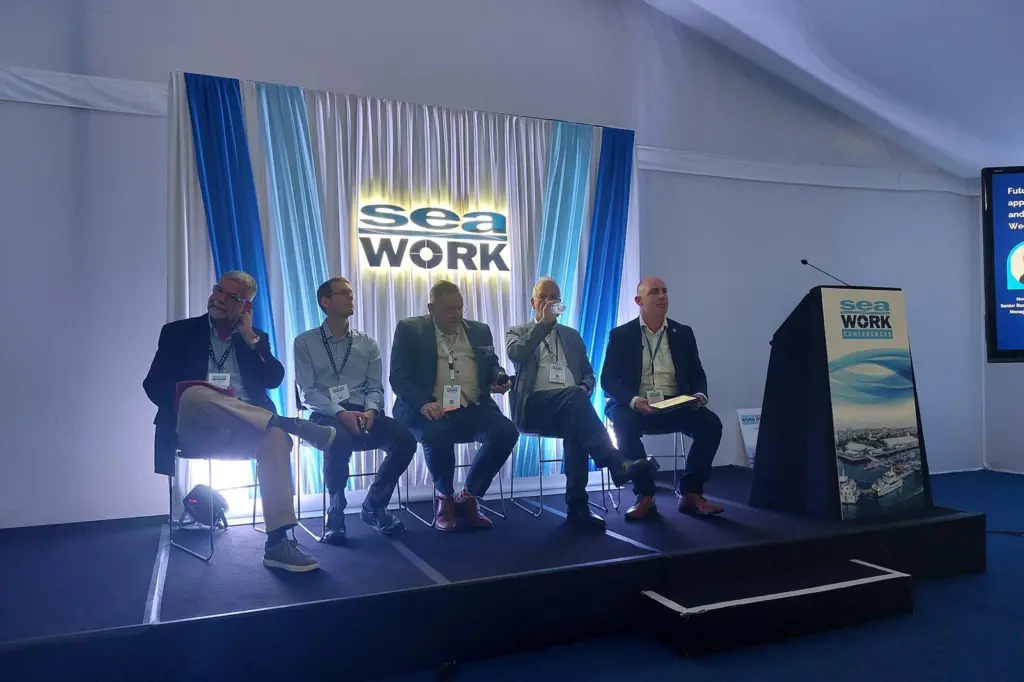
The session kicked off with looking at the definition of ‘future fuels’, which aren’t really future at all as they’re here and now. This session’s aim was to help operators work out which of these alternatives are best suited for their own operations going forward.
As moderator Noel Tomlinson, senior business development manager, Commercial Maritime at BMT, said, “This session is about potential applications and how they work in the real world. We’re looking to work out where the blanks are and how we as a sector can move forward with confidence.”
The safety aspect
John Booth, Future Propulsion & Fuel Safety team leader at the Maritime & Coastguard Agency, took delegates through one of the main challenges – making sure regulation keeps in step with the different types of system available and their environmental effects. This is mainly by way of the IMO’s IGF Code and MSC Circulars. Booth said the UK’s new Maritime Decarbonisation Strategy will help bring policy more into line with regulation too.
Vessel electrification is mainly regulated by the third edition of the Workboat Code, which tackles lithium-ion batteries and alternative fuels.
But when it comes to mitigating against risk (such as thermal runaway), storage and life cycle issues of batteries, Booth said there was more work to be done.
Booth touched on the challenges with each alternative fuel, ie hydrogen, which is highly flammable and ammonia, which is of course toxic.
“But they can be made safe as long as they are supported by regulation, safety standards, infrastructure and maintenance,” he said.
Hydrogen in action
Bert de Ruiter, commercial manager Work Boats at the Jifmar Group, gave a key case study on the operator’s Coastal Liberty Offshore Support Vessel (OSV), which runs on hydrogen fuel cells.
In late February 2024, the refitted OSV received class certification by DNV for its hydrogen system on board, engineered by eCap Marine and contracted by Offshore Service Gesellschaft.
The green hydrogen for the installed fuel cells is produced locally and sustainably, using offshore wind power on an electrolyser hydrogen plant a few kilometres from the vessel’s berth at Cuxhaven Port. This was installed simultaneously with the fuel cell project.
One of the main learnings from the project, according to de Ruiter, was surrounding project time plans and making sure a generous contingency budget is factored in.
“In addition, the purity of H2 is a concern, even the slightest impurity will mean a disturbance to operations,” he said.
De Ruiter pointed out that additional concerns with hydrogen projects should be space constraints for onboard equipment, the need for a redundant power solution and the vessel range – larger H2 storage will be needed for longer voyages.
This is not a project that can be done on a short-term contract either – it ideally needs to be done on a contract that is running for at least 10 years, he said.
“It’s not a project you can do on your own, it needs to have full input from the owner/operator, vessel charterer and the end user, who should all be willing to invest. It’s no secret that very few clients are willing to pay for these projects, but ours was.”
Electrification focus
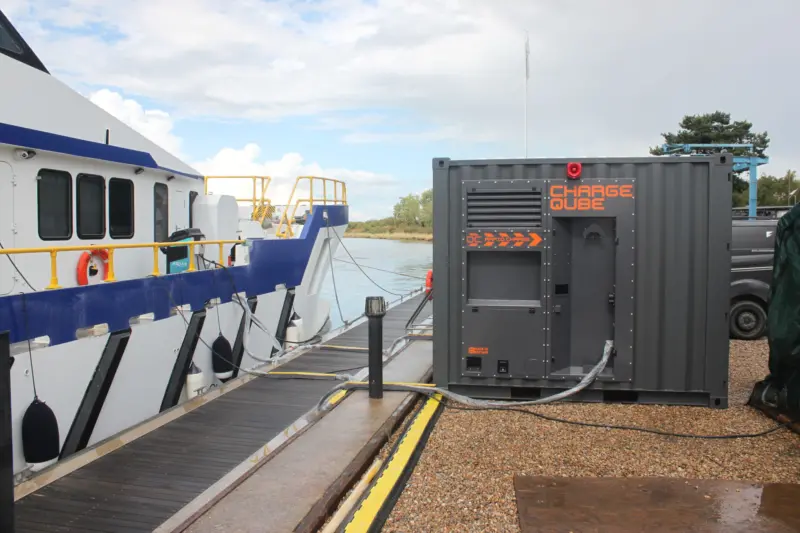
Steve Bruce, global OEM sales director at ePropulsion, said that for small to medium workboats electrification was the best choice at present.
“Alternative fuels have got a role to play in the transition as we enter a new chapter for marine propulsion,” he said.
ePropulsion started out in the leisure sector back in 2012 with just one 1KW outboard.
The company has grown exponentially since then and a large proportion of its business is now in the commercial sector – some of its key projects include fitting an H-Series 60kW inboard to the Thames Marine Services Albert workboat and the newest Bleu Seine waterways cruiser, which is set for a January 2026 launch.
Methanol concept
John Buckingham, chief mechanical engineer at BMT, introduced the company’s methanol dual fuel concept for a crew transfer vessel (CTV).
“The energy transition for small vessels is challenging: where space constraints are a key driver, efficiency is key,” he said.
When it comes to green methanol, the energy density of the fuel, new equipment and gaps in the supply chain are the key challenges to widespread adoption.
“Hybrid is slowly becoming baseline standard for CTVs, but economic barriers remain the greatest blocker for change,” he said.
Buckingham said there were projects trying to address supply issues such as the Cromarty Clean Fuels Project in Scotland.
He also spoke about the the benefits of green methanol, which is a liquid at ambient temperatures with a larger range and better density than other alternatives.
But one of its key considerations is that it needs more space for storage. The fuel has a flashpoint of 12 degrees and needs more space between storage tanks as an important safety consideration.
The take-homes
Moderator Noel Tomlinson rounded up the session by asking each of the speakers one area of learning from each area.
Steve Bruce said the focus should always be on total cost of ownership, this is why he argued that electrification is the answer commercially.
John Booth said that for him it would be to get everyone in the room, including the right collaborators, and identify the right technology for each operation.
For Bert de Ruiter, the key point would be to make sure that the time and funding was there for a project – any down time costs money.
John Buckingham said his key message was to start early – not only is this a requirement for safety, but also a key consideration for training too.
One of the key questions coming from the audience was about how to educate charterers and end users to come on board with alternative fuel projects.
Bert de Ruiter said that the financial incentive was clear from his project – there was no need to run diesel.
“Luckily we had a charterer who came to us rather than this being an operator-led project – Seawork is an example of a nice platform we can use to help educate charterers that they need to be involved in the cost,” he said.
It remains fact though that there is a reluctance to invest in these capital projects without understanding what the clear return will be.
A point was raised from the audience relating to more subsidies being available and what about tax breaks on profits for alternative fuelled vessels.
The consensus from the speakers was that no one would disagree with a tax break. When it comes to subsidies, they are useful for getting things started, but not for keeping things going.
“There should also be more of an onus on manufacturers so that making the transition can be justified, which will also help drive costs down,” said Steve Bruce. “This shouldn’t be about convincing people to do it because it’s the right thing to do, it should also make sense commercially.”
The session closed noting that incentivisation across the whole value chain was something that needed far more work.
Related Articles
 ELECTRICAL SYSTEMS
 ENVIRONMENT
 ENVIRONMENT