![MaritimeJournal[Seawork]](https://www.maritimejournal.com/wp-content/uploads/2026/09/MaritimeJournalSeawork.svg)


BMT unveils autonomy training platform at OI
BMT has launched a ROC-Sim platform simulator designed to allow operators and developers to test and train on uncrewed maritime systems without putting vessels or personnel in the water.
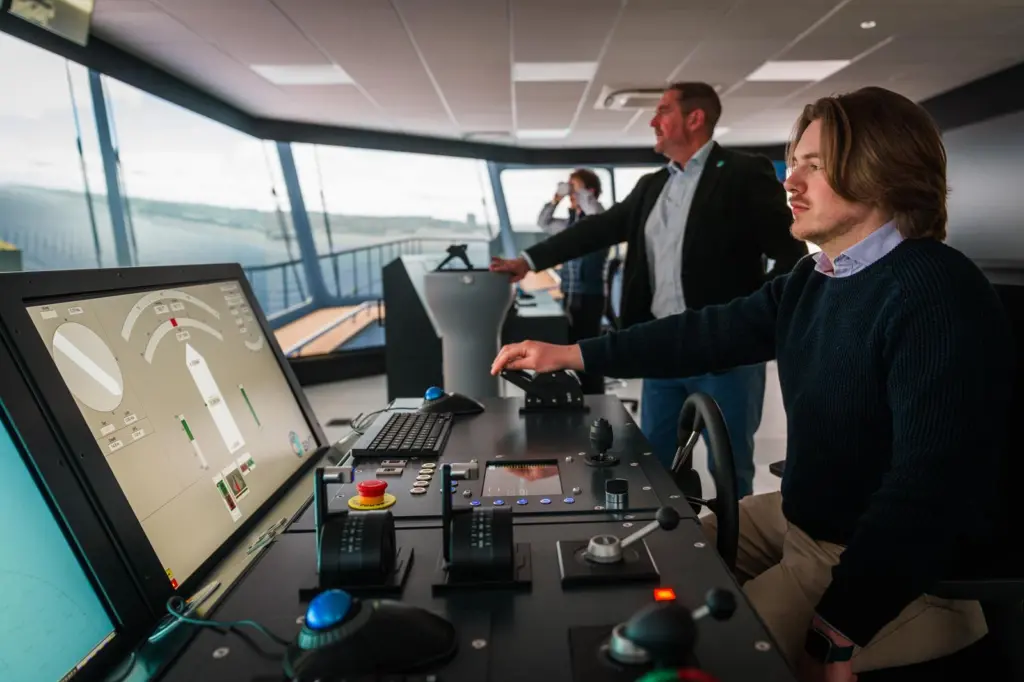
The ROC-Sim, a deployable Remote Operations Centre Simulator, was officially unveiled on the National Centre for Marine Autonomy (NCMA) stand at Oceanology International in London this week.
Sitting within the company’s Digital Innovation and Simulation Centre (DISC) in Fareham, southern England, it is built on BMT’s REMBRANDT high-fidelity simulator and can be integrated into an existing ROC or networked into a federated simulation environment.
The system is designed to replicate a vessel’s handling characteristics in a virtual environment before operators transition to live control. It supports testing of autonomous functions, command and control interfaces, operating procedures and edge cases, and is compatible with any uncrewed surface vessel or third-party command and control system.
“Maritime autonomy is advancing quickly, but confidence only comes when decisions are tested as they will be made, not as we hope they will perform,” said Jesse Loynes, BMT Maritime Autonomous Systems Consultant. “ROC-Sim gives organisations a way to interrogate assumptions, validate operations and build trust across the entire autonomy lifecycle.”
Will Alexander, Head of Maritime Autonomous Systems at BMT, said the platform had been developed to address regulatory and training pressures facing operators making the shift to autonomous systems.
“ROC-Sim has been developed to help operators, regulators and equipment manufacturers build trust in autonomy by testing systems in a cost effective, realistic, repeatable synthetic environment,” he said.
ROC-Sim forms part of BMT’s wider autonomy assurance ecosystem alongside its Synthetic Environment Assurance Services offering.
BMT is a member of the NCMA, which co-hosted the launch at the show.