



MacGregor wins DNV certification for floating-to-floating gangway
MacGregor has secured DNV certification for floating-to-floating personnel transfers using its Horizon motion-compensated gangway, allowing crew to move directly between two independently moving vessels offshore.
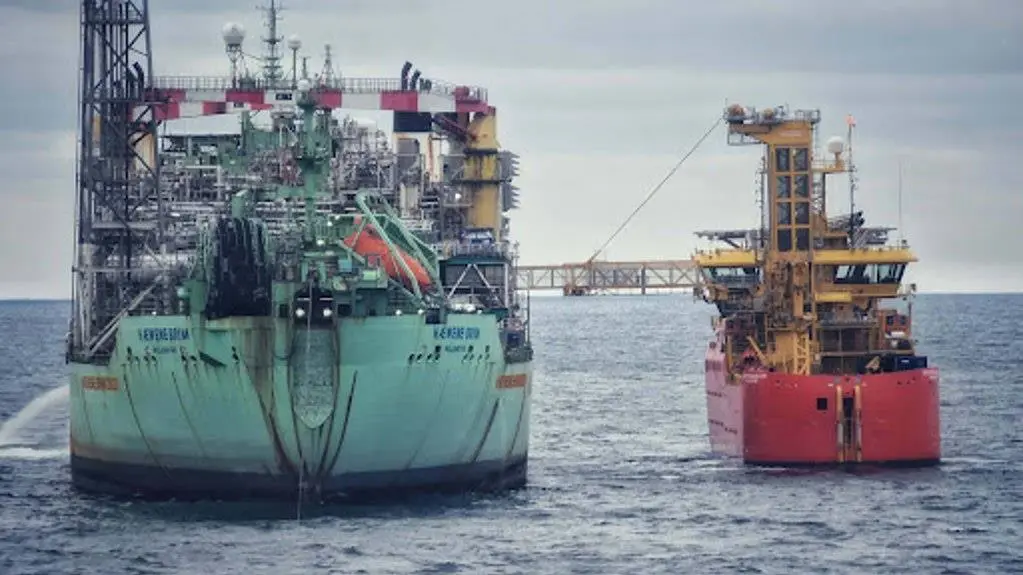
The certification, announced on 24 August, follows a sea acceptance test and was achieved under DNV-ST-0358. MacGregor said the capability is intended for applications including FPSOs, floating rigs, floating wind projects and offshore service vessels, where there may be no fixed structure available for personnel transfer.
The Horizon system uses LiDAR-based relative-motion tracking to measure the movements of the two vessels. A motion-compensation system then adjusts the gangway to maintain the connection between them. MacGregor has developed a dedicated flap at the gangway tip in place of the docking head normally used when connecting to a fixed structure.
“This new capability opens up flexible crewing models for FPSOs and floating facilities, so that crew changes can be carried out at sea, service campaigns don’t need to be routed around port calls, and walk-to-work access between vessels can be based on the field’s schedule,” said Prateek Sadhana, MacGregor product owner, Walk-to-Work Gangways.
“In the renewables sector, this supports the service logistics that floating wind operations demand – where there is no fixed structure to land on whatsoever.”
MacGregor said the floating-to-floating capability is an extension of its existing Horizon platform and can be retrofitted to units already in service.
“Certification matters commercially as well as technically,” Sadhana said. “It gives owners, charterers and insurers an independently verified basis for planning vessel-to-vessel operations.”
The technology is entering a market in which several competitors already offer floating-to-floating capability.
Dutch offshore-access specialist Ampelmann has been developing ship-to-ship operations for several years. Its E-type and E1000 systems are specified for transfers between floating objects, including floating wind turbines. The company says its systems compensate for movement in six degrees of freedom.
Ampelmann says its E1000 can transfer personnel and cargo up to 1,000kg and is designed for vessels above 70m.
Industry data also identifies SMST and Uptime International as significant competitors in the motion-compensated gangway market.
Maritime data and intelligence company Spinergie estimates that SMST, Ampelmann and Uptime account for the majority of installed and upcoming systems, with MacGregor among the newer entrants to the market.