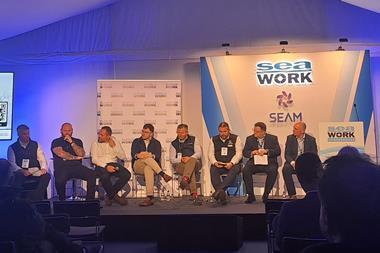


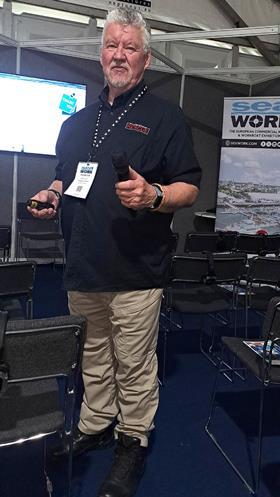
“We are trying to take Search and Rescue into the 21st Century rather than the human eyeball,” the director of the Professional Rescue Academy, Dave Lane, told delegates at a Seawork workshop today.
Dave Lane has organised Floodfighters Conferences for two decades, including at Seawork, which this year also put on a workshop as well as a conference to promote the idea that new technology is a must if we are to expect better outcomes from SAR.
And the top layer of Lane’s multi-layer solution is man’s best friend – the dog, which Lane said can scent a human within up to 500 metres even when the wind was blowing.
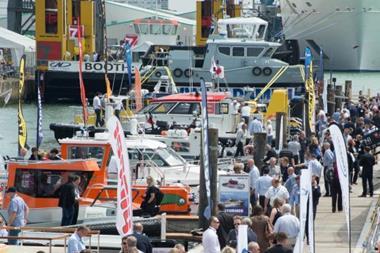
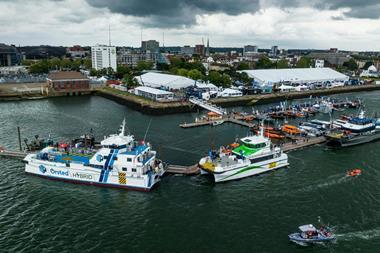
The second layer is the side scan sonar, he said, and the third, the quality of the boats themselves, which are now preferred with a cathedral hull for better stability, such as the Kontra design, which was showcased on the pontoon at Seawork.
With the rapid roll-out of drones, UAVs and ROVs it made sense to incorporate them as a fifth layer within SAR, ’which is very traditional’, Lane said, and often meant lenghty timelines in rescue.
“I think we can improve the timeline to get quicker to the person, find them, recover them and get them to a safe place,” he said. “So we need to review the choice of boats for better outcomes, deploying drones, sonar, ROVs and also specific training.”
Finally, alternative sonar was a crucial layer, Lane said, such as using Aquaeye, a handheld underwater device that can recognise the human shape.
“Even a year ago if someone told me that AI could recognise a human head I wouldn’t have believed it,” said Lane. “But it can, and we should be using this technology to get better outcomes.”
The total number of teams declared to the national flood rescue asset register is now well below 100. Many of these are unpowered boats, so capability has declined as well as overall number.
There are no central funds for research to improve search and rescue capabilities. Technology is changing rapidly, but safer and different power systems; boat designs; sonar for casualty detection; game-changing aerial surface or sub-surface uncrewed vehicles/drones are currently left to private companies.