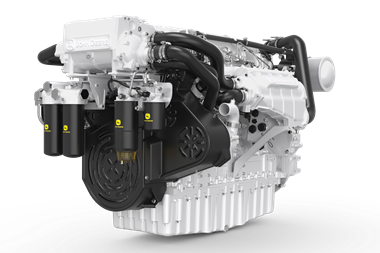
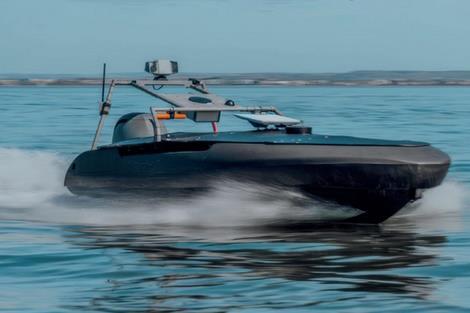


In this video discussing the project at Seawork are, from left, Lloyd’s Register’s Glenn Harris and Steve Windrim, Oliver Cornforth from OS Energy and Nik Lekkas from Ecomar Propulsion.
Unlike most alternative fuel projects, Prince Madog is a retrofit rather than a newbuild. The 30-year-old research vessel, jointly operated by OS Energy and Bangor University, is being fitted with a hydrogen fuel cell and battery-electric propulsion system for zero-emission coastal research. Last month it became one of the first projects to receive Lloyd’s Register’s ShipRight Risk Based Certification (RBC), providing confidence that the design meets class requirements despite the absence of comprehensive hydrogen retrofit rules.
The vessel’s operating profile made hydrogen a natural fit. Bangor University typically conducts predictable eight-hour environmental surveys, allowing battery-electric propulsion supported by hydrogen fuel cells, while conventional propulsion remains available for longer transits.
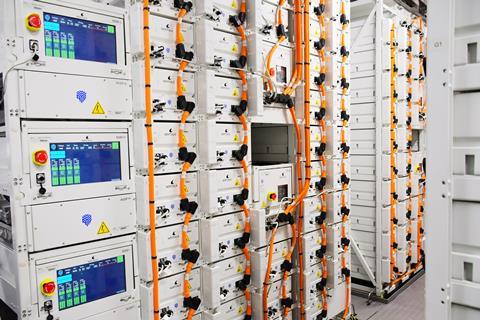
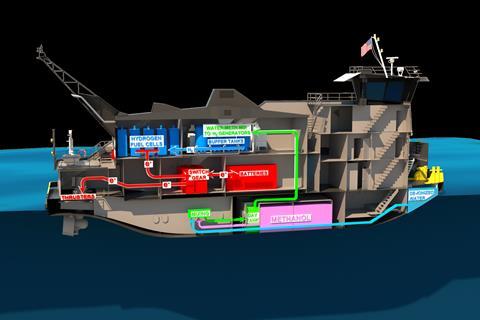
Because prescriptive regulations do not yet exist, the project adopted Lloyd’s Register’s risk-based certification route. The retrofit required extensive structural modifications, including a new battery compartment, high-voltage electrical systems and a dedicated fuel cell room. Ecomar selected compressed gaseous hydrogen over liquid hydrogen because it is more readily available and avoids the complexity of cryogenic storage and boil-off management.
The vessel will carry around 180kg of hydrogen, enough for approximately 24 hours of zero-emission operation—equivalent to three days of survey work.
Despite lingering concerns over hydrogen safety, Lekkas believes robust engineering is the answer. “There are always hazards and risks,” he says. “Those risks can be managed and mitigated if they’re thought about carefully enough.”
Read our full interview with Nik Lekkas here.