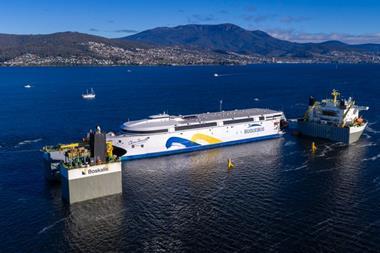



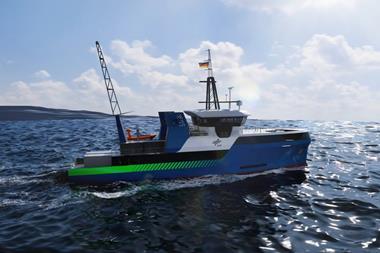
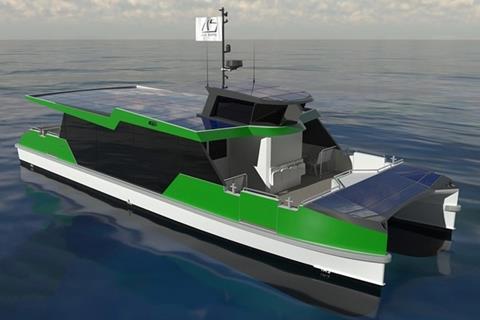
The collaboration marks a major milestone for vessel electrification in Australia’s commercial marine sector, combining Volvo Penta’s IPS450E electric propulsion technology with Aus Ships’ vessel build expertise.
“This project represents a bold step towards low-emission transport in Australia,” said Philippa Wood, head of Volvo Penta, Oceania.
“What we’re doing here goes beyond deploying new technology – it’s about validating a complete, integrated solution that delivers efficiency, reliability and confidence for operators.”
Scalable operations
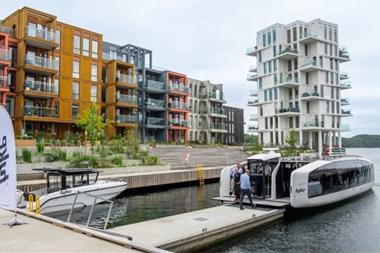
Currently under construction, the demonstrator vessel is designed to validate scalable electric ferry operations and support wider adoption of low-emission marine transport across Australian waterways.
The electric ferry will feature a twin installation of Volvo Penta’s IPS450E electric propulsion system, each delivering 250kW per driveline.
According to the companies, it will become the first vessel globally to enter service with this propulsion configuration.
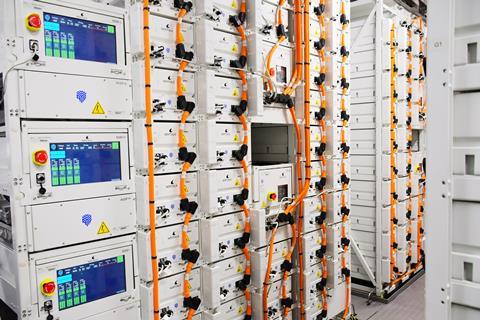
The vessel build also includes a 460kWh onboard battery pack and integrated solar panels to create what the partners describe as a flexible energy ecosystem for commercial operations.
To extend operational capability during the demonstration phase, the vessel will additionally incorporate a Volvo Penta D4 variable-speed genset acting as a range extender.
The project aims to generate operational data covering performance, reliability, service requirements and lifecycle costs as operators increasingly assess the commercial viability of electric propulsion systems.
Optimised efficiency
Ms Wood said the initiative demonstrates how established marine technologies can support the transition toward sustainable transport solutions. She added that Volvo Penta’s Electric IPS platform combines decades of marine propulsion experience with quieter and more efficient electric operations.
The Volvo Penta Electric IPS system integrates propulsion and control into a single platform designed to improve manoeuvrability, operational efficiency and ease of handling.
Built on more than 20 years of IPS development, the system incorporates forward-facing propulsion and Electronic Vessel Control technology to optimise energy consumption and extend operating range.
Additional onboard technologies include 8-inch Type Approved Displays, heavy-duty control levers, joystick docking and Dynamic Positioning System functionality.
Tommy Ericson, director of Aus Ships, said the integration of advanced propulsion and control systems into a commercial passenger vessel represented a significant opportunity for the sector.
“From a ship designer’s and builder’s perspective, integrating this level of propulsion and control capability into a commercial passenger vessel opens new possibilities for both efficiency and passenger experience,” he said.
Aus Ships, known for constructing high-speed catamarans including Brisbane’s CityCats, is supporting the vessel build through its established Australian shipbuilding operations.
The company currently holds fleet replacement contracts extending through 2029, positioning it to support future deployment of electric ferries in the region.
The project has also secured AUD2 million in funding support through the Australia-Singapore Low Emissions Technologies initiative. The programme is funded by the Australian and Singaporean governments and delivered jointly by Australia’s national science agency CSIRO and the Maritime Port Authority of Singapore.
Dr Fiona Scholes, ASLET Program Manager at CSIRO, said demonstration projects remain critical for accelerating maritime decarbonisation and validating emerging technologies in operational environments.
“Marine transport is one of the most challenging sectors to decarbonize, but this project will demonstrate that clean marine transport is possible in Australia,” she said.
Beyond the initial demonstrator, the partners are targeting future deployment of similar electric ferry designs across routes along Australia’s east coast, including Brisbane and Sydney. The long-term objective is to establish a scalable platform capable of supporting broader vessel electrification strategies throughout the region.
Technical progress on the vessel build is already advancing, with Volvo Penta IPS drives delivered and additional electric components expected to arrive in the coming months. Most major hardware is anticipated to be on site by July.
Volvo Penta said the collaboration also supports the company’s wider hybrid and electric marine strategy, with further growth in electrified marine solutions expected through 2026 and 2027.