

One of Turkey’s leading tug builders and fleet owners, Sanmar, is celebrating its golden anniverary this year.
As it coincided nicely with our Special Report, we asked İpek Gürün, Corporate Strategy Director, 10 questions about the company’s strategy, both past and present.
1. Looking back over five decades, what would you say are the two or three defining moments that shaped where Sanmar is today?
Looking back on our 50-year journey, two defining moments stand out.
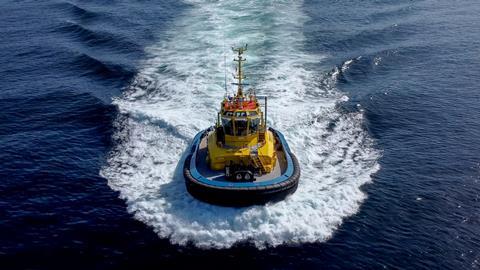
The first was establishing our long-term strategic partnership with Robert Allan Ltd. Through this collaboration, we have had the opportunity to build some of the world’s most successful and widely respected tugboat designs. Having built more than 350 Robert Allan Ltd. designed tugboats is not a coincidence; it is the result of decades of shared engineering expertise, constant learning, innovation, and mutual trust.
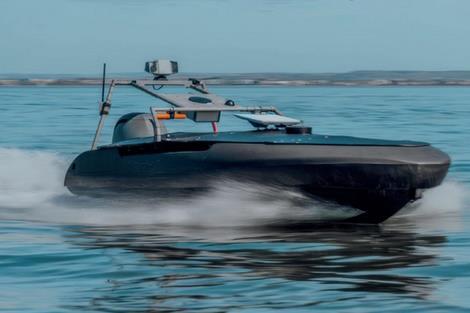
The second defining moment was placing innovation and sustainability at the centre of our business strategy. Throughout our history, Sanmar has often been among the companies shaping the direction of the industry rather than simply following it. From building Turkey’s first privately owned tugboat and Europe’s first Robert Allan-designed tugboat to the world’s first dual-fuel LNG tugboats, the world’s first remotely operated commercial vessel, fully battery-electric tugboats, and, most recently, the world’s first purpose-built dual-fuel methanol escort tugboats, we have consistently pushed boundaries.
2. How has Sanmar’s relationship with Robert Allan Ltd evolved over the years, and how has that partnership shaped your design philosophy?
The relationship goes far beyond that of designer and shipbuilder. For more than three decades, we have worked closely together, evaluating emerging technologies, responding to changing industry requirements and developing solutions for operators around the world.
One principle has consistently guided this partnership: innovation should never exist for its own sake. It must deliver measurable benefits to operators.
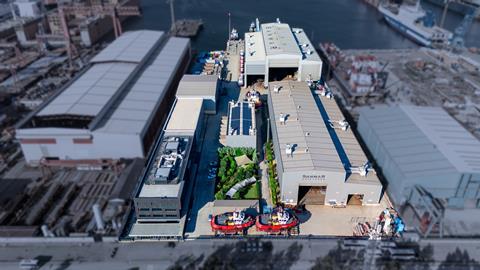
Operating our own fleet provides a unique advantage for a tug builder. With three shipyards and extensive operational knowledge, every project becomes an opportunity to transfer lessons learned into the next generation of tugboat designs.
3. Has the profile of your typical customer changed – geographically, or type of operator you’re building for?
Our customer base is more global than ever before. Today, we work with many of the world’s leading towage operators across Europe, North America, South America, the Middle East and the Asia-Pacific region.
At the same time, customer expectations have evolved significantly. While performance and commercial considerations remain important, operators are increasingly focused on sustainability, emissions reduction, energy efficiency and compliance with future regulations.
4. What have been the toughest periods Sanmar has had to navigate and what did the company learn from them?
The pandemic, global supply chain disruptions and recent wars have been significant challenges for the entire industry. Additionally, as a shipbuilder operating in Turkey, in the past 3 years we have been managing periods of currency volatility and high inflation.
We navigated these challenges by maintaining financial discipline, enhancing operational efficiency, strengthening supply chain resilience, and continuing to invest in innovation.
5. Skilled labour is a perennial issue in shipbuilding. How has Sanmar approached recruitment, training and retention as the workforce has grown past 500 people?
People remain Sanmar’s greatest strength.
One of our biggest advantages is the loyalty and experience of our workforce. Many of our employees have been with the company for +10 years This continuity creates not only expertise but also invaluable institutional knowledge.
While we invest heavily in training and developing the next generation of shipbuilding professionals, we also place great importance on transferring experience from senior employees to younger colleagues.
The success of a tugboat is determined not only by engineering and technology but also by the skill, dedication and experience of the people who build it. Currently we have more than 201 engineers and technical employees.
6. You’ve now completed sea trials on your 14th fully electric tug. What have you learned about the technology, its feasibility and the market’s appetite for it?
The technology has already proven itself. Fully electric tugboats are operating successfully in different climates, ports and operational environments around the world.
The pace of future adoption will depend less on the vessels themselves and more on supporting infrastructure. As charging systems, port electrical networks and regulatory frameworks continue to develop, we expect electric tugboats to become increasingly common.
We do not see electric propulsion as a niche solution. We believe it will become one of the mainstream propulsion options for harbour towage operations.
The biggest challenge is infrastructure. Charging facilities, electrical grid capacity and investment models will play a decisive role in determining the speed of adoption.
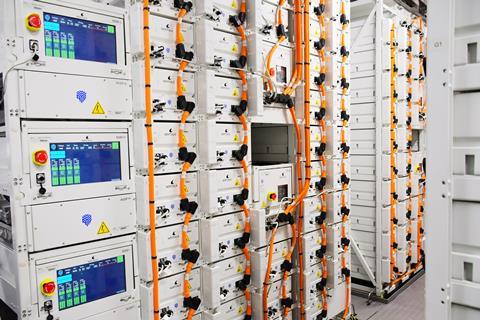
Battery technology continues to improve rapidly, delivering greater efficiency, reliability and energy density with each generation.
As a result, we believe infrastructure development rather than vessel technology will be the primary factor influencing future growth.
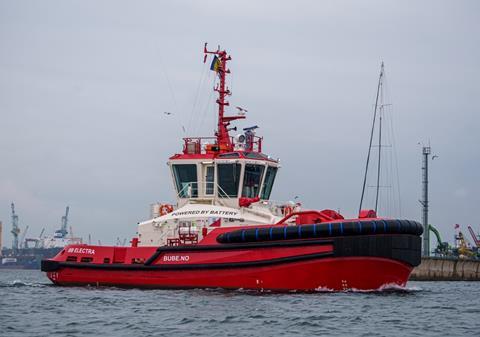
To date, we have built 14 electric tugboats, with the 15th currently under construction. These vessels are operating successfully across Europe, North America and South America.
We have been proud to contribute to several industry milestones, including the first fully electric tugboats for Canada, Norway, Denmark and Chile.
We have also been operating an Electra in our own fleet for the past 1.5 years where more than 75% of all manoeuvres are completed using just battery power.
Our experience has clearly demonstrated that electric propulsion is operationally viable, technically mature and increasingly attractive to operators seeking sustainable solutions. With 15 electric tugboats delivered to date, we have strengthened our position as the world’s leading builder of electric tugboats while maintaining our leadership in the domestic market.
7. Are batteries really green?
No technology is entirely impact-free. The key is to consider the entire lifecycle, from manufacturing and operation to recycling and end-of-life management.
That said, batteries provide one of the most effective pathways currently available for reducing operational emissions, particularly when charged using renewable energy sources.
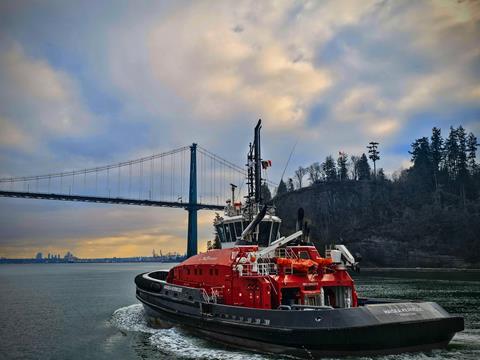
As battery technologies and recycling systems continue to improve, their environmental benefits will become even stronger.
Lets also not forget that when operating an electric tugboat, if you are not manoeuvring, then your total energy consumption is almost nothing (as if the tug is off).
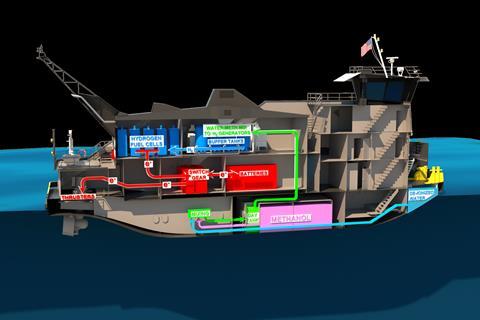
8. Beyond batteries, how is Sanmar thinking about LNG, methanol, hydrogen and ammonia as tug fuels, and which of these do you see gaining real traction in the next decade and why?
We believe there is no single fuel that will meet every operational requirement. The right solution depends on factors such as duty cycle, infrastructure, local regulations, and customer priorities.
Battery-electric tugs is, in our view, the most compelling solution for many harbour tug applications where charging infrastructure is available.
LNG is a mature and proven technology that continues to offer meaningful emissions reductions compared with conventional marine fuels and remains a practical option in regions with established bunkering infrastructure. Sanmar has successfully delivered LNG-fuelled tugboats and continues to see demand in selected markets. We delivered the worlds first LNG fueled tugs in 2014, and they are still operating today.
For many operations, diesel propulsion remains the most practical solution.
However, modern diesel technology is very different from what it was a decade ago. IMO Tier III compliant engines have significantly reduced emissions and represent a far more environmentally responsible option than previous generations.
Our role is not to promote a single technology but to help customers identify the solution that best matches their operational requirements.
9. Where do you see the commercial tug market heading over the next decade in terms of vessel design, propulsion mix, and regulatory pressure from bodies like the IMO and EU?
We expect to see lower emissions, greater efficiency and smarter vessels.
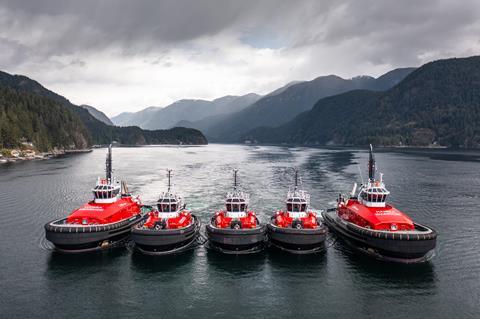
Alternative fuels will become more common, digitalisation will accelerate and regulatory frameworks will continue to drive the industry’s transition toward more sustainable operations.
Despite these changes, operators will continue to prioritise the same core requirements: safety, reliability and performance.
Onboard, capabilities such as performance monitoring, predictive maintenance, energy optimisation and remote support are becoming increasingly important, enabling operators to improve reliability, reduce costs and maximise vessel availability. We believe the next generation of tugboats will be not only cleaner but also more connected, intelligent and data-driven.
At the same time, our most significant digital investments are focused on transforming our own operations. Over recent years, we have invested heavily in digital tools to enhance planning, reporting, cost management, supply chain visibility and overall operational efficiency. We are also developing custom AI solutions to support production planning and decision-making, helping us build smarter, faster and more efficiently.
10. As Sanmar enters its next chapter, what’s the single biggest priority – new designs, new markets, new propulsion types, or something else entirely?
Over our first 50 years, we earned the trust of operators around the world.
Looking ahead, our ambition is not simply to build more tugboats. It is to help lead the development of sustainable, intelligent and future-ready tugboat technologies.
As we celebrate our 50th anniversary, we are proud of what we have achieved, but even more excited about what lies ahead. The first 50 years were built on trust, engineering excellence and long-term partnerships. The next 50 years will be defined by innovation, sustainability and helping shape the future of global towage just as we have helped shape its evolution over the last five decades.
Reaching 50 years is about far more than a milestone.
It represents generations of employees, customers, suppliers and partners who have helped shape Sanmar into the company it is today. Very few shipyards have the privilege of reaching such a milestone, and we do not take it for granted.