FEATURE: Offshore wind’s two-speed economy

Specialist vessels and equipment are attracting investment as offshore wind developers face increasingly complex projects. But a large development pipeline is no guarantee of investor appetite, highlighting the widening gap between physical demand and financial confidence.
DM mugshot

On one hand, companies are spending heavily to secure the equipment and expertise they believe will be needed for the next generation of projects. Specialist vessels are commanding strong day rates, while even the less visible parts of offshore construction are generating new orders.

On the other, investors are becoming more demanding. Developers with substantial project pipelines – and even developers with a single, fully consented, government-backed project – are finding that neither guarantees an acceptable return.

The result is an industry that is simultaneously expanding, consolidating and becoming more selective.

A €501 million bet on foundations

A striking recent move is Cadeler’s €501 million acquisition of Menck, the German specialist in offshore foundation-installation equipment and technology.
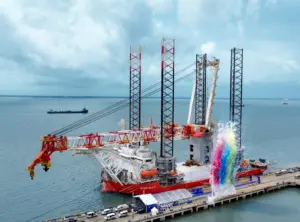
Cadeler Wind Ally - naming ceremony - September 2025

Source: File

Cadeler’s installation Wind Ally was christened in September 2025

Menck provides hydraulic impact hammers and other specialist equipment and engineering services used to install fixed-bottom offshore foundations. Cadeler says the acquisition gives it a broader foundation transport and installation offering, while Menck will continue operating as a standalone business and serving other installation contractors.

The transaction is therefore not simply the conventional acquisition of another supplier. Cadeler is buying into a critical part of the technology chain that determines what its installation vessels can actually build.

Cadeler chief executive Mikkel Gleerup says the rationale is straightforward: offshore projects are becoming harder to execute.

“Offshore wind projects continue to increase in scale and technical complexity, making reliable execution more important than ever,” he says. “Bringing together Menck’s specialist engineering capabilities with Cadeler’s offshore installation proficiency, we are combining highly complementary strengths that will enhance our support to customers across the full installation value chain.”

The offshore-wind vessel market is often discussed in terms of the number and lifting capacity of jack-up installation vessels. But the vessel is only one component of the installation system: as monopiles and other foundations become larger, contractors also need increasingly capable hammers, drilling equipment, noise-mitigation systems, engineering expertise and specialist handling equipment.

Cadeler is effectively bringing more of that capability inside the group, reducing its reliance on subcontracted specialist equipment and engineering while retaining access to Menck’s wider market expertise.

Menck’s technology base includes more than 150 years of engineering experience, and Cadeler says the business has accumulated more than 50 million data points from driven-pile installations. It is also developing a next-generation Wind Hammer intended for ultra-large foundations, with the first unit expected in early 2027.

“Cadeler will strengthen Menck’s financial flexibility to support and accelerate the execution of our continued growth plan,” said Menck executive vice president Jochem Scherpenisse. “With Cadeler, we will have a strong platform to further develop our business and to continue to deliver trusted solutions to customers across the offshore wind industry.”

The less glamorous business of protecting cables

Further down the construction chain, UK-based Tekmar Group has won a contract worth approximately €1 million to design and manufacture concrete protection and stabilisation solutions for cables on a major unnamed European offshore wind farm. Delivery is scheduled during 2026.
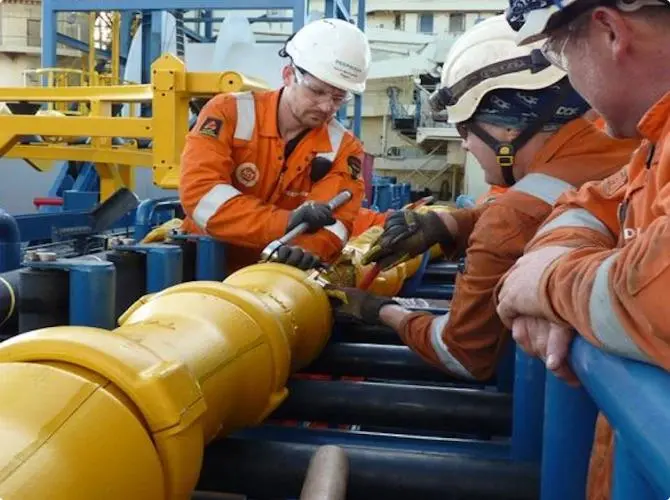
Tekmar

Source: Tekmar Group

Tekmar Group’s cable-protection

The contract is much smaller than Cadeler’s acquisition, but it is an example of the specialist engineering hidden beneath the headline turbine installation figures.

Offshore cables have to contend with seabed movement, exposure, impact risks and the potential for damage where burial is difficult or inadequate. Tekmar’s concrete solutions are designed to provide protection and stabilisation around this infrastructure. Failure can have serious consequences for a wind farm’s ability to export electricity.

“This is a demonstration of the company’s market-leading position in asset protection technology, the strength of the relationships we have with customers and the progress we are making in broadening our offer to customers across the global offshore wind and oil and gas markets, with the aim of our concrete solutions offer mirroring the success of our wider cable protection technology business,” said Richard Turner, chief executive of Tekmar Group.

The €1 million award provides another small indication that the offshore-wind construction supply chain remains active, and that increasingly specialised work is being carved out for companies with particular engineering and protection capabilities.

The workboat squeeze

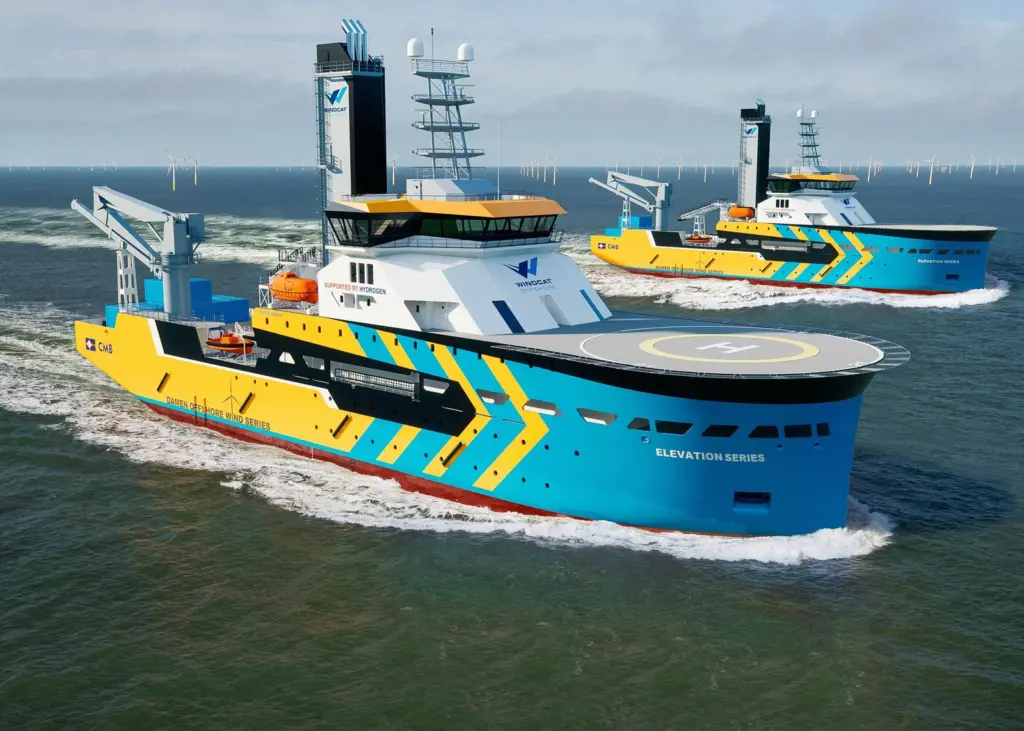
Another part of the marine supply chain is also seeing strong conditions: commissioning service operation vessels (CSOVs).
CSOV-Windcat-Offshore-1

Source: File

Windcat CSOVs

The European CSOV market remains tight, with high-specification vessels capable of commanding day rates well above €60,000 in short-term employment. At the same time, vessels are approaching the end of summer contracts, creating an interesting test for the market as owners look for follow-on employment.

Modern CSOVs are expensive, specialised assets. They provide accommodation and offshore personnel-transfer capability, together with walk-to-work systems, cranes, stores, workshops and other equipment required to support offshore-wind construction and operations. A strong day-rate environment improves the economics of those vessels and makes investment in new tonnage easier to justify.

But it also illustrates one of the industry’s emerging problems: the offshore-wind supply chain cannot necessarily add specialist marine capacity as quickly as developers can announce projects. At the heavy end, there are jack-ups and foundation-installation vessels. Then come cable-lay and support vessels, survey vessels, SOVs and CSOVs, CTVs and multicats, all of which may be required by a single project at different stages. The market therefore needs not simply more vessels, but the right vessels, in the right geographic location, with the right equipment and at the right time.

The present strength is partly being tested by contract rollover: if several vessels become available simultaneously, owners may find that today’s high rates are difficult to maintain. Conversely, if the expanding offshore-wind pipeline absorbs the tonnage, today’s tightness could become a more structural feature of the market.

And then there is the money

The strength of the supply chain does not necessarily translate into higher valuations for the businesses developing offshore-wind projects. The economics are different: specialist contractors can benefit from scarce assets and expertise, while developers have to make individual projects work against rising construction and financing costs.
graph

German renewable energy developer PNE is one example. PNE has been running a structured process to seek an investor for the purchase of up to 100% of its shares. But on 10 August the company confirmed that the interest received indicated that prospective buyers’ price expectations were below the prevailing market price of the PNE share.

“The price expectations of potential acquirers are below the current market price level of the PNE share,” the company said. “Against this background, it is currently uncertain whether a transaction will take place and what its terms would be.”

That does not mean PNE’s business is failing. Its subsequent half-year results, published on 13 August, showed normalised EBITDA of €27.4 million, up from €4.7 million a year earlier. PNE also sold eight wind and solar projects totalling 163MW during the first half of 2026 and reported a project pipeline of 21.7GW at the end of June.

“We have achieved important operational successes in a challenging market environment and have shown that high-quality wind and photovoltaic projects continue to be in demand,” says Heiko Wuttke, CEO. “However, we also see that we and the entire industry currently have a hard path to take, which is characterized by many uncertainties.”

Much of PNE’s pipeline is at an early development stage, illustrating the substantial gap between potential future capacity and projects capable of generating near-term returns. Projects still have to clear permitting, grid-connection, financing, procurement and construction hurdles, and a company can have billions of euros’ worth of potential future development while prospective buyers remain unwilling to pay the valuation its shareholders expect.

Even consented projects don’t always stack up
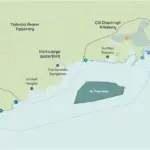
Hornsea 4 map

Source: File

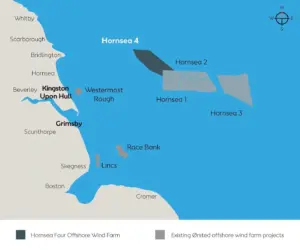
Ørsted abandoned Hornsea 4, which would have been one of the largest offshore wind farms in the world

PNE is not the only recent illustration of this caution, and not the most extreme one. In May 2025, Ørsted discontinued development of Hornsea 4, a 2.4GW offshore wind farm off the Yorkshire coast that would have ranked among the largest in the world.

Hornsea 4 was not an early-stage prospect struggling to attract a buyer, as much of PNE’s pipeline still is. It had already secured planning consent, and in September 2024 had been awarded a UK Contract for Difference guaranteeing a 15-year price of around £83/MWh.

Ørsted walked away anyway, the company pointing to continued increases in supply chain costs, rising interest rates, and growing risk around building and operating a project of this scale on schedule, saying the combination had eroded the project’s value creation below its investment bar.

The cancellation was expected to cost Ørsted between €470 million and €605 million in breakaway fees and write-downs, on top of a market value that had already fallen by around 80% from its 2021 peak.

Where PNE has a large pipeline but has struggled to attract acquirers willing to meet its valuation, Ørsted had a single, fully consented, government-backed project – and still concluded it could not deliver an acceptable return under prevailing cost and financing conditions. A guaranteed price and a granted permit were not, on their own, enough to clear the bar.

Two speeds, one industry

At the physical end, offshore wind is becoming larger and more complicated: Cadeler is paying €501 million for foundation-installation expertise, Tekmar is winning specialist cable-protection work, and CSOV operators are commanding strong day rates.

At the financial end, caution is rising – PNE’s and Ørsted’s experiences, different as they are in scale and stage, show that neither a large pipeline nor a permitted, price-guaranteed project is necessarily bankable.

That gap looks set to shape the marine market. If developers concentrate capital on the strongest projects, demand and scarcity value should stay high for contractors with specialist vessels and technology.

The physical supply chain can be tight while the financial market is cautious. A company can invest €501 million in a foundation-installation specialist because it sees a long-term opportunity, while another company with a 21.7GW pipeline struggles to find a buyer willing to meet its valuation, and a third walks away from a project it had already been guaranteed a price to build.

Weaker projects are more likely to be delayed, sold or redesigned, pushing further consolidation as companies choose to control scarce assets and expertise rather than rely on third parties.

The offshore-wind industry may therefore be growing at two speeds: projects face a higher bar for capital, while the specialist infrastructure needed to build the projects that do survive may become more valuable.
 

*]:pointer-events-auto R6Vx5W_threadScrollVars scroll-mb-[calc(var(–scroll-root-safe-area-inset-bottom,0px)+var(–thread-response-height))] scroll-mt-(–sticky-padding-top)” style=”box-sizing: border-box; border: 0px solid rgba(0, 0, 0, 0.05); margin: 0px; padding: 0px; width: 1052.77px; scroll-margin-top: 0px; scroll-margin-bottom: 346.9px; –thread-stream-context-height: max(22 * .25rem, 1/3 * calc(100lvh – calc(0px + 0px) – calc(75.99264526367188px + 0px + 0px))); –thread-response-height: calc(calc(100lvh – calc(0px + 0px) – calc(75.99264526367188px + 0px + 0px)) – max(22 * .25rem, 1/3 * calc(100lvh – calc(0px + 0px) – calc(75.99264526367188px + 0px + 0px))));” dir=”auto” data-turn-id=”1a071213-ccb7-4502-b530-7a83d8e69cf3″ data-turn-id-container=”1a071213-ccb7-4502-b530-7a83d8e69cf3″ data-testid=”conversation-turn-1″ data-turn=”user”>


Pasted markdown(1).md
File
 
Can you critique this please:
 

*]:pointer-events-auto R6Vx5W_threadScrollVars scroll-mb-[calc(var(–scroll-root-safe-area-inset-bottom,0px)+var(–thread-response-height))] scroll-mt-[calc(var(–header-height)+min(200px,max(70px,20svh)))]” style=”box-sizing: border-box; border: 0px solid rgba(0, 0, 0, 0.05); margin: 0px; padding: 0px; width: 1052.77px; scroll-margin-top: 135.471px; scroll-margin-bottom: 346.9px; –thread-stream-context-height: max(22 * .25rem, 1/3 * calc(100lvh – calc(0px + 0px) – calc(75.99264526367188px + 0px + 0px))); –thread-response-height: calc(calc(100lvh – calc(0px + 0px) – calc(75.99264526367188px + 0px + 0px)) – max(22 * .25rem, 1/3 * calc(100lvh – calc(0px + 0px) – calc(75.99264526367188px + 0px + 0px))));” dir=”auto” data-turn-id=”request-WEB:f3bdb428-1637-4437-b843-6ccca8630214-0″ data-turn-id-container=”request-WEB:f3bdb428-1637-4437-b843-6ccca8630214-0″ data-testid=”conversation-turn-2″ data-turn=”assistant”>

Absolutely. I’ve read it. Overall, this is a strong, publishable trade-journalism piece: the central idea is clear, the examples are well chosen, and the ending ties the physical supply-chain story to the financial story effectively. 

What works particularly well

1. The central thesis is genuinely interesting.
“Two-speed economy” is a good organising idea because it avoids the simplistic offshore wind is booming / offshore wind is struggling framing. You show that both things can be true simultaneously:

  • physical infrastructure is scarce and attracting investment;

  • capital is becoming more selective.

That tension gives the article a reason to exist.

2. The Cadeler/Menck example is excellent.
The €501m acquisition gives you a substantial, concrete opening rather than starting with abstract market commentary. The explanation that the vessel is only one part of the installation system is especially useful. 

I particularly like:

“The vessel is only one component of the installation system…”

That is the sort of sentence that teaches the reader something rather than simply reporting an announcement.

3. The progression down the supply chain works.
Moving from foundations → cable protection → CSOVs → developers/investors gives the article a nice widening perspective. The Tekmar section is also useful because it demonstrates that the thesis isn’t dependent on one enormous transaction. 

4. The PNE/Ørsted comparison is the strongest analytical section.
This is where the article really earns its thesis. PNE has a huge pipeline but valuation problems; Ørsted had a consented project with a government-backed price mechanism and still walked away. 

The line:

“A guaranteed price and a granted permit were not, on their own, enough to clear the bar.”

is probably the article’s strongest analytical sentence.

5. The conclusion lands the argument.
The final paragraph gives the reader a plausible consequence rather than merely repeating the introduction: consolidation, greater control of scarce assets and expertise, and differentiation between projects. 


Where I’d tighten it

1. The headline concept needs slightly more definition

“Two-speed economy” is good, but technically the article is really about two-speed offshore-wind investment economics or a divergence between supply-chain economics and project economics.

“Economy” is broad enough that some readers might expect a macroeconomic story.

You establish what you mean in the standfirst, but I’d make the contrast even sharper in the opening. Something along the lines of:

Offshore wind’s supply chain is tightening even as developers struggle to make projects pay.

You don’t necessarily need to use that as the headline, but that’s the proposition the first paragraph should make unmistakable.

2. There is some repetition around the core argument

The article makes essentially the same point several times:

  • “large development pipeline” ≠ investor appetite

  • project pipelines don’t guarantee returns

  • permitted/project with CfD doesn’t guarantee investment

  • physical supply chain tight / financial market cautious

  • large pipeline ≠ bankability

The repetition isn’t terrible, because it reinforces the thesis, but I’d cut perhaps 10–15% of the explanatory material.

For example, lines 67 and 79 are both doing similar analytical work. 

You could let the Ørsted example do more of the work rather than explicitly restating the lesson after both examples.

3. Be careful with the word “investment”

This is the biggest conceptual issue I’d examine.

Cadeler buying Menck for €501m is corporate investment in the supply chain. PNE seeking a buyer and Ørsted abandoning Hornsea 4 concern equity valuation/project investment economics.

Those aren’t quite the same thing.

Your argument is sound, but the distinction should be explicit:

Supply-chain companies are willing to invest because scarcity can support pricing and utilisation. Developers/investors are more cautious because project returns have deteriorated.

That’s more precise than simply saying “investors” are becoming cautious.

4. The CSOV section is useful but slightly overlong

The CSOV section makes an important point about specialist capacity, but it could probably lose a paragraph.

This passage is good:

“The market therefore needs not simply more vessels, but the right vessels, in the right geographic location, with the right equipment and at the right time.” 

That’s a strong formulation. I’d consider building the section around that rather than spending quite as many words explaining what CSOVs do.

5. Some claims need either sourcing or slightly softer language

If this is intended for publication, I’d scrutinise claims such as:

  • CSOVs “commanding day rates well above €60,000”

  • “more than 50 million data points”

  • the first Wind Hammer expected in early 2027

  • the ~80% fall in Ørsted’s market value

  • “high-specification vessels” and their current rate environment.

They may all be correct, but because the piece otherwise has a reported-news feel, specific numerical claims need particularly robust sourcing.

The article currently mixes company statements, reported facts and your own analysis without always signalling the distinction.

6. “Ørsted walks out on Hornsea” is slightly too colloquial

The section heading is punchy, but “walks out” introduces a slightly tabloid tone compared with the otherwise serious trade-publication voice.

I’d prefer:

Ørsted abandons Hornsea 4

or, more analytically:

When even a consented project doesn’t stack up

The latter would also reinforce your central thesis.


One structural change I’d seriously consider

I’d bring the PNE/Ørsted material slightly earlier.

At present, the reader gets:

Cadeler → Menck → Tekmar → CSOVs → PNE → Ørsted → thesis

That’s logical, but the financial argument arrives relatively late.

An alternative is:

Opening thesis → Cadeler → CSOV/Tekmar evidence of physical tightness → PNE → Ørsted → what this means for the supply chain.

That makes the article feel increasingly like an argument rather than a sequence of market updates.


The biggest opportunity

I think you can make this more analytical without making it longer.

The really interesting question underneath the piece is:

Why is capital still flowing into scarce supply-chain assets when capital is becoming harder to justify for the projects themselves?

You currently imply the answer:

scarcity + specialist capability + limited substitutability = attractive supply-chain economics

versus

higher capex + higher financing costs + execution risk + uncertain returns = unattractive project economics.

I’d make that mechanism more explicit. That’s what turns this from a good collection of offshore-wind news into a genuinely insightful market feature.

My overall verdict

Strong: 8/10.

  • Argument: 9/10

  • Examples: 9/10

  • Structure: 8/10

  • Writing: 8/10

  • Original insight: 8.5/10

  • Conciseness: 7/10

The piece doesn’t need a fundamental rewrite. It needs sharpening. I’d cut some repetition, distinguish supply-chain investment from project/developer investment more explicitly, tighten the CSOV material, and make the underlying economic mechanism the spine of the piece.

The result could be considerably stronger while probably being 10–15% shorter.


*]:pointer-events-auto R6Vx5W_threadScrollVars scroll-mb-[calc(var(–scroll-root-safe-area-inset-bottom,0px)+var(–thread-response-height))] scroll-mt-(–sticky-padding-top)” style=”box-sizing: border-box; border: 0px solid rgba(0, 0, 0, 0.05); margin: 0px; padding: 0px; width: 1052.77px; scroll-margin-top: 0px; scroll-margin-bottom: 346.9px; –thread-stream-context-height: max(22 * .25rem, 1/3 * calc(100lvh – calc(0px + 0px) – calc(75.99264526367188px + 0px + 0px))); –thread-response-height: calc(calc(100lvh – calc(0px + 0px) – calc(75.99264526367188px + 0px + 0px)) – max(22 * .25rem, 1/3 * calc(100lvh – calc(0px + 0px) – calc(75.99264526367188px + 0px + 0px))));” dir=”auto” data-turn-id=”99ef39ee-01d7-4c50-a65a-4172ebce8a5f” data-turn-id-container=”99ef39ee-01d7-4c50-a65a-4172ebce8a5f” data-testid=”conversation-turn-3″ data-turn=”user”>

Apart from your point 5, could you do that?
 

*]:pointer-events-auto R6Vx5W_threadScrollVars scroll-mb-[calc(var(–scroll-root-safe-area-inset-bottom,0px)+var(–thread-response-height))] scroll-mt-[calc(var(–header-height)+min(200px,max(70px,20svh)))]” style=”box-sizing: border-box; border: 0px solid rgba(0, 0, 0, 0.05); margin: 0px; padding: 0px; width: 1052.77px; scroll-margin-top: 135.471px; scroll-margin-bottom: 346.9px; pointer-events: none; –thread-stream-context-height: max(22 * .25rem, 1/3 * calc(100lvh – calc(0px + 0px) – calc(75.99264526367188px + 0px + 0px))); –thread-response-height: calc(calc(100lvh – calc(0px + 0px) – calc(75.99264526367188px + 0px + 0px)) – max(22 * .25rem, 1/3 * calc(100lvh – calc(0px + 0px) – calc(75.99264526367188px + 0px + 0px))));” dir=”auto” data-turn-id=”request-WEB:f3bdb428-1637-4437-b843-6ccca8630214-1″ data-turn-id-container=”request-WEB:f3bdb428-1637-4437-b843-6ccca8630214-1″ data-testid=”conversation-turn-4″ data-turn=”assistant”>

Yes. I’d keep the substance and reported figures intact, while applying points 1–4 and 6: sharpen the central proposition, reduce repetition, distinguish supply-chain investment from project investment, tighten the CSOV section, and change the Hornsea heading/tone. I’ve left the sourcing/numerical-claim issue untouched as requested. 


FEATURE: Offshore wind’s two-speed economy

Specialist vessels and equipment are attracting investment as offshore wind developers face increasingly complex projects. But a large development pipeline is no guarantee of investor appetite, highlighting a widening gap between the economics of the physical supply chain and those of the projects it serves.

On one side, companies are spending heavily to secure the equipment and expertise they expect to be needed for the next generation of projects. Specialist vessels are commanding strong day rates, while less visible parts of offshore construction are generating new orders.

On the other, capital is becoming more selective. Developers with substantial project pipelines — and even developers with a single, fully consented, government-backed project — are finding that neither guarantees an acceptable return.

The result is an industry that is simultaneously expanding, consolidating and becoming more selective: scarcity can support investment in the supply chain even as rising costs, financing rates and execution risks make some individual projects harder to justify.

A €501 million bet on the foundations

A striking recent move is Cadeler’s €501 million acquisition of Menck, the German specialist in offshore foundation-installation equipment and technology.

Menck provides hydraulic impact hammers and other specialist equipment and engineering services used to install fixed-bottom offshore foundations. Cadeler says the acquisition gives it a broader foundation transport and installation offering, while Menck will continue operating as a standalone business and serving other installation contractors.

The transaction is therefore not simply the conventional acquisition of another supplier. Cadeler is investing in a critical part of the technology chain that determines what its installation vessels can actually build.

The rationale is straightforward: offshore projects are becoming harder to execute.

“Offshore wind projects continue to increase in scale and technical complexity, making reliable execution more important than ever,” he says. “Bringing together Menck’s specialist engineering capabilities with Cadeler’s offshore installation proficiency, we are combining highly complementary strengths that will enhance our support to customers across the full installation value chain.”

The offshore-wind vessel market is often discussed in terms of the number and lifting capacity of jack-up installation vessels. But the vessel is only one component of the installation system. As monopiles and other foundations become larger, contractors also need increasingly capable hammers, drilling equipment, noise-mitigation systems, engineering expertise and specialist handling equipment.

Cadeler is effectively bringing more of that capability inside the group, reducing its reliance on subcontracted specialist equipment and engineering while retaining access to Menck’s wider market expertise.

Menck’s technology base includes more than 150 years of engineering experience, and Cadeler says the business has accumulated more than 50 million data points from driven-pile installations. It is also developing a next-generation Wind Hammer intended for ultra-large foundations, with the first unit expected in early 2027.

“Cadeler will strengthen Menck’s financial flexibility to support and accelerate the execution of our continued growth plan,” said Menck executive vice president Jochem Scherpenisse. “With Cadeler, we will have a strong platform to further develop our business and to continue to deliver trusted solutions to customers across the offshore wind industry.”

The less glamorous business of protecting cables

Further down the construction chain, UK-based Tekmar Group has won a contract worth approximately €1 million to design and manufacture concrete protection and stabilisation solutions for cables on a major unnamed European offshore wind farm. Delivery is scheduled during 2026.

The contract is much smaller than Cadeler’s acquisition, but it is another example of the specialist engineering beneath the headline turbine-installation figures.

Offshore cables have to contend with seabed movement, exposure, impact risks and the potential for damage where burial is difficult or inadequate. Tekmar’s concrete solutions are designed to provide protection and stabilisation around this infrastructure. Failure can have serious consequences for a wind farm’s ability to export electricity.

“This is a demonstration of the company’s market-leading position in asset protection technology, the strength of the relationships we have with customers and the progress we are making in broadening our offer to customers across the global offshore wind and oil and gas markets, with the aim of our concrete solutions offer mirroring the success of our wider cable protection technology business,” said Richard Turner, chief executive of Tekmar Group.

The €1 million award provides another indication that the offshore-wind construction supply chain remains active, and that increasingly specialised work is being carved out for companies with particular engineering and protection capabilities.

The workboat squeeze

Another part of the marine supply chain is also seeing strong conditions: commissioning service operation vessels (CSOVs).

The European CSOV market remains tight, with high-specification vessels capable of commanding day rates well above €60,000 in short-term employment. At the same time, vessels are approaching the end of summer contracts, creating an interesting test for the market as owners look for follow-on employment.

Modern CSOVs are expensive, specialised assets. They provide accommodation and offshore personnel-transfer capability, together with walk-to-work systems, cranes, stores, workshops and other equipment required to support offshore-wind construction and operations. Strong day rates improve their economics and make investment in new tonnage easier to justify.

But the market also illustrates a broader constraint: specialist marine capacity cannot necessarily be added as quickly as developers can announce projects. At the heavy end, there are jack-ups and foundation-installation vessels. Then come cable-lay and support vessels, survey vessels, SOVs and CSOVs, CTVs and multicats, all of which may be required by a single project at different stages.

The market therefore needs not simply more vessels, but the right vessels, in the right geographic location, with the right equipment and at the right time.

That strength is now being tested by contract rollover. If several vessels become available simultaneously, owners may find that today’s high rates are difficult to maintain. Conversely, if the expanding offshore-wind pipeline absorbs the tonnage, today’s tightness could become a more structural feature of the market.

And then there is the money

The strength of the supply chain does not necessarily translate into higher valuations for the businesses developing offshore-wind projects. The economics are different: specialist contractors can benefit from scarce assets and expertise, while developers have to make individual projects work against rising construction and financing costs.

German renewable energy developer PNE is one example. PNE has been running a structured process to seek an investor for the purchase of up to 100% of its shares. But on 10 August the company confirmed that the interest received indicated that prospective buyers’ price expectations were below the prevailing market price of the PNE share.

“The price expectations of potential acquirers are below the current market price level of the PNE share,” the company said. “Against this background, it is currently uncertain whether a transaction will take place and what its terms would be.”

That does not mean PNE’s business is failing. Its subsequent half-year results, published on 13 August, showed normalised EBITDA of €27.4 million, up from €4.7 million a year earlier. PNE also sold eight wind and solar projects totalling 163MW during the first half of 2026 and reported a project pipeline of 21.7GW at the end of June.

“We have achieved important operational successes in a challenging market environment and have shown that high-quality wind and photovoltaic projects continue to be in demand,” says Heiko Wuttke, CEO. “However, we also see that we and the entire industry currently have a hard path to take, which is characterized by many uncertainties.”

The issue is partly the difference between potential capacity and projects capable of generating near-term returns. Much of PNE’s pipeline is at an early development stage. Projects still have to clear permitting, grid-connection, financing, procurement and construction hurdles, meaning a company can have billions of euros’ worth of potential future development while prospective buyers remain unwilling to pay the valuation its shareholders expect.

When even a consented project doesn’t stack up

PNE is not the only recent illustration of this caution, and not the most extreme one.

In May 2025, Ørsted discontinued development of Hornsea 4, a 2.4GW offshore wind farm off the Yorkshire coast that would have ranked among the largest in the world.

Hornsea 4 was not an early-stage prospect struggling to attract a buyer, as much of PNE’s pipeline still is. It had already secured planning consent, and in September 2024 had been awarded a UK Contract for Difference guaranteeing a 15-year price of around £83/MWh.

Ørsted walked away anyway, the company pointing to continued increases in supply chain costs, rising interest rates, and growing risk around building and operating a project of this scale on schedule, saying the combination had eroded the project’s value creation below its investment bar.

The cancellation was expected to cost Ørsted between €470 million and €605 million in breakaway fees and write-downs, on top of a market value that had already fallen by around 80% from its 2021 peak.

The contrast with PNE is revealing. PNE has a large pipeline but has struggled to attract acquirers willing to meet its valuation. Ørsted had a single, fully consented, government-backed project — and still concluded that it could not deliver an acceptable return under prevailing cost and financing conditions.

A guaranteed price and a granted permit were not, on their own, enough to clear the bar.

Two speeds, one industry

At the physical end, offshore wind is becoming larger and more complicated. Cadeler is paying €501 million for foundation-installation expertise, Tekmar is winning specialist cable-protection work, and CSOV operators are commanding strong day rates.

At the project-investment end, caution is rising. PNE’s and Ørsted’s experiences, different as they are in scale and stage, show that neither a large pipeline nor a permitted, price-guaranteed project is necessarily bankable.

That divergence is likely to shape the marine market.

If developers concentrate capital on the strongest projects, demand and scarcity value should remain high for contractors with specialist vessels, equipment and technology. The supply chain can therefore remain tight even as the overall development pipeline becomes more selective.

The distinction matters. A company can invest €501 million in a foundation-installation specialist because it sees long-term value in scarce equipment and expertise, while another company with a 21.7GW pipeline struggles to find a buyer willing to meet its valuation. A third can walk away from a project it had already been guaranteed a price to build.

The likely consequence is further differentiation. Weaker projects are more likely to be delayed, sold or redesigned, while companies across the supply chain have an incentive to control scarce assets and expertise rather than rely on third parties.

The offshore-wind industry may therefore be growing at two speeds: projects face a higher bar for capital, while the specialist infrastructure needed to build the projects that do survive can become more valuable.