![MaritimeJournal[Seawork]](https://www.maritimejournal.com/wp-content/uploads/2026/09/MaritimeJournalSeawork.svg)






Ports of the future: safer, smarter and always on
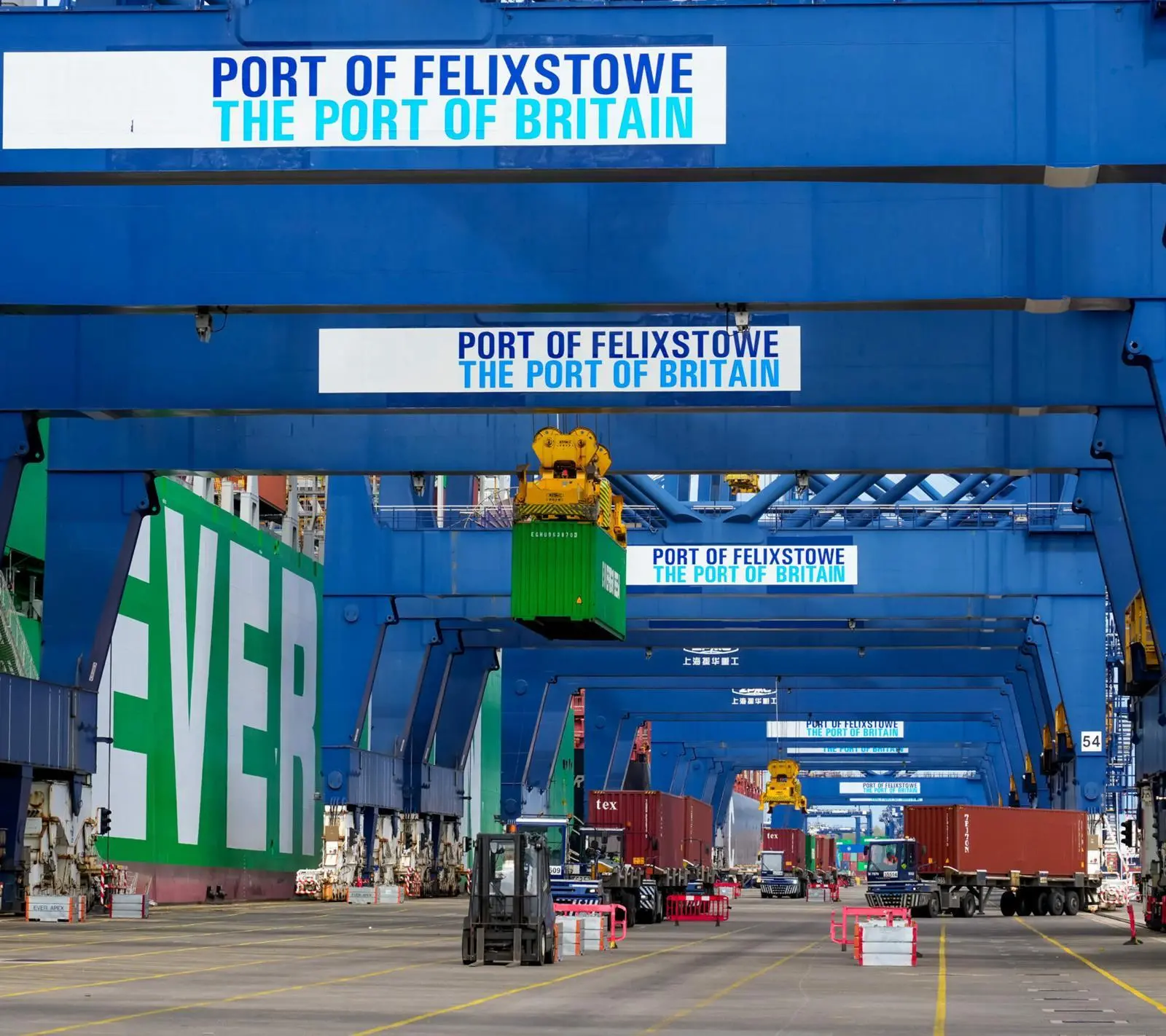
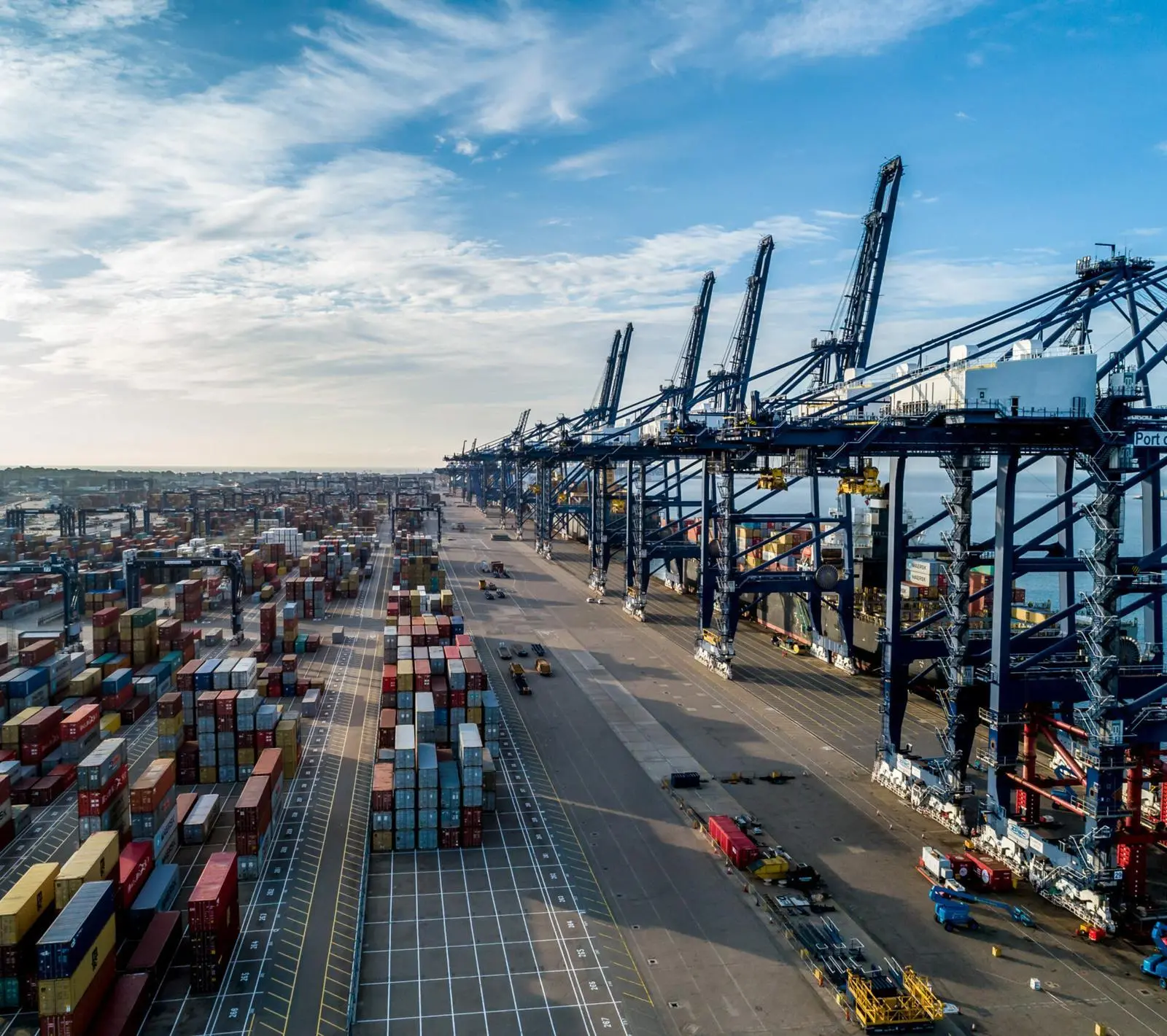
Stand on the quay at a major container port today and you can already see glimpses of the future.

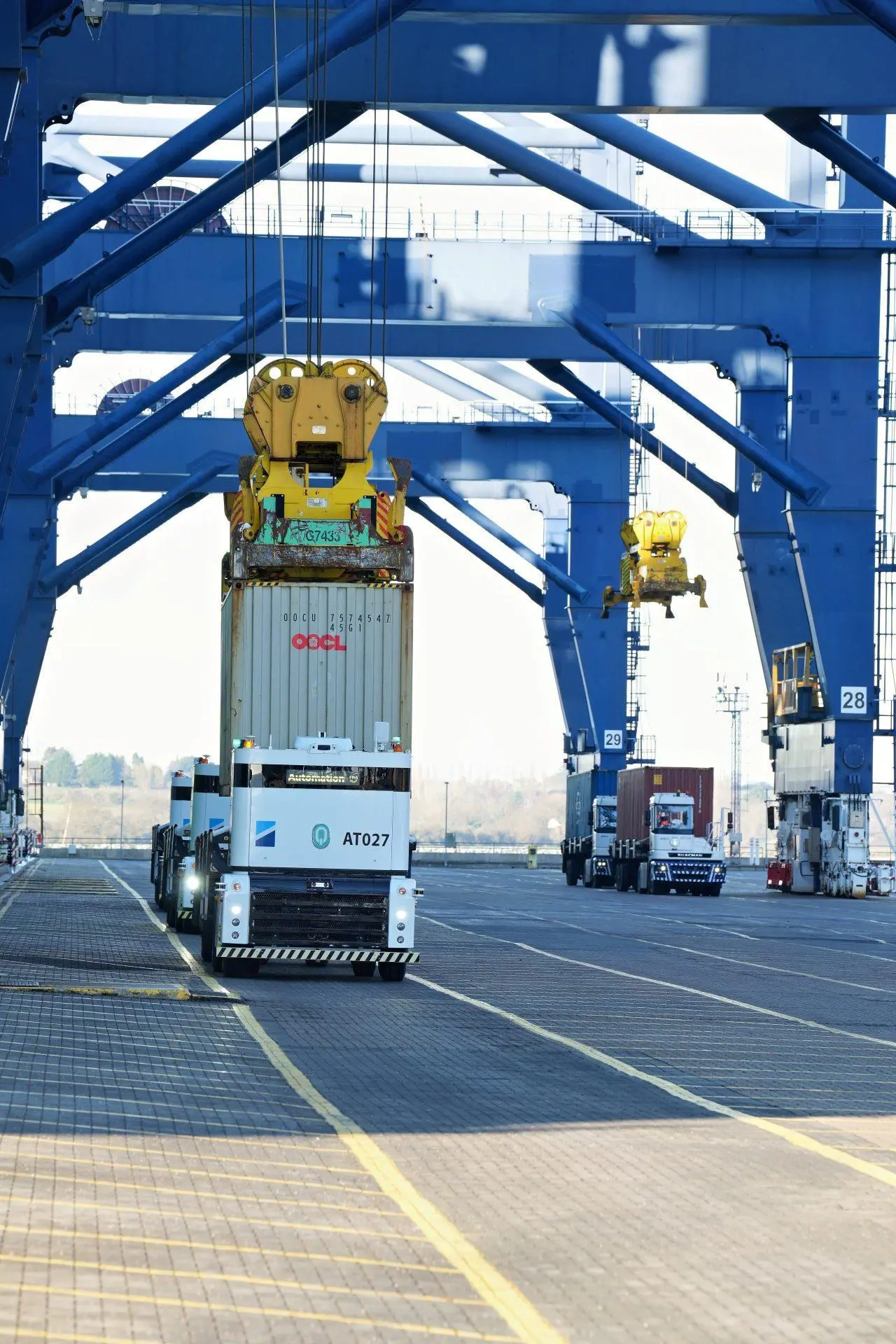
Autonomous trucks weaving quietly through the stacks. Crane operators working from control rooms instead of cabs 40 metres above the quay. Drones checking hard to reach structures. Screens in the control centre glowing with live data about every move.
These are not science fiction images.: they are early signals of where ports are heading. The question now is not whether ports will change, but how fast, and how safely, they can make that change.
Port of Felixstowe, working with partners such as Three Group Solutions, offers one of the clearest examples of this transition.
The port is moving from a traditional communications model to a dedicated private 5G platform that can support large-scale automation and data-rich operations. It is a useful lens through which to think about what the port of the future could, and should, look like.
The pressures shaping the next-generation port
Ports have always lived with pressure. Tidal windows, berth clashes, late vessels and weather disruptions are the industry’s background noise. What has changed in the past decade is the intensity and complexity of those pressures.
Several forces are converging:
- Ship sizes continue to grow, which concentrates more cargo on fewer calls and reduces the margin for error
- Supply chains are more volatile, with geopolitical tensions and extreme weather events rippling straight into port schedules
- Regulators, customers and investors are demanding better safety records and more ambitious decarbonisation plans
- Demographics are changing, as experienced crane drivers and equipment operators retire and are not easily replaced.
The result is a simple, uncomfortable truth: if ports try to handle tomorrow’s demands with yesterday’s tools, they will fall behind. The only realistic way to deliver more capacity, more predictability and better safety is to make ports fundamentally more intelligent.
From infrastructure to intelligent system
Historically, ports were built around physical assets such as quays, cranes, sheds, roadways and rail connections. The smarter ports layered terminal operating systems on top to orchestrate work and for a long time, that was enough.
In the emerging model, the physical infrastructure is only one layer of a much larger system. The future port will integrate four elements:
1. Connected assets. Almost every piece of equipment, from a ship-to-shore crane to a yard tractor, will be instrumented. Position, status, fuel or battery level, load, vibration and maintenance history will all be available in real time.
2. Human and machine collaboration. Automation will not remove people from ports, but it will change what they do. Machines will handle the repetitive, tiring, hazardous parts of the work. People will supervise, intervene when necessary and deal with exceptions and planning. Remote operations will become common.
3. Decision intelligence. Data from thousands of sensors and systems will feed into analytics platforms that continuously optimise yard plans, crane splits, truck appointment systems and rail slots. Ports will move from static planning to dynamic, self-correcting operations.
4. A digital skin around the port. Cameras, drones and wearables will add a safety and security layer over the entire estate, identifying hazards, tracking movements and enforcing geofenced rules in near real time.
All of this has a common dependency. The data must move safely and reliably, with predictable latency, between machines, people and systems. Without that, the most sophisticated analytics or automation systems remain ideas on a slide. This is where Port of Felixstowe’s experience becomes particularly relevant.
Port of Felixstowe has been running its operations on a private mobile network for more than a decade. That decision, taken long before private 5G was fashionable, was driven by a blunt operational reality: if the connection between the terminal operating system and the people driving cranes and trucks fails, the port stops. Public mobile coverage was never designed to carry that level of responsibility.
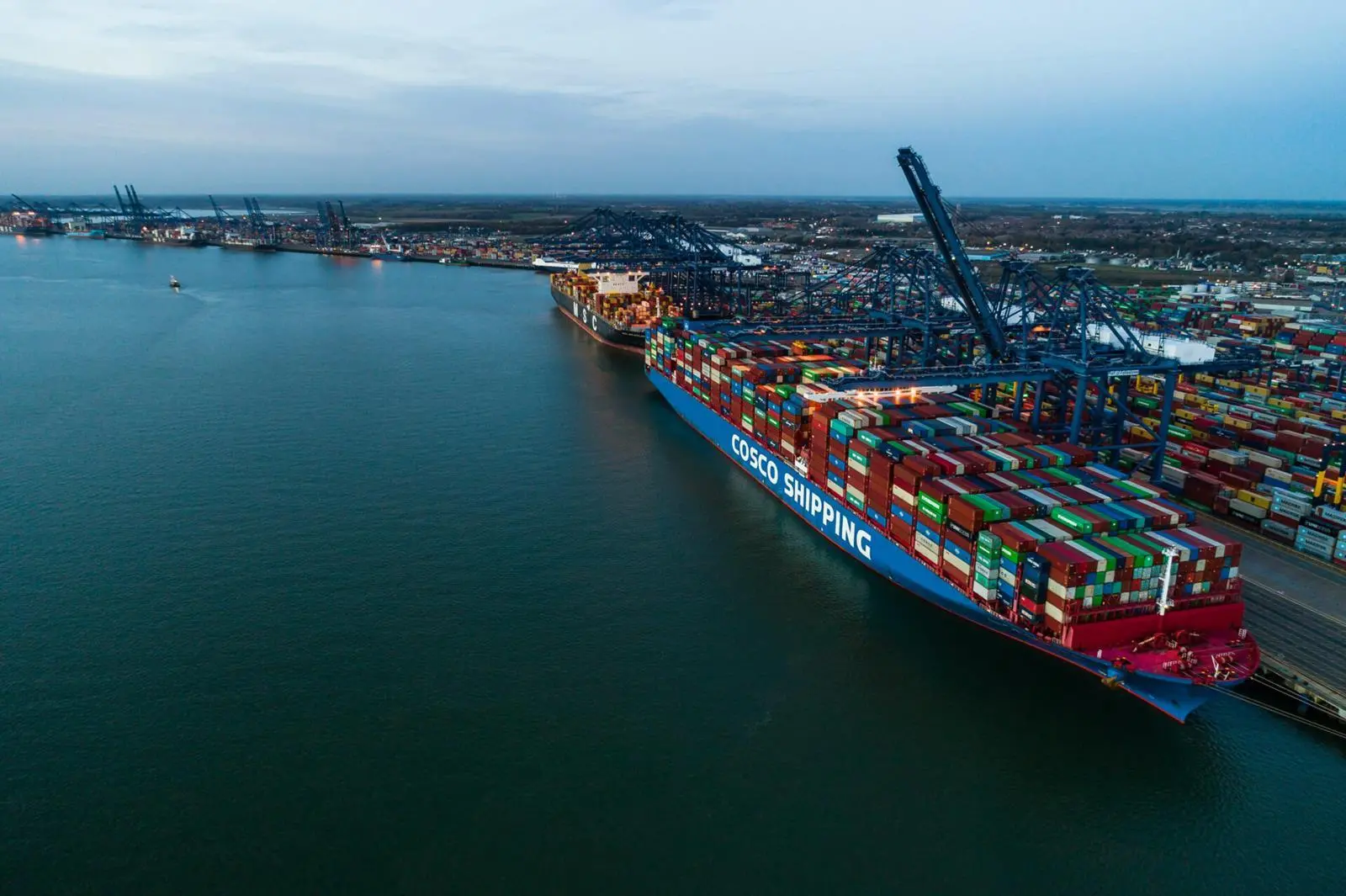
The move to a private 5G platform raises the bar again. Instead of simply carrying work instructions to tablets, the network will support:
- Around 200 autonomous or semi-autonomous trucks, each with multiple cameras and safety systems
- High-density sensor networks for predictive maintenance and environmental monitoring
- Drones and mobile camera units that need broadband connectivity wherever they fly or move within the estate
- For the future, there is the possibility for remote-controlled quay cranes and yard equipment, where latency and jitter can have safety implications.
In that context, the 5G network is not a communications upgrade. It is part of the port’s critical infrastructure alongside power and rail. It has to be engineered with redundant cores, overlapping radio coverage and diverse backhaul routes. It must sit cleanly within the port’s cybersecurity perimeter and work seamlessly with both operational technology and IT systems.
The interesting point for the wider sector is what that connectivity then makes possible.
A day in the life of a future port
Imagine a typical day in a future port that has fully embraced this model, whether that port is Felixstowe or another major gateway.
At any given moment, the digital twin is already aligned with the live state of the terminal. It continuously draws on updated train timetables, truck appointment bookings, vessel ETAs and weather forecasts to maintain an optimised view of the quay, yard and hinterland flows. It operates throughout, adjusting its recommendations throughout the day and night. Human planners review and approve proposed changes whenever required, refining allocations as necessary.
As shifts change, autonomous trucks are already in circulation, joining and leaving tasks according to real-time routing instructions from the operations system. There is no defined starting point or queue. Their batteries are charged in line with live duty predictions so that capacity matches the pace of operations rather than following a fixed overnight schedule. Remote crane operators begin their shifts in the control centre, taking over equipment that has been running steadily through earlier handovers. On their screens, high-definition camera feeds, sensor overlays and guidance systems continue to support accuracy and reduce fatigue.
Out in the yard, geofencing rules remain in force around the clock. Any human operated vehicle that moves towards an area reserved for autonomous units triggers alerts and, if necessary, automated slow down or stop commands. Wearables provide staff with immediate feedback if they approach a high-risk zone or omit required protective equipment, ensuring consistency regardless of the time of day.
Drones fly pre-programmed inspection routes along quay cranes and lighting towers, looking for signs of corrosion, fatigue or damage. Others skim low over the water, checking for floating debris or oil sheens near berths. Only exceptions reach human eyes.
Throughout the cycle of operations, the digital twin makes continuous adjustments. If a vessel arrives ahead of schedule while another is delayed, the platform reallocates cranes and yard blocks to maintain overall productivity. A sudden change in wind conditions prompts a temporary pause on certain lifts and a revised sequence that keeps performance within target.
In the background, maintenance systems examine vibration and temperature readings from key assets. One of the yard cranes is showing a combination of patterns that suggest a bearing will fail in the next few days. The system automatically proposes a short maintenance window between two vessel operations, with the necessary parts and technicians scheduled in advance.
From an efficiency and safety standpoint, the differences with many current terminals are stark. There is less waiting and idling, fewer unnecessary moves, fewer people in harm’s way and better visibility of risks before they mature into incidents. All of it depends on an invisible fabric of connectivity and data flows.
Port of Felixstowe as a bridge between present and future
The Port of Felixstowe is not yet operating the fully realised vision described above, nor would anyone sensibly claim that it is. What makes the Port of Felixstowe interesting is that many of the building blocks are already in place.
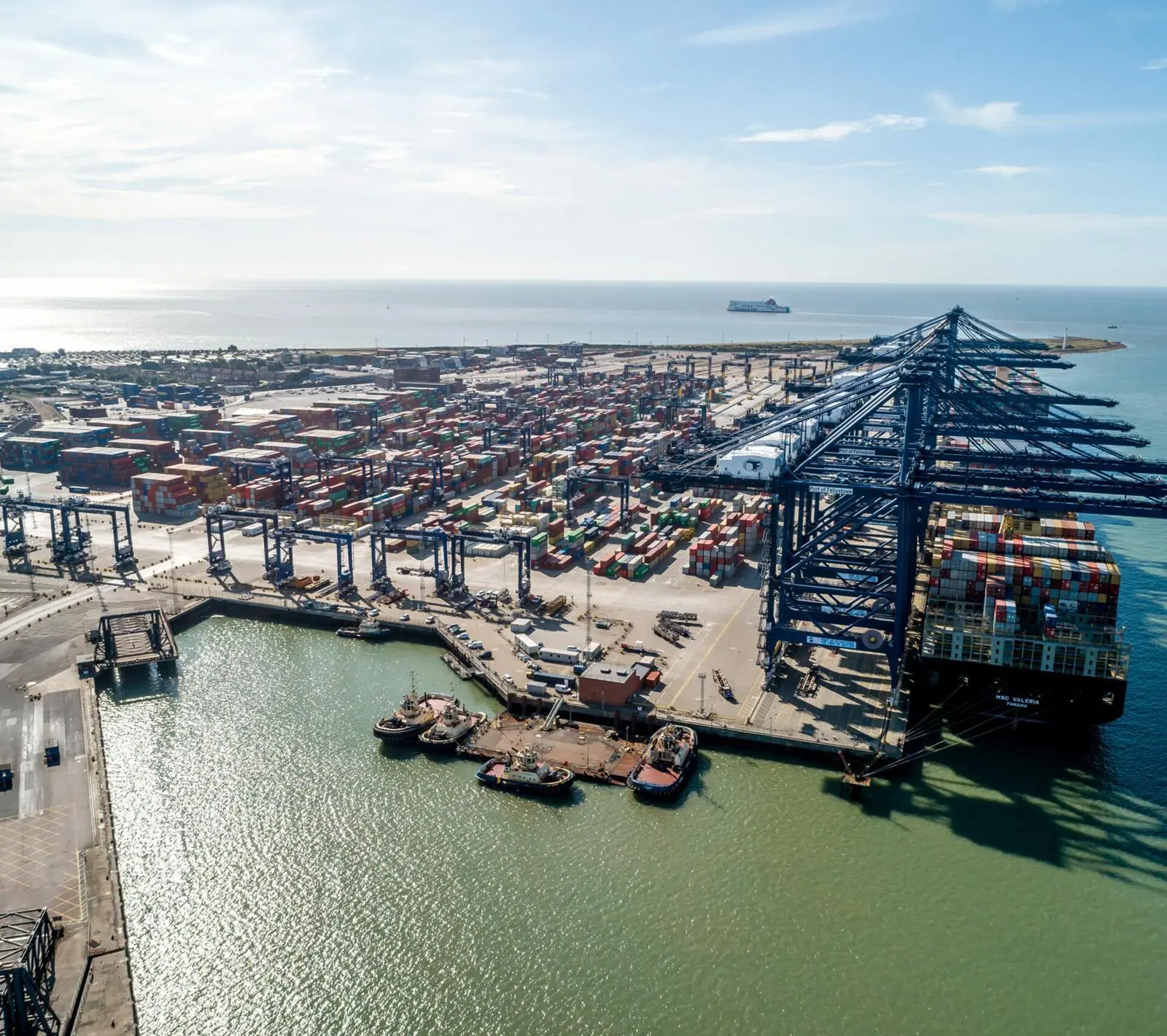
The private 5G network gives the port the capacity, coverage and latency profile needed for industrial scale automation. Autonomous truck projects are moving from test tracks to live operations. Remote-controlled crane operations are shifting people from cabs to control rooms. Sensors and cameras are proliferating.
Just as importantly, the Port of Felixstowe has gone through the hard organisational work of treating connectivity as a strategic asset rather than a background service. Operations, engineering, IT and safety teams have all had to engage in the design and migration of the new network. That cultural shift is as important as any technical milestone.
For other ports, the lesson is that the journey to a future-ready operation is incremental.
You do not move from paper-based processes to real-time digital twins in one leap. You start with specific, high-value use cases, such as truck automation or remote crane operations, and ensure the underlying network and data models are robust enough to support them.
Over time, as more assets and processes become connected, you approach the point where a true system-level optimisation becomes possible.
Safety as a design principle, not a constraint
In discussions about future ports, safety is sometimes treated as a constraint: a list of regulations that tell you what you cannot do. In reality, the technologies that will define the port of the future offer a chance to embed safety into the design rather than bolt it on at the end.
Consider three examples.
1. Line of sight. In a conventional yard, a driver often has limited visibility, particularly at night or in rain. In a future port, a remote operator might have synthetic views combining multiple cameras and lidar, plus automatic obstacle detection. That does not remove risk entirely, but it can remove certain classes of incident.
2. Human behaviour. Many accidents happen when people unintentionally enter spaces where they should not be, or when they are distracted. Geofencing, wearables and camera-based analytics can reinforce rules in real time, rather than relying solely on training and signage.
3. Fatigue. Automation and remote operations, if designed well, can reduce some of the physical strain and monotony that contribute to poor decision making. Operators can rotate between different tasks more easily. Ergonomic control rooms are easier to improve than crane cabs bolted to steel structures.
All these safety gains rely on the same foundations as efficiency gains: connectivity, data and intelligent systems. In that sense, safety and efficiency are not competing priorities in the port of the future. They are outcomes of the same design choices.
Where port leaders should start
The vision of a future port can feel daunting, particularly for terminals wrestling with day-to-day operational challenges. The key is to translate that vision into concrete steps.
There are several pragmatic starting points.
- Audit current connectivity and identify where public networks are being stretched beyond their design intent
- Identify one or two high impact use cases, such as remote operation of a subset of cranes or automation of selected yard moves, and scope what connectivity, data and change management they require
- Invest in a network and security architecture that can scale, rather than point solutions tied to a single project
- Bring operations, IT, engineering and safety together early, so that digital and physical changes are planned as one system.
Port of Felixstowe’s experience shows that this is not theory. With the right approach, it is possible to modernise the communications backbone of a major port while ships still sail and containers still move.
Ports that make those early investments now, whether in private 5G or other industrial connectivity platforms, will be far better placed to adopt the next waves of automation and decision intelligence. Those that wait risk discovering that the real bottleneck in their operation is no longer the quay or the gate, but an invisible layer of outdated connectivity.
The port of the future will be defined by how safely and efficiently it can turn information into action. The Port of Felixstowe is one of the places where that future is starting to come into focus.
Related Articles
 SPECIAL REPORTS
 FEATURES & VIDEOS
 FEATURES & VIDEOS