

Ian Ellis – MacDuff Ship Design
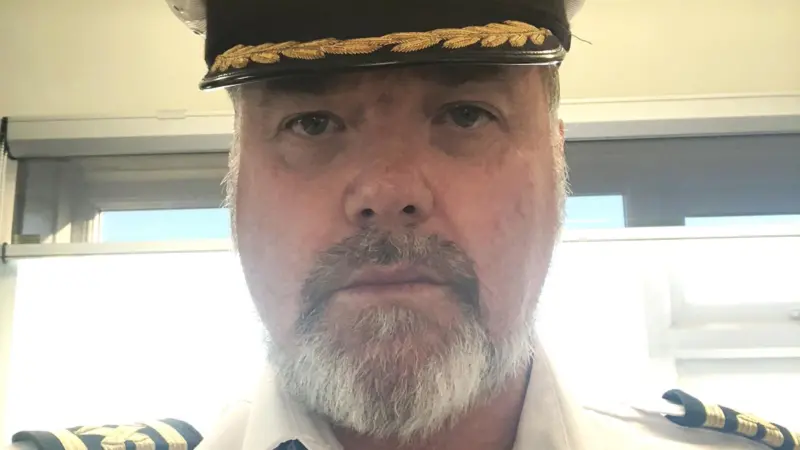
Some builds, admits Ian Ellis of MacDuff Ship Design, have taken him out of his comfort zone. However he seems, like the company, to thrive on a challenge.
“It’s getting over the mental barriers, more than the physical calculations or the build, that are the hardest,” he says.
For example, working on the recently delivered 45m ‘Atco Noura’ patrol boat meant changing a whole design philosophy: “Our tugs and fishing boats have been typically over-engineered as it’s the nature of this type of vessel ; the idea has always been, ‘you can’t go far wrong by ensuring it is strong enough,’ but these vessels don’t tend to have too many weight constraints.”
However, this build was “completely the other end of the spectrum” he says: it needed a steel hull for economy and maintenance, but it still had to be capable of achieving 32 knots. So, Mr Ellis and the rest of the design team needed to get both their ideas, and Atco Noura, into shape for its design.
It won’t be the first time he has had to change his thinking.
“I found I was on a pretty steep learning curve when I started at MacDuff Ship Design back in the mid-90s,” says Ian Ellis, the company’s MD since last summer. “It was very different from the theory at Newcastle university.” He was very much involved in the company’s own first newbuild, a 24m stern trawler. “It was a big step for both the company and myself, and because we were a small company, everyone was involved in the whole design process” he says. “It meant learning very quickly.”
Nevertheless, the niche that the company was set up to fill was closing: “By the early 2000s the fishing industry in the UK was declining… the decision was made to start a push into the workboat and harbour tug markets.”
More challenges came with MacDuff’s first tug, the 13m Fair Maid of Perth, delivered in 2005: “It meant creating a whole new hull form in order to fit suitable propellers inside the shallow draft,” he explains.
“This boat really opened up the market, and I still see the smaller multipurpose vessels and harbour tugs as being our bread and butter – although we’ve done all sorts things since then.” The ‘all sorts’ includes everything from fishfarm boats to oil treatment barges and ferries – and along the way the company has developed a good relationship with the Torgem shipyard in Turkey, which, says Mr Ellis, has meant opening up to even more designs.
But he admits there are always challenges involved when making changes, for example the office take-up of CAD. “The package just sat in the office for about six months; we all kept thinking, we’ll use it on the next design – then after one Christmas break we said, ‘it’s now or never’.” Interestingly, he says it hasn’t made initial concept drawings any quicker to create, “but as well as making these drawings, they are much easier to modify so there are huge advantages when it comes to the detailed design process”.
“The really enjoyable thing about Macduff Ship Design is that the boats usually are of a size where one person can ‘take ownership’ of an entire project, and there’s a lot of satisfaction in leading a design. This has helped to keep our team together over many years.”
By Stevie Knight