

Thursday marked the 35th celebration of World Maritime Day. This year’s theme is ‘IMO: One hundred years after the Titanic’.
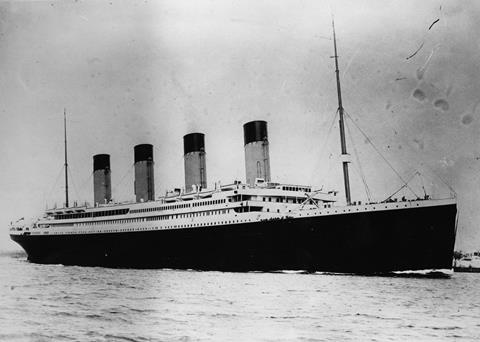
It is a theme chosen by the International Maritime Organization (IMO) to reflect on the safety of passenger shipping today, and into the future, on the centenary anniversary of the Titanic disaster.
In his World Maritime Day message, IMO Secretary-General Koji Sekimizu recalled that the Titanic tragedy, on 14 April 1912, which transformed in a few short hours the world’s most celebrated ship into a name forever associated with disaster, prompted the major shipping nations of the world, at that time, to take decisive action to address maritime safety. This led to the adoption, two years later, of the first ever International Convention on Safety of Life at Sea and, ultimately, to the establishment of IMO itself.
“Today, much updated and revised, SOLAS is still the most important international treaty addressing maritime safety, Mr. Sekimizu said. “This year, as we look back on that pivotal disaster 100 years ago, I urge IMO Member Governments and the shipping industry as a whole to refresh their determination to improve and enhance the safety of passenger shipping today, and into the future.”
Mr Sekimizu used his message to announce that IMO is planning to hold a two day symposium at IMO Headquarters in London, in conjunction with IMO’s Maritime Safety Committee next June, on the ‘Future of Ship Safety’.
The idea is to go beyond the current safety issues under the Committee and rigorously consider the future of maritime safety. The objective is for the discussions to contribute to the future advancement of the Organization’s maritime safety policy.
Mr. Sekimizu referred to the comprehensive body of international conventions, supported by hundreds of guidelines and recommendations that, between them, govern just about every facet of the shipping industry, from the drawing board to the scrapyard, developed by IMO, which have led to shipping today to be safer, cleaner, more efficient and more secure than at any time in the past.
“But each new generation of vessels brings fresh challenges and, regrettably, accidents still occur, reinforcing the need for continual improvement. Our efforts to promote maritime safety, not least of passenger ships, will never stop. We should respond quickly to accidents and we must be proactive, he said.
“The lives of thousands of people are in the hands of the ship's management, the captain and crew and the operating staff. I therefore hope that this sector, in particular, will take the opportunity to lead the way, because ‘safety’ is its main product, not comfort, entertainment or leisure. Without safety, the industry will not survive, let alone sustain its growth. And real safety does not result simply as a consequence of regulation compliance.
“Some 20 years ago, the International Safety Management Code, adopted by IMO, represented a step change in the establishment of a safety culture in shipping. The time has now come to generate another step change. This will not be achieved through legislative measures alone. We must generate a new impetus in shipping to go beyond compliance with regulations and explore industry wide mechanisms to ensure the safety culture is embedded throughout the entire industry.”
The 2012 World Maritime Day message in full, including a video message, can be downloaded from the IMO website at:
http://www.imo.org/About/Events/WorldMaritimeDay/wmd2012/Pages/default.aspx