




FEATURE: Clearing Germany’s WWII subsea ammo
Firms are putting themselves forward to clear more than a million tonnes of World War II ammunition that still lie dumped on the seabed around Germany’s coastline.
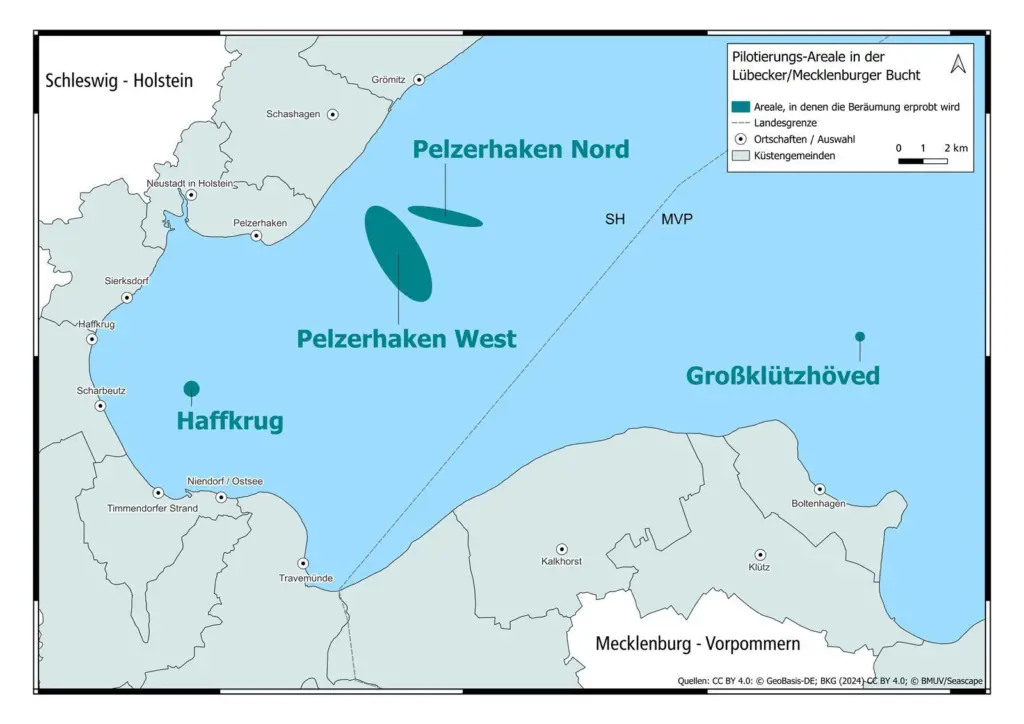
Around 1.3 million tonnes of mines, grenades, torpedoes and cartridges are believed to be in the German North Sea, and about 300,000 tonnes in the Baltic Sea. Even chemicals used in warfare are believed to be under the waves.
Dumped deliberately during and after the second World War, the munitions could still be live and toxic and the more they rust and degrade, the more dangerous they become, releasing substances that can damage the environment.
One common ingredient from the kind of conventional munitions lying below the waves is trinitrotoluene (TNT), which scientists have long examined for its effect on the oceans.
In the Environmental and human toxicology studies on explosive chemicals leaking from submerged munitions paper by toxicologist Edmund Maser and colleagues, the toxicity and carcinogenicity is highlighted, as well as its metabolites in water, sediment and marine organisms – although the findings do not show that the poisons have entered the food chain.
Taking action
Politicians have begun to take action, and are looking at ideas from two companies in particular as to how to rid the seas of the explosives.
Germany’s federal minister for the environment Steffi Lemke, from the Green Party, last year approved €100 million for an immediate action programme to begin clearing.
While much of the clearance is being done on a case-by-case basis – in preparation for building infrastructure, for example – the immediate action programme aims to clear it on a larger scale.
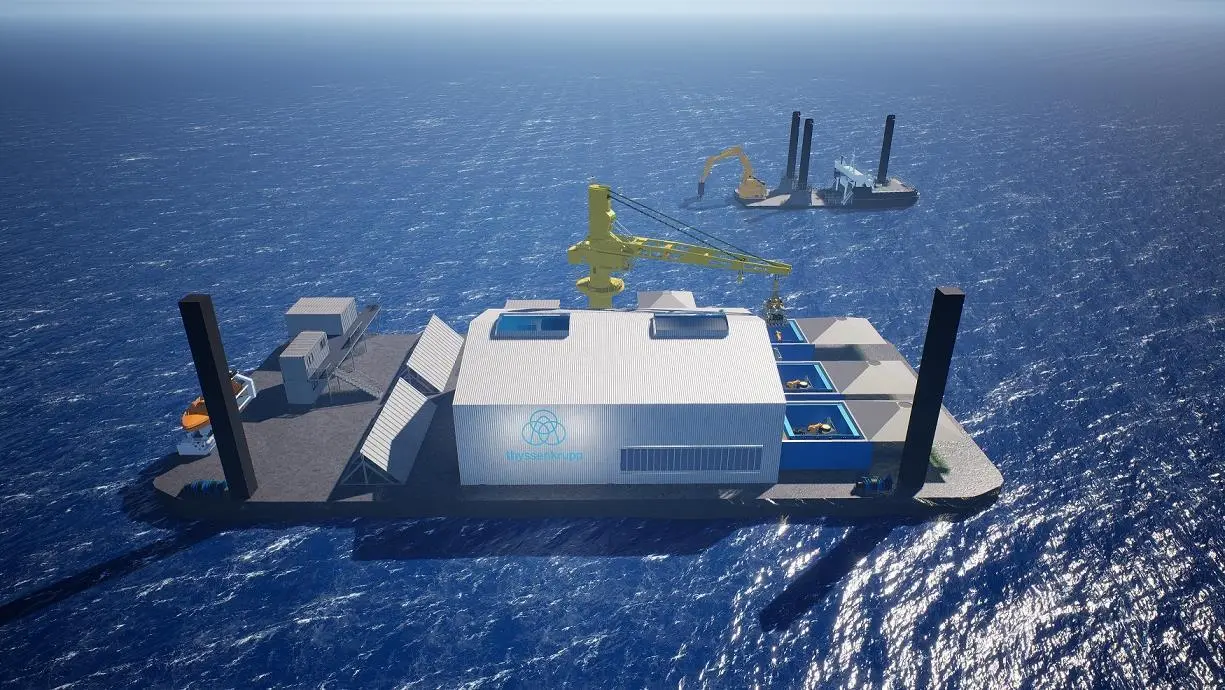
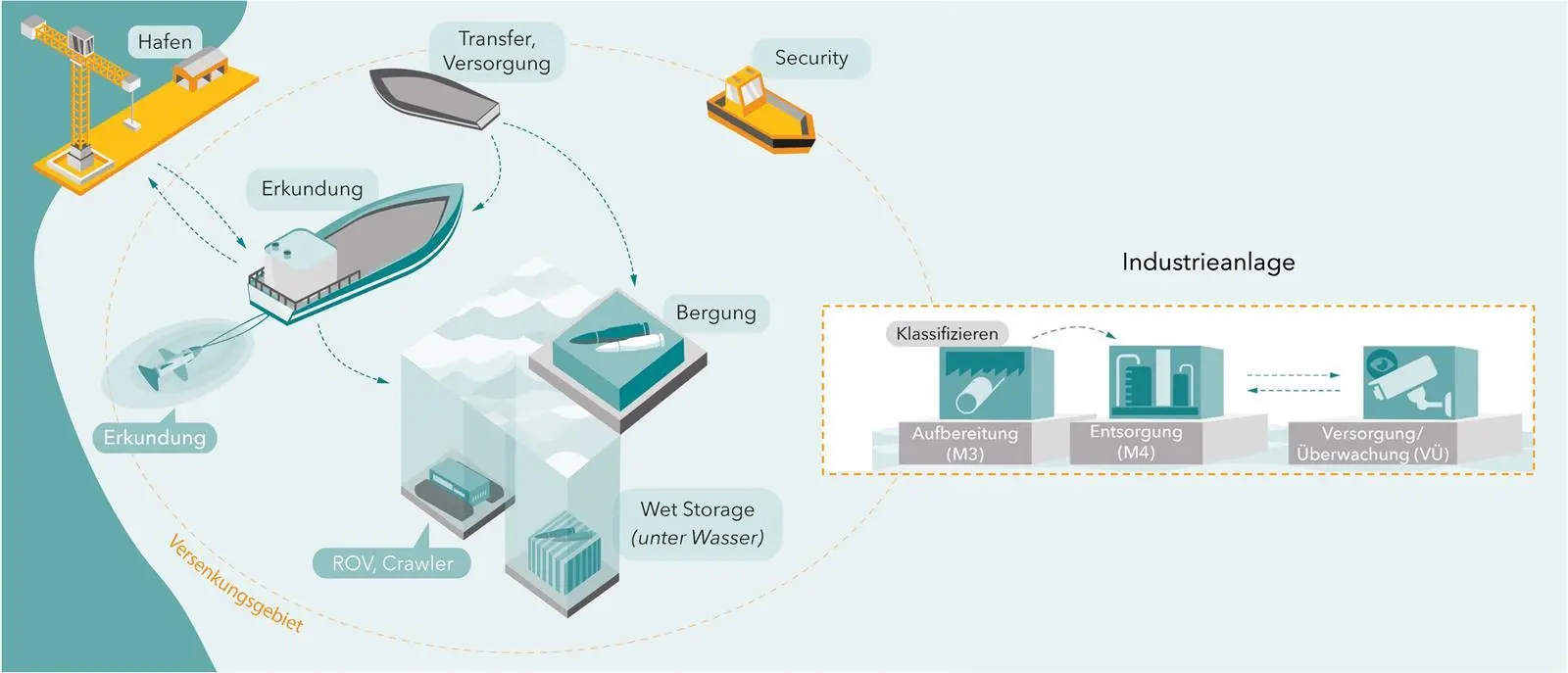
This, says Wolfgang Sichermann, of Seascape in Hamburg, which is managing the programme for the federal government, will be done by incinerating the old ammunition on a specialist platform out to sea.
“In the end, we want to demonstrate the functionality of the entire process chain,” says Sichermann.
The first steps to be taken are of course identifying where the munitions are, so this would be done from the surface, using sonar and magnetic systems coupled with autonomous underwater vehicles (AUVs).
Remote-controlled underwater vehicles (ROVs) will be used to move along the seabed, recovering old ammunition as far as possible without having to use human divers.
Once collected, the munitions would be brought to the surface in a basket by crane, says Sichermann, who used to work for naval shipbuilder Thyssenkrupp Marine Systems before becoming managing director of the German Maritime Centre.
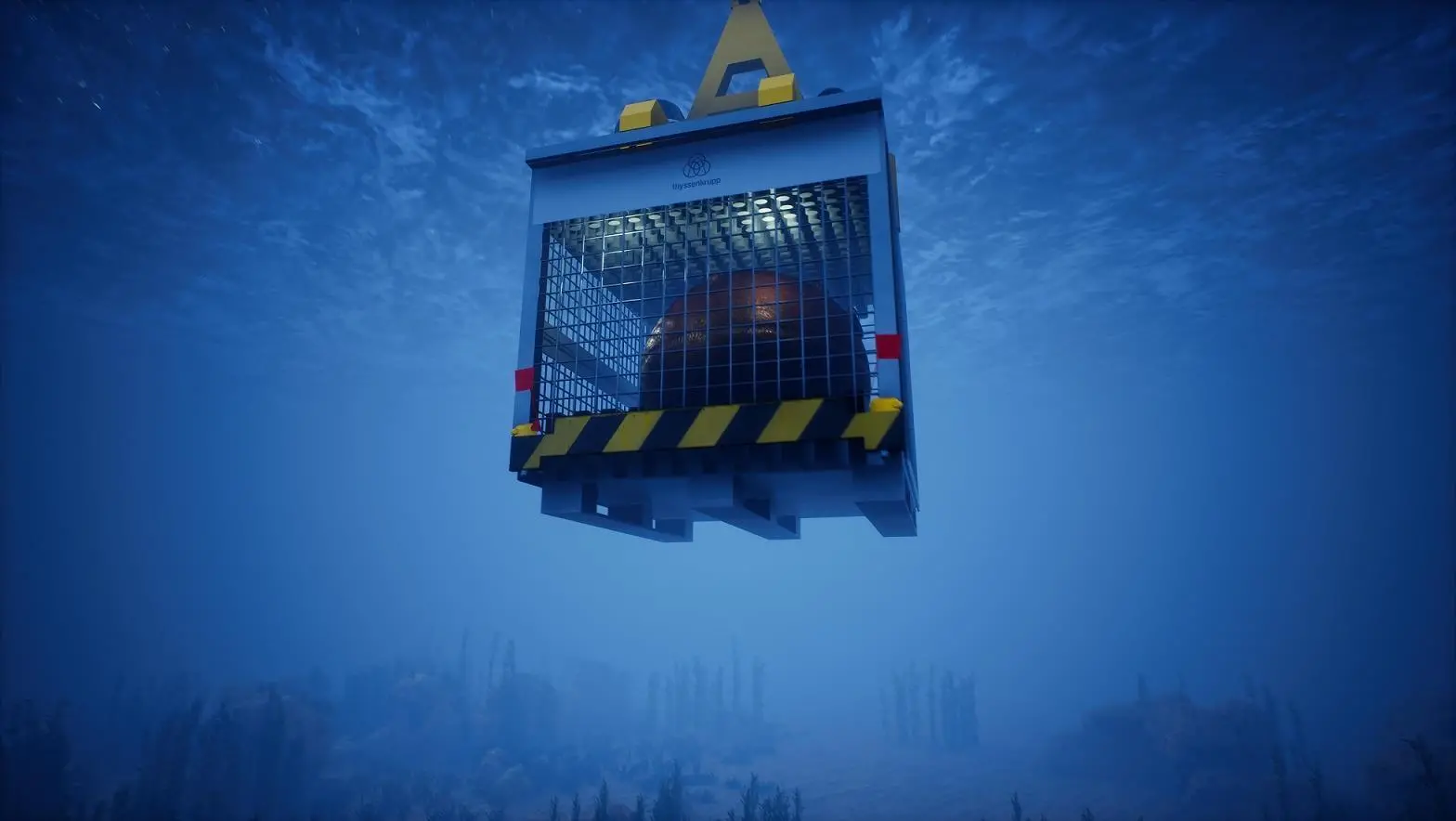
Detonators would be removed, ammunition broken down and explosives incinerated in a special furnace on a platform, or ‘disposal unit’, as Sichermann calls it, on the surface of the sea.
A prototype of the platform should be ready by the end of 2026. Sichermann says, to prove disposal at sea can be done safely.
Poised to compete
Disposal at sea could then be trialled and a pilot phase for salvage is due to start as early as September 2024. This would involve clearing various areas in the Baltic Sea from ships or salvage platforms – but still without a disposal platform and therefore without disposal at sea. The cleared munitions will either be disposed of onshore or provided in wet storage facilities for testing of the disposal platform at sea.
Thyssenkrupp Marine Systems from Kiel is in the starting blocks. The company wants to apply for the federal government’s tender for the development and construction of the disposal platform, says Product manager Dr Martin Rütten.
Depending on the tender and government requirements, a floating platform could be anchored near the operations and used for this incineration and breaking-down process.
The other major company in Germany positioning itself for the immediate action programme is Rheinmetall, which has come up with an Entsorgungs Modul Munitions Altlasten (EMMA), which means Ammunition Waste Disposal Module. An existing offshore platform combined with an existing ammunitions disposal facility will be at the heart of EMMA.
Working with Norway’s WilNor Governmental Services, part of the Wilhelmsen Group, one possibility is to use the ‘unique infrastructure with the space, facilities and skilled employees to build an appropriate platform and integrate the necessary systems’ by partner German Naval Yards Kiel.
Whichever companies do the clearance, it will take some time.
“Our platform design will be able to dispose of around 600 tons per year,” said Rütten of Thyssenkrupp. “Assuming that half of the 300,000 tons of war munitions in the German Baltic Sea are accessible and safe to transport, it would take 10 platforms 25 years to dispose of them.”
Related Articles
 OTHER NEWS
 SPONSOREDSTORY
 INDUSTRY NEWS