
Lack of training led to crew death, probe finds
A member of crew died when a tug manoeuvre was carried out under supervision of a captain who was still in training himself, an investigation has found.
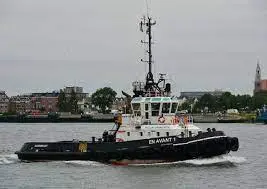
Insufficient training and lack of communication led to a fatal accident on board a tug in August 2021, the Dutch Safety Board has concluded.
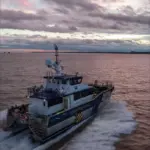
One tug crew member died and another was hospitalised after the accident on board the tug En Avant 7, which happened while assisting a bulk carrier at the Eastern harbour at Moerdijk, in the South of the Netherlands.
“The immediate cause of the fatal accident is the entrapment of two crew members between the tow wire and the superstructure of the tugboat,” said the Dutch Safety Board report. “During a manoeuvre, the tow wire rotated further than usual. The tow wire suddenly came under tension due to over-twisting. The two crew members who were guiding the tow wire became trapped between the superstructure and the tow wire.”
It then says the captain was unaware of whether the workplace was safe while making the turn.
“The manoeuvre had not been discussed with the entire crew in the new composition and the crew members had different expectations of the role of the other,” the report says. “The Board further noted that the captain was responsible for supervising the trainee on board. Due to the nature of the work on board, and because the captain himself was still in training, the captain did not have experience and routine to supervise a trainee.”
Gary Clay, director of Fathom Safety, which was set up to improve maritime pilot safety, said that while towage was a routine operation in most ports, the ability of potentially dangerous situations to rapidly develop were ever present.
“This case once again demonstrates how a number of circumstances can align and lead to tragic consequences,” he said. “In this incident a combination of insufficient training, inadequate supervision and a lack of structured briefing and procedures resulted in a fatality.
“Having clear, structured training, development and operational procedures are essential regardless of the size of the vessel and the applicable legislation.
“The maritime sector is an understandably high-risk environment and towage is no exception. It is essential towage providers pay due regard to the importance of having skilled and competent crew both at the controls and on the deck.”
En Avant 7, which is owned by Dutch shipping company Muller, was built in 1981 and is moored in Dordrecht.
The Dutch Safety Board has made several recommendations to Muller, including developing a system to determine the qualifications of crew members and implement training programmes.
It says that because in 2002, specific training courses for tug captains were abolished and the responsibility for training transferred to shipping companies, control measures for high-risk activities is primarily organised by the shipping company, in cooperation with the crew, so that they are less dependent on the situation on board alone.
“By submitting a training programme to the shipping company, there are differences in degrees of quality,” it says. “The board recommends providing clear frameworks of requirements for ship-specific education and training objectives for tug captains on Dutch inland waterways.”