

MCA warns of risk-to-life counterfeit pilot ladders
The UK’s Maritime & Coastguard Agency has issued a safety bulletin following the discovery of counterfeit pilot ladders by the US Coast Guard during a Port State Control examination at the Port of Baltimore in the US.
The plate and certificate indicated that the ladder was produced by “Qingdao Good Brothers Marine Life Saving Appliance Co. Ltd”, a company that manufacturers SOLAS-approved pilot ladders.
But while the ladder’s serial number matched its certificate, the number of steps and the length of the ladder did not align with the specifications listed on the certificate.
It echoes an incident in March 2019, when the Australian Maritime Safety Authority identified counterfeit pilot ladders falsely bearing the company’s name and SOLAS certification.
The US Coast Guard inspection discovered several errors, including referencing ISO 779-1 instead of the correct standard ISO 799-1 along with lacking the standard designation type.
“Preliminary findings show that there were more than 400 incidents or accidents during the 96,000 transfers conducted with the use of a pilot ladder in 2022,” says the union Nautilus International, quoting MAIB analysis of feedback from more than 100 UK harbour authorities on pilot transfer operations.
“One quarter of these were the consequence of shackles rather than rolling hitches being used to secure the pilot ladder side reports and a further 23% occurred because of the poor condition of the pilot ladder.
“A further 13% happened because handhold stanchions were not fit for purpose, while the remaining 39% of reported incidents and accidents involved issues such as the length of the ladder, its position against the hull, and incorrect rigging of the tripping line.”
Safety campaign
Organisations representing marine pilots worldwide have long campaigned for the safety of their members during critical boarding and disembarking phases of their work. The sole purpose of employing marine pilots is to enhance the safety of the ship’s entry and exit into and out of ports, including providing ‘local knowledge’ for the ship’s crew.

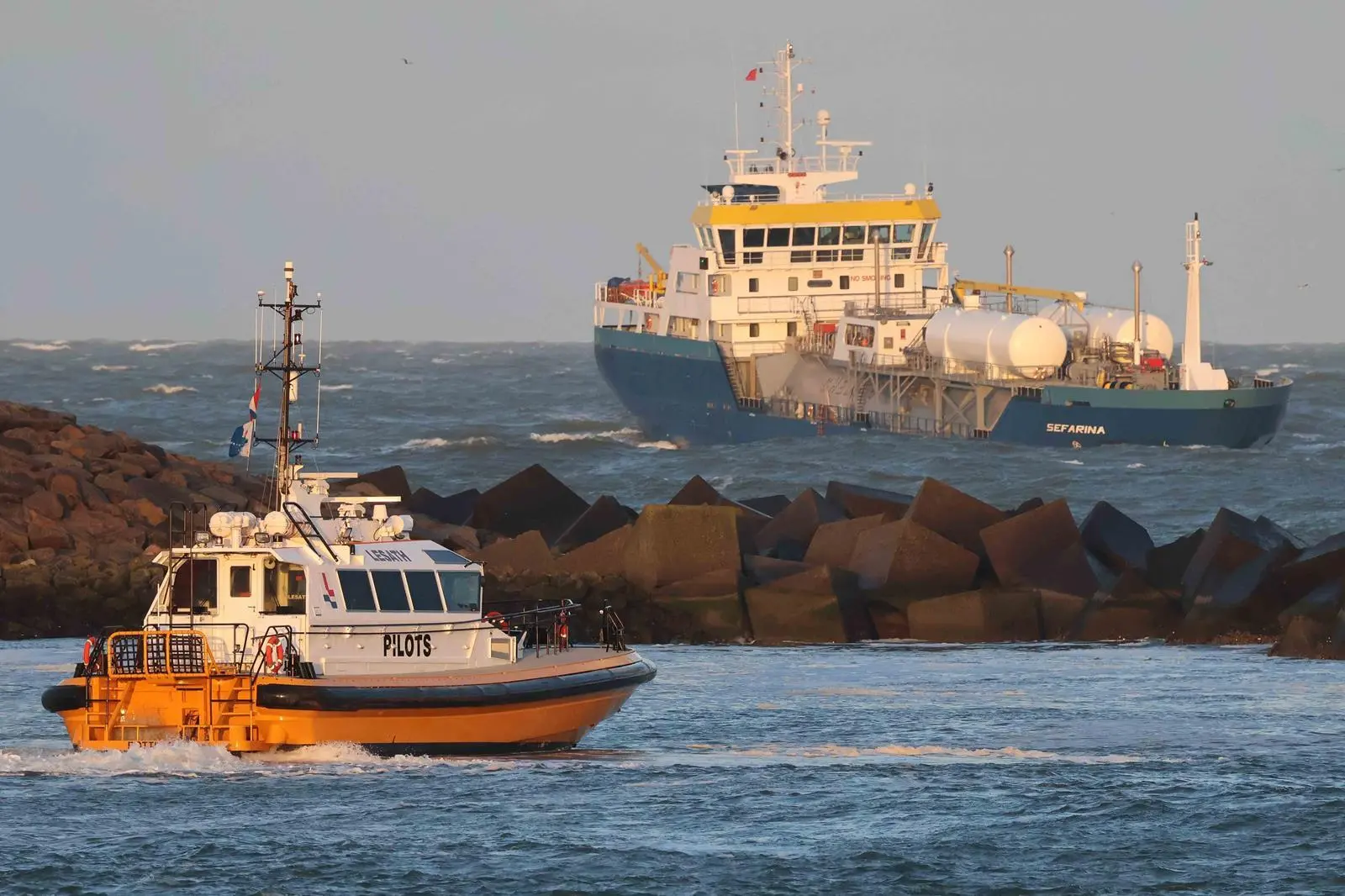
For pilots themselves, however, the hazardous phase of transferring from a moving pilot cutter, perhaps in inclement weather, to the vertical ladder or combination ladder of a similarly moving ship, then ascending what can be some considerable distance before arriving at the safety of the ship’s deck, presents potential dangers.
Examination of accidents and near misses has previously identified either sub-standard or wrongly rigged ladders as being a factor, and an indication of how serious pilot organisations view the subject is the UK Marine Pilots Association’s website’s home page, which has a Non-Compliant Pilot Ladder Reporting Info & Form link where members can report discrepancies.
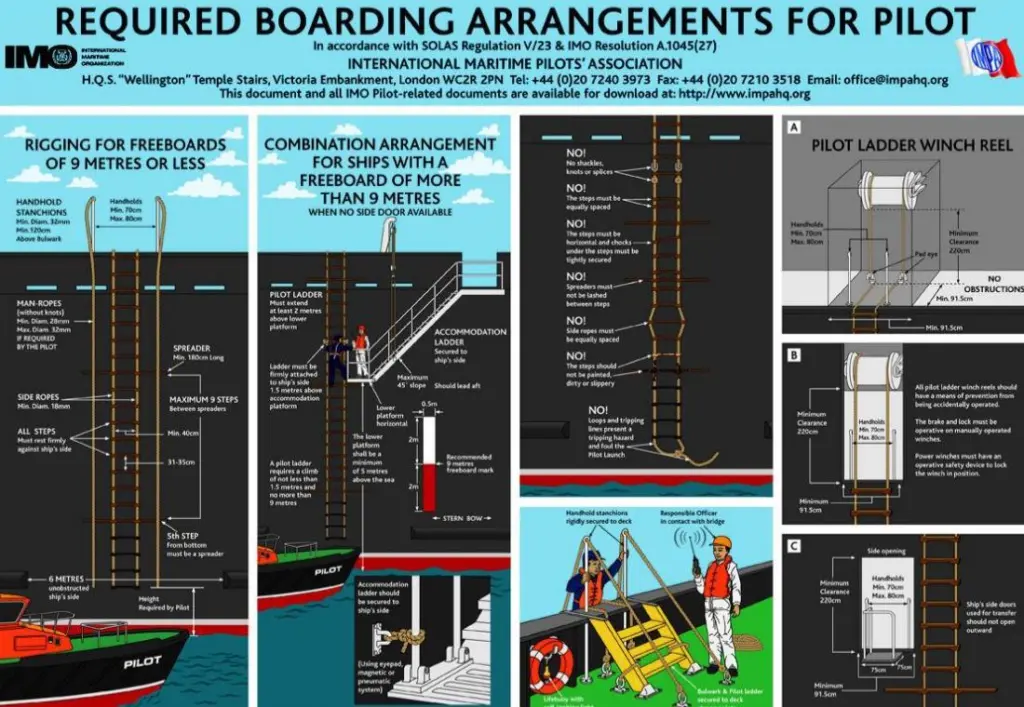
Its extensive Code of Safe Practice for the boarding and disembarkation of pilots says pilot boat coxswains or VTS should confirm with the ship’s master that the pilot ladder is rigged in accordance with current IMO and SOLAS regulations. Where the ship has a freeboard of more than 9m (and when no side door is available), a combination ladder is required.
Clearly the ladder itself is potentially the ‘weak link’ connecting the pilot with the ship, therefore essential that it is in top condition, meets the required standard and is rigged properly by the ship’s crew.
Lloyd’s Register
“A fall from a pilot ladder is a serious matter. From a height of nine metres, a person will hit the surface [water or pilot cutter’s deck] at a speed approaching 50km per hour,” says Erik Mooij, group senior HSES manager at LR.
Included in its exploration of the key challenges with pilot ladders, LR’s guidance, published in 2023, explains how crews can ensure their safe operation at all times.
Mooij points out that design of these ladders has remained relatively static over the last few decades, with no major changes to either their form or function, and that around 20% of pilot ladder deployments fail to meet basic safety standards outlined by IMO and the International Maritime Pilots Association.
The final decision whether or not to board a ship rests with the pilot and the operation can be stopped if they feel an unsafe ladder is present. But of course aborting can in itself lead to further risks if the ship is committed to an approach channel without the pilot’s expertise, not to mention potential commercial delays if the vessel’s arrival is halted.
Mooij also points out that it can be difficult to detect problems from sea level – even with an expert eye. Responsibility for ensuring the safety of this phase rests with the ship, and the paper stresses the importance of proper inspection and maintenance regimes for ladders that can be used on almost a daily basis or very seldom, and are subject to the vagaries of weather and storage arrangements.
In-depth crew training is key, where the pilot’s life can literally be in the hands of those charged with maintaining and operating pilot ladders.
Training should include identifying accumulated defects with particular attention to combination ladder, which in addition to a short conventional ladder element are a more complex arrangement requiring specific seamanship skills.