



Salvaging the ‘Dali’ after fatal bridge collapse
As the authorities in Baltimore prepare to untangle the container ship Dali from the collapsed Francis Scott Key Bridge, the local community along with the wider shipping industry are starting to untangle the circumstances surrounding the accident and extract any ‘lessons learned’ for the future.
Ships coming into contact with other objects generally attract little attention beyond the maritime community, usually restricted to webcam clips doing the social media rounds.
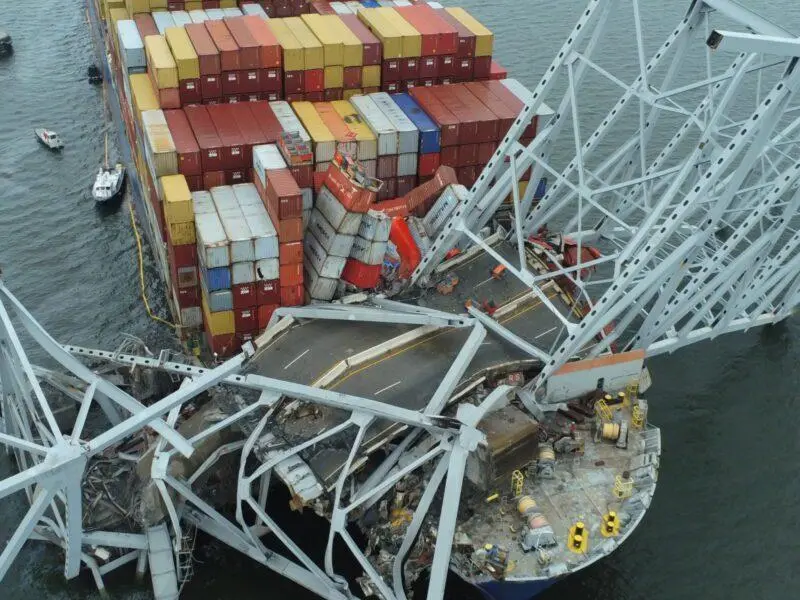
When the outbound container ship Dali lost power and struck one of the bridge’s support towers the result was little short of catastrophic, with virtually the entire bridge collapsing in seconds. A warning by the ship of its dilemma allowed the bridge to be closed to road traffic, but a team of eight persons working on the bridge plunged into the water following its collapse.
The immediate consequences were widespread, affecting not only the port but also local communities, for whom the bridge was a major artery.
The access channel was blocked, the ships within effectively trapped and while there are tunnels and bridges upstream, vehicles carrying hazardous materials are prohibited from using them, adding to the ensuing congestion, which is unlikely to ease potentially for years until the bridge is rebuilt.
Response
The immediate priority was search and rescue.
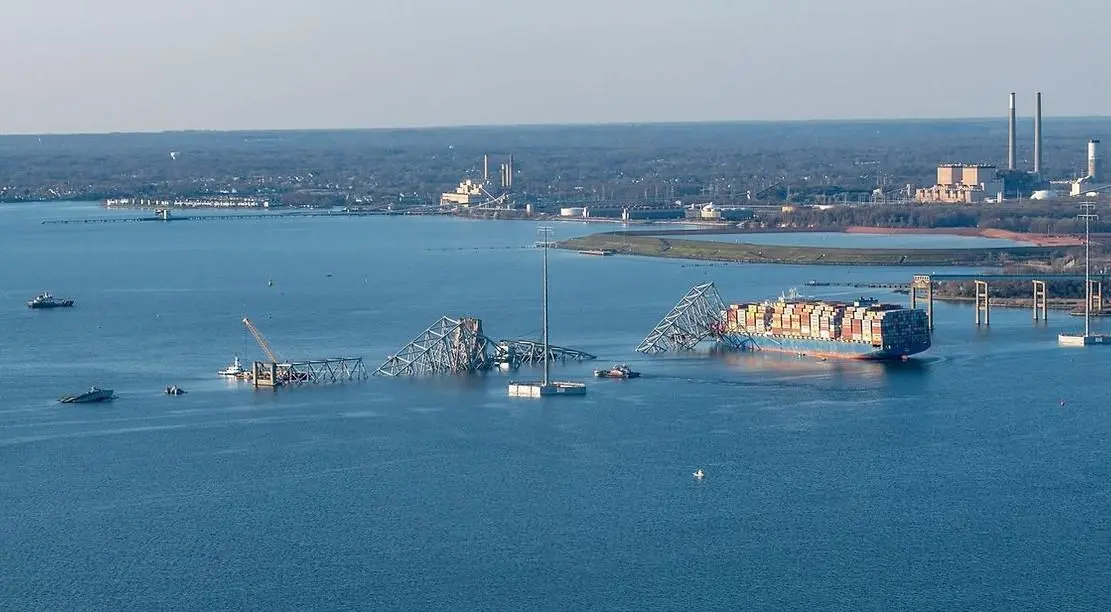
Two of the bridge workers were rescued, two bodies were recovered and the remaining four are now assumed not to have survived. No serious injuries were reported to the 21 crew and two pilots on the container vessel.
A Unified Command was established ashore, including the USCG; US Army Corps of Engineers (USACE); Maryland Department of the Environment; Maryland Transportation Authority; Maryland State Police; and Witt O’Brien’s, representing Synergy Marine.
The next priority was to remove wreckage from the seabed to allow access to the port, along with freeing the Dali, reportedly pinned to the seabed by bridge sections lying on its forepart.
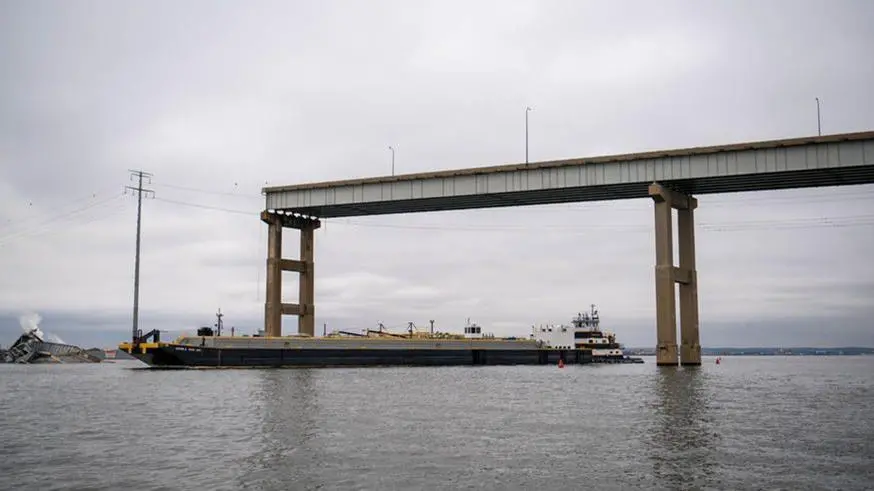
Progress was made with clearing the seabed, allowing a pusher tug and fuel barge to transit a temporary alternate channel with a depth of just 3.35m and vertical clearance 28.9m just a week later, with a second deeper temporary alternate channel opened the following day.
The two elements of the recovery operation involves both marine salvage expertise and similar skills from federal, state and local players for the shoreside elements, including removing the bridge debris. Seven cranes, 10 tugs and nine barges along with more than 1,000 specialist workers are reported to be involved in the recovery operations.
Subsequent global speculation has been widespread but it is reliably reported that USACE is leading the efforts to clear the channel.
It is also reported that Dali’s charterer, Maersk, has appointed Fort Lauderdale-based Resolve Marine to salvage the vessel, while New Jersey-based Donjon Marine is among the other non-government organisations mobilising equipment, including a crane barge.
Lessons learned
The National Transportation Safety Board (NTSB) will investigate and eventually report on the accident in the wake of wild speculation on every aspect of the accident, from the design of the bridge to Port of Baltimore’s operational procedures.
One aspect that soon gained traction was the tug arrangement for vessels using the port.
Two shiphandling tugs assisted Dali from its berth, including turning it to leave via the Key Bridge before being released as per standard practice. The question has been asked whether the ship could have been brought back under control if tugs were still in attendance.
Other ports where escort tugs accompany ships, including under bridges, have been mentioned and it is important to consider the term ‘escort towing’ in this context.
Escort towing generally involves a powerful tug tethered to the ship’s stern to influence its heading (for example if the ship loses steering) from forces generated by the hydrodynamic effect of the tug’s underwater hull profile.
Referred to as ‘indirect towing’, it is carried out when the ship’s rudder still influences its heading and at speeds greater than during ‘direct towing’ operations. NTSB reports that Dali’s speed was approximately seven to eight knots when it lost power, around the limits of when tugs operate in direct mode.
There is still much to emerge from the event that claimed six lives, and the eventual NTSB investigation and recommendations will provide the ultimate verdict.
For the communities around Baltimore, however, the consequences of the loss of their bridge will linger far beyond when the Dali is repaired and likely back in service.
Related Articles
 OTHER NEWS
 SPONSOREDSTORY
 INDUSTRY NEWS