![MaritimeJournal[Seawork]](https://www.maritimejournal.com/wp-content/uploads/2026/09/MaritimeJournalSeawork.svg)


Maasvlakte 2 – the story continues
Back in 2009 MJ started reporting on construction of Rotterdam’s Maasvlakte 2 port extension, eight years after opening in 2013 we return to catch up on progress.
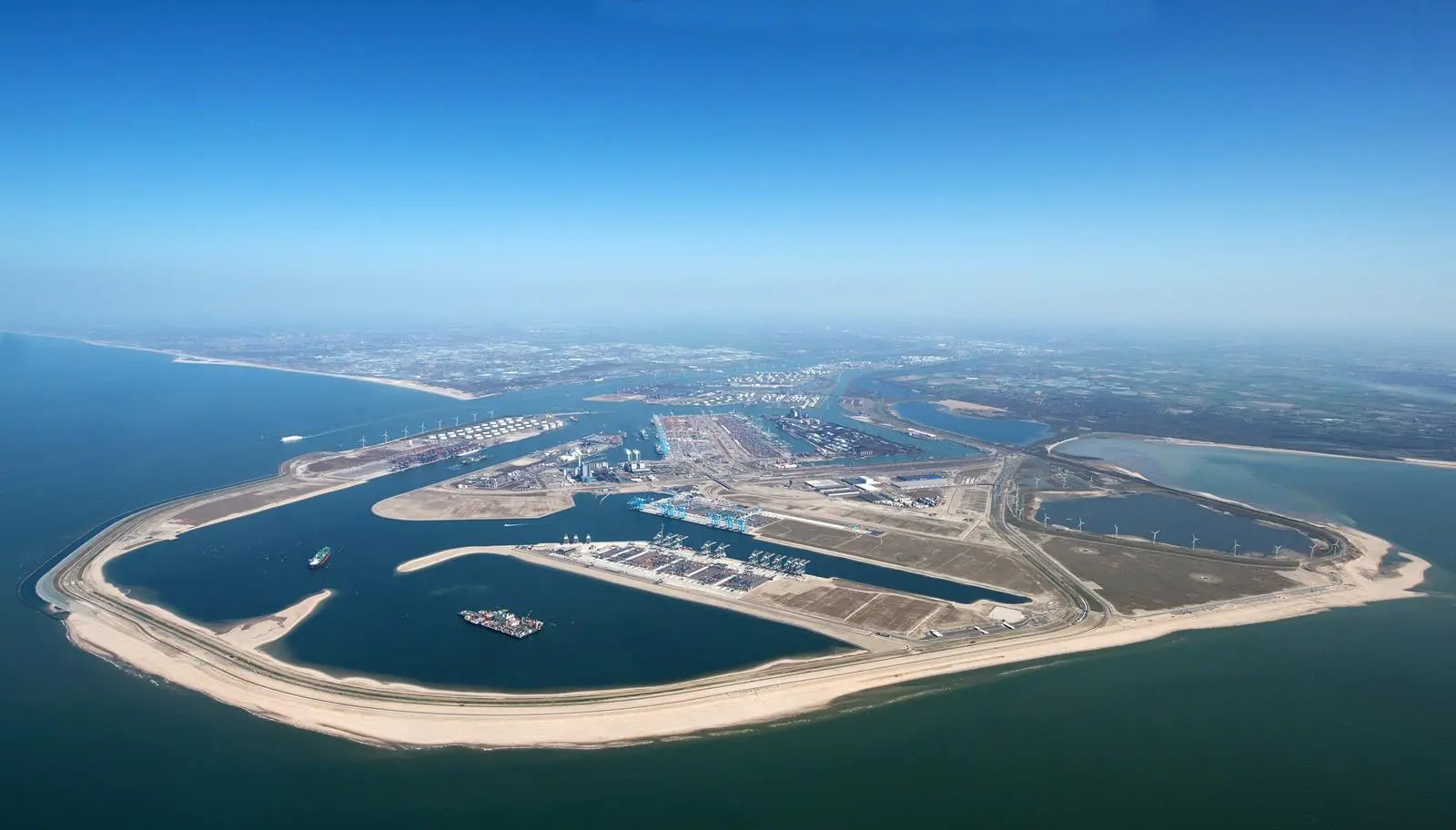
Maasvlakte 2 is just part of the port of Rotterdam story and early days with new tenants taking up residence created the analogy of a new neighbour moving in but yet to be accepted into the community and whose worth is yet to be established. With much of Maasvlakte 2 now spoken for and some of the first entrants already expanding their footprint it is clear that this new peninsular intruding into the North Sea and requiring maps of the Netherlands to be redrawn is now very much part of the larger community, seamlessly connected to the rest of the port of Rotterdam. It doesn’t do the story justice however to reflect only on changes at Maasvlakte 2 over the three years since the last review. As the rest of the port has developed and changed so the presence of Maasvlakte 2 has had its effect.
For ports historically located inland (think of London) urbanisation often sees maritime activities move gradually downstream towards the sea. Much of Port of Rotterdam Authority’s (PRA) estate is on the left bank stretching from the city to the coast 35km distant including Maasvlakte 2. As expansion moves westward, rather than surrendering vacated areas solely for non-maritime purposes, an element of maritime-related activities has been maintained. An example is where the former Rotterdam Drydock Company (RDM) at Heijplaat has been redeveloped as an ‘innovation showcase’ allowing companies in the maritime and offshore industries from start-ups to world players to develop, manufacture, test and demonstrate prototypes and new products.
DEVELOPING MAASVLAKTE 2
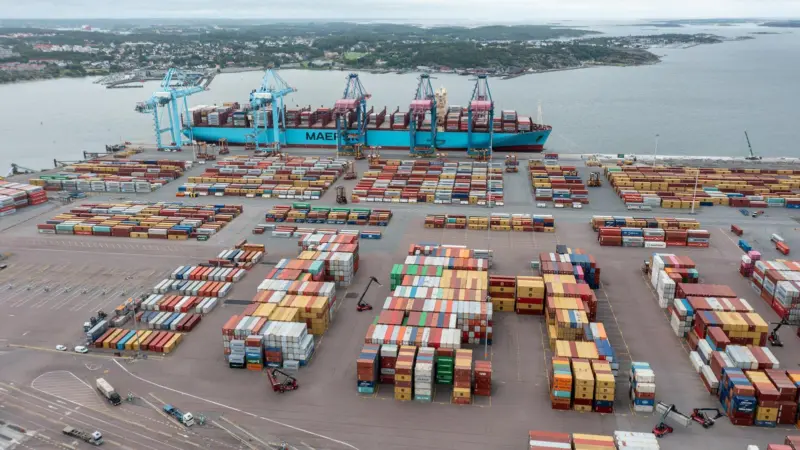
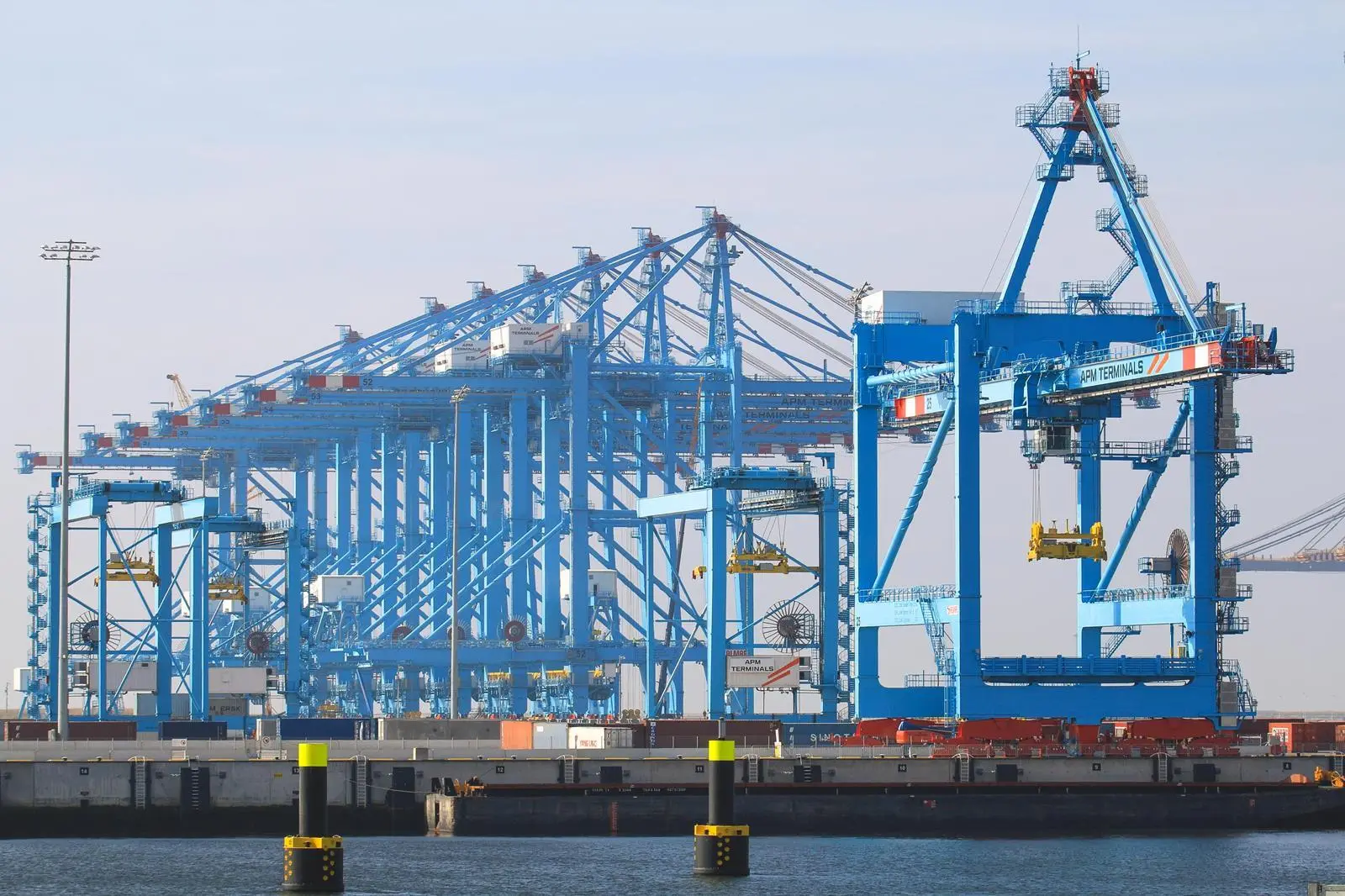
The first major tenants at Maasvlakte 2 were APM Terminals (APMT), part of A.P. Moller-Maersk and Rotterdam World Gateway (RWG), a consortium of APL, MOL, HMM, CMA CGM and terminal operator DP World. In 2015 they commissioned what were to become the world’s most advanced and automated container terminals, located at the 3km long Prinses Amaliahaven. Around half the available area was initially developed, both operators having since increased their number of gantry cranes with RWG reporting recently it had handled the five millionth container at its terminal. Earlier this year PRA stated it was to develop virtually all the remaining area of the harbour with the first elements due for completion in late 2022. It was also reported that APMT and RWG had signed options for the soon to be redeveloped area.
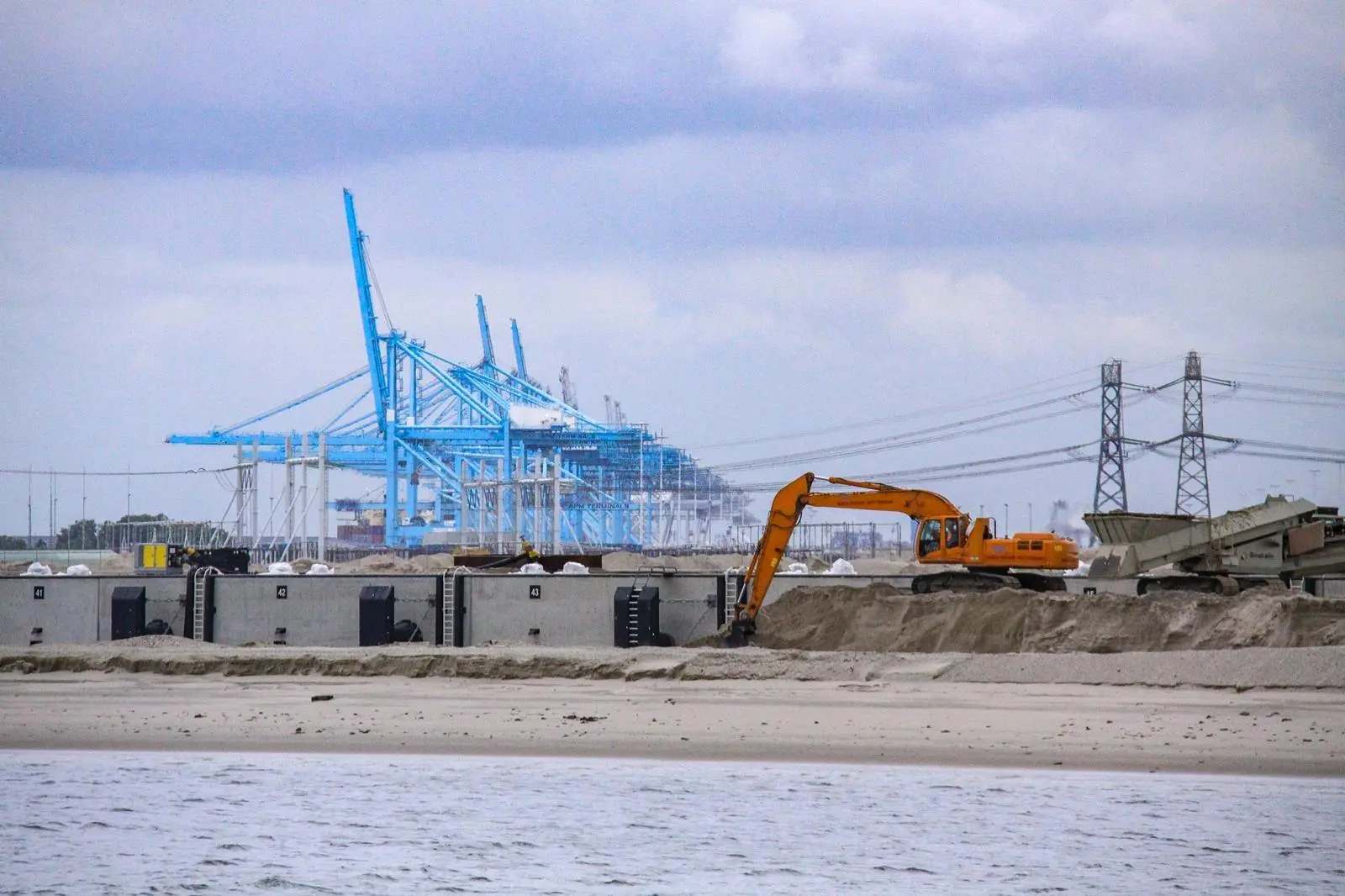
Around 240 million m3 of sand was dredged from 10km off the South Holland coast to win the land that is now Maasvlakte 2 covering an area of some 2,000ha and surrounded by a 4km long dike. During construction it was intriguing to see new land appearing from the sea only to disappear a few months later, the material moved to other locations as the harbours and quays took shape. This winning of new land continued in 2017 when PRA announced that 70ha of the Prinses Alexiahaven was to be reclaimed to become Offshore Center Rotterdam to service growth in offshore wind and anticipated demand for oil and gas platform dismantling. The land was formed but currently remains undeveloped, the point however is that the foundations are now in place, ready for whatever requirement comes along, then again they may take it away and put is elsewhere!
Rotterdam is pressing ahead with its energy transition programme, creating a ‘future-proof port’ through three steps: efficiency and infrastructure, transitioning to a new energy system and to a new raw material and fuel system and the authority’s presence in the offshore sector including wind energy has not been dimmed by the pandemic which brings us to another significant tenant to arrive at Maasvlakte 2.
Sif Group is a major player in the offshore wind industry manufacturing foundations and transition pieces including transition piece-less monopile alternatives and in 2014 PRA reached agreement with Sif Group and Verbrugge International to lease a 42ha site for a manufacturing facility including a 400m deepsea quay. The huge assembly building and storage area now dominate the area at the end of the Yangtzekanaal. In 2019 Sif Netherlands B.V. leased an additional 30ha, the expansion including 200m of additional quay with 16.5m guaranteed depth allowing close-to-quay jacking for installation vessels and first customer for the facility, due for completion in 2023 will be Siemens Gamesa for the Hollandse Kust windfarm project.
Sif’s exposed location is well-suited for wind turbines themselves and in 2019 GE Renewable Energy and Future Wind (a JV between Pondera Development and Sif Holding Nederland) agreed to the installation of the first prototype Haliade-X 12MW wind turbine, at the time the world’s largest designed for offshore applications. The agreement covers a five year test and 15 year full service and maintenance period. With 220m long blades and an overall height of 248m, around twice that of typical land-based turbines it now dominates the skyline.
LOGISTICS PARKS
Modern container terminals are more than deepwater quays, giant cranes and huge areas of land. Nearby logistics, or distribution parks are the norm now for onward handling of goods including provision of value-added services. Rotterdam has three logistics parks, including one adjacent to the terminals at Maasvlakte 2 and number four, Maasvlakte Distribution Park West is taking shape on the 38.5ha triangular area of land next to the contaminated dredged material depot De Slufter. In 2019 Busan Port Authority became launch customer leasing a 5ha plot, followed in March 2020 by development investor DHG who signed a contract for 30ha of the site, PRA reporting at the time ‘great interest in the remaining +/- 15ha.’
Rotterdam’s strength lies in its geographical location providing access to markets throughout Europe involving transshipment of goods from deepsea vessels to short-sea feeders, inland barges, and road and rail freight. There are five independent deepsea container terminals in the port, the new facilities for APMT and RWG and ECT’s three terminals, Euromax, Delta and recently acquired APMT terminal at Maasvlakte 1. Containers are often required to be moved from one terminal to another and to nearby distribution parks and rail terminals and in 2015 PRA announced what is by any measure a futuristic developments in the Container Exchange Route. The dedicated 17km road network will connect terminals, container depots, distribution centres and customs facilities within the Maasvlaktes undisturbed by other traffic and without taking up barge, rail or truck handling capacity. Autonomous vehicles will carry the containers, automatically identified at non-stop gates with monitoring and tracking via a cloud-based platform. PRA is also looking to wider applications integrating sensor technology and AI and in June 2020, with construction of the basic roadway infrastructure well underway the authority issued a ‘request for tender’ for provision of transport services involving both supply of hybrid transport vehicles and transport of containers. The hybrid element allows the vehicles to run autonomously or operated by a driver and PRA’s subsidiary PortShuttle will act as operator including planning transport runs, administration and invoicing.
During the planning process for Maasvlakte 2 an important consideration was the potential effects on the environment. Engagement with the public was important from the very outset and since 2009 PRA have included these stakeholders in its journey with the FutureLand visitor centre. With close views of the container terminals, FutureLand’s visitors young and old learned about not only Maasvlakte 2’s construction but as its scope widened, current and future developments in an around the port in general. It also provided a focal point for visiting delegations with facilities for VIPs.
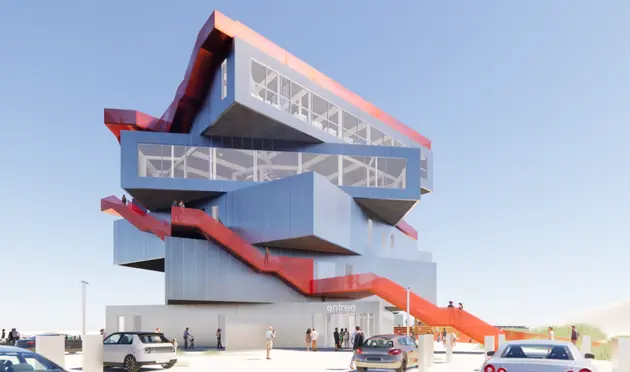
Earlier in 2021 with FutureLand nearing the end of its useful service life the decision was taken to replace it with a futuristic new Port Experience Centre (PEC) close to Maasvlakte 2’s leisure beach and the Prinses Amaliahaven. Scheduled for opening early in 2024 the facility will be important in keeping the region’s populace connected with the port, something often overlooked when attention is understandably and rightly focused on the commercial objectives of running a port of Rotterdam’s scale. Visitors now have the opportunity to learn about the port in Rotterdam’s city centre itself with the recent opening of the Port Pavilion next to the Leuvehaven in the Maritime District. Visitors can find information about exploring the port and can also share the experience of the Maritime Museum’s preserved historic vessels moored in the adjacent Leuvehaven.
EAST OF MAASVLAKTE
With Maasvlakte 2 established, what happens there influences and in turn is influenced by what happens in the rest of the port so while catching up with progress at the port’s new extension, it would be remiss not to take a brief look at developments elsewhere in Rotterdam.
In June 2020, Marseille Maersk sailed from APMT’s Prinses Amaliahaven terminal bound for Malaysia with a draught of 17.3m, a new record for container ships calling at Rotterdam. In December the same year, it was pipped by Marie Maersk with a draught of 17.4m. Depths in the channels and berths at Maasvlakte 2 were designed for the inevitable increasing size of such vessels but as the 20,000teu+ giants replace previous generation liner service vessels, those displaced often cascade down to other services with potential requirements for channels and terminals beyond Maasvlakte 2 to be capable of hosting larger ships over time.
In 2020, with ECT’s Delta Terminal handling the largest container ships a 500m stretch of the Amazonehaven was deepened from 16.65m to 17.45m including the option to dredge a larger section providing a comparable depth for at least two additional berths each 500m in length. Earlier, in 2019 a similar dredging campaign was completed with deepening of the Nieuwe Waterweg and Botlek by 1.5m over 25km providing access to the Botlek complex for vessels with draughts of 15m. It is worth noting that Rotterdam’s waterways can accommodate oil tankers and ore carriers with draughts of 22.5m (inwards) and 21.5m (outwards).
Rotterdam handled its first containers in 1966 at ECT’s City Terminal at Eemhaven (Heijplaat) some 30km upstream from Maasvlakte 2 and 5km downstream from the city centre. As deepsea container vessels increased in size they gradually migrated to the Maasvlaktes and in recent years Eemhaven has been used mainly by container feeder vessels. City Terminal is now developing into a container-related logistics location including where Kloosterboer is constructing a state-of-the-art, fully automated, high-rise cold storage facility with capacity for 60,000 pallets. On the right bank of the Nieuwe Maas the Merwehaven, now part of the ‘M4H’ complex is being redeveloped including transformation of the former cold storage warehouse into a multi-tenant location aimed at harnessing innovation skills similar to the RDM site opposite for the new generation of manufacturing companies. Another recent development is the Rotterdam Food Hub at Calandkanaal between Europoort and Maasvlakte. The 60ha site will service growth in the agrofood sector and include berths for refrigerated cargo vessels.
PRA has ambitious energy transition plans too extensive to include in detail here but typical is its response to the gathering pace of the hydrogen economy including Shell’s plans to establish a hydrogen plant on Maasvlakte 2, connected to its refinery at Pernis via pipeline by 2023. Thyssenkrupp Steel and HKM’s joint ambition to set up an international hydrogen supply chain has also not passed unnoticed in the debate about hydrogen production and Rotterdam.
The authority is also exploring carbon capture and storage but a more immediate development with emission reduction in mind is the establishment of cold-ironing facilities where seagoing ships and inland barges can plug-in to shore electric supplies when alongside allowing on-board generators to be shut down. Rotterdam, Antwerp, Hamburg, Bremen and Le Havre are working together to provide large container ships with shore-based power by 2028. Cold-ironing has been compulsory for Rotterdam’s 500+ inland vessel berths for some years and in 2019 five commercial parties launched a pilot project to explore various shore-based mobile power solutions at Parkkade in central Rotterdam. Fixed facilities are now being established around the port, and worthy of mention is the shore-based supply due to be commissioned this year at Heerema’s location on the Rozenburg peninsular. Electricity generated locally by wind turbines will power Heerema’s vessels that use the berths including its large crane ships.
Summing up, Maasvlakte 2 now appears to have been adsorbed into the overall fabric of the port. While new warehouses, larger lorry parks and container terminal extensions will provide visual clues to growth, it is the future in the areas of energy transition, emission reductions and digitisation that will perhaps be of more importance and provide greater change into the future.
By Peter Barker