



Dutch consortium finalised to upgrade rivers before EU 2027 deadline
A Dutch consortium (WaterWerk) has been finalised to carry out extensive works on two Dutch rivers under the EU’s Water Framework Directive (WFD).
As the 2027 deadline to the WFD approaches, a coordinated package of works has been put together by the Dutch Water Board, or Rijkswaterstaat, to carry out specific work in the Netherlands.
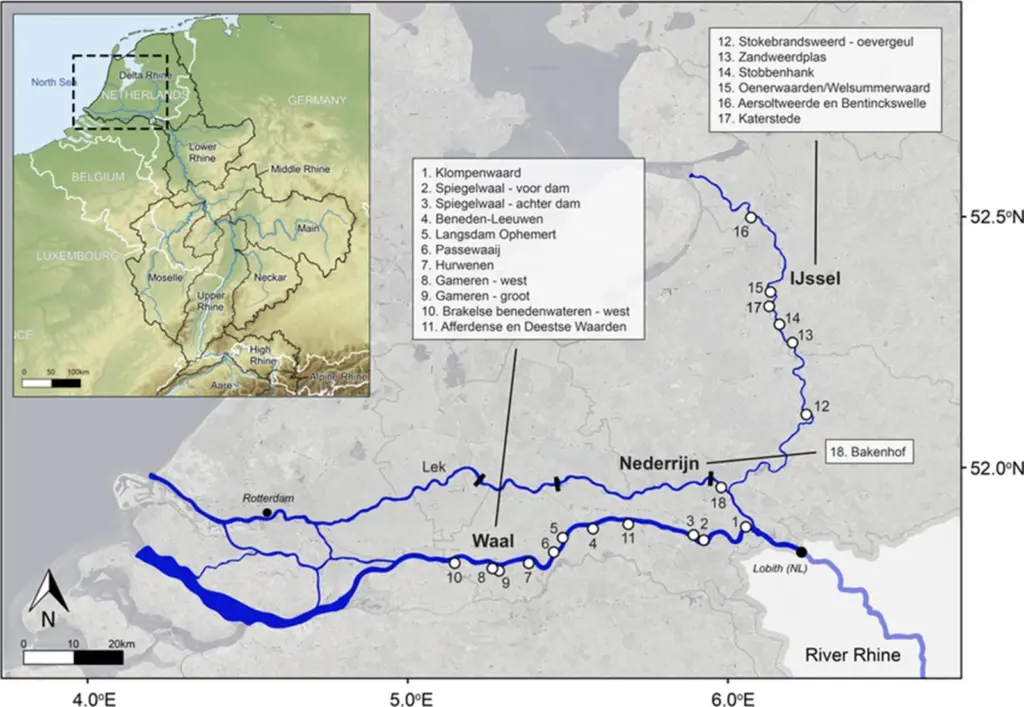
It has signed agreements with Van Oord, Boskalis and Martens en Van Oord to implement the WFD, which will improve water quality without compromising flood safety or inland navigation, project leaders say, on two particular rivers – the Nederrijn-Lek and IJssel-Zuid. They form critical corridors for shipping, water discharge and freshwater supply, and while decades of river regulation, bank armouring and channelisation have ensured safety and efficiency, it has been at the cost of wildlife along the banks.
The current programme seeks to redress that balance.
The WFD requires surface waters to achieve “good ecological status.” For large, heavily modified rivers like those in the Rhine delta, this does not mean returning to a pre-industrial state, but introducing targeted, realistic ecological improvements within the existing hydraulic framework.
On the Nederrijn–Lek and IJssel-Zuid, Rijkswaterstaat is delivering these improvements across around 40 locations, with works focusing on three main interventions.
1. Nature-friendly riverbanks
One of the most visible measures is creating nature-friendly banks, where traditional hard revetments of stone and asphalt are removed and replaced or softened, so that banks can be re-shaped into gentler slopes with shallow water zones.
These areas are crucial for plants, insects and fish, which struggle in steeper gradients, according to the EU.
“With these measures on the Nederrijn–Lek and IJssel-Zuid, we are improving ecological quality while fully respecting the river’s primary functions, said a Rijkswaterstaat programme manager.
“This is not about large-scale river reconstruction. It’s about smart, targeted interventions – nature-friendly banks, side channels, river wood – that collectively make a measurable ecological difference.”
Where erosion risk is high, geotextiles, planted reed beds and fascines will be installed, and local ‘toe protection’ to keep the banks stable while creating habitat.
2. Side channels (geulen) and side arms
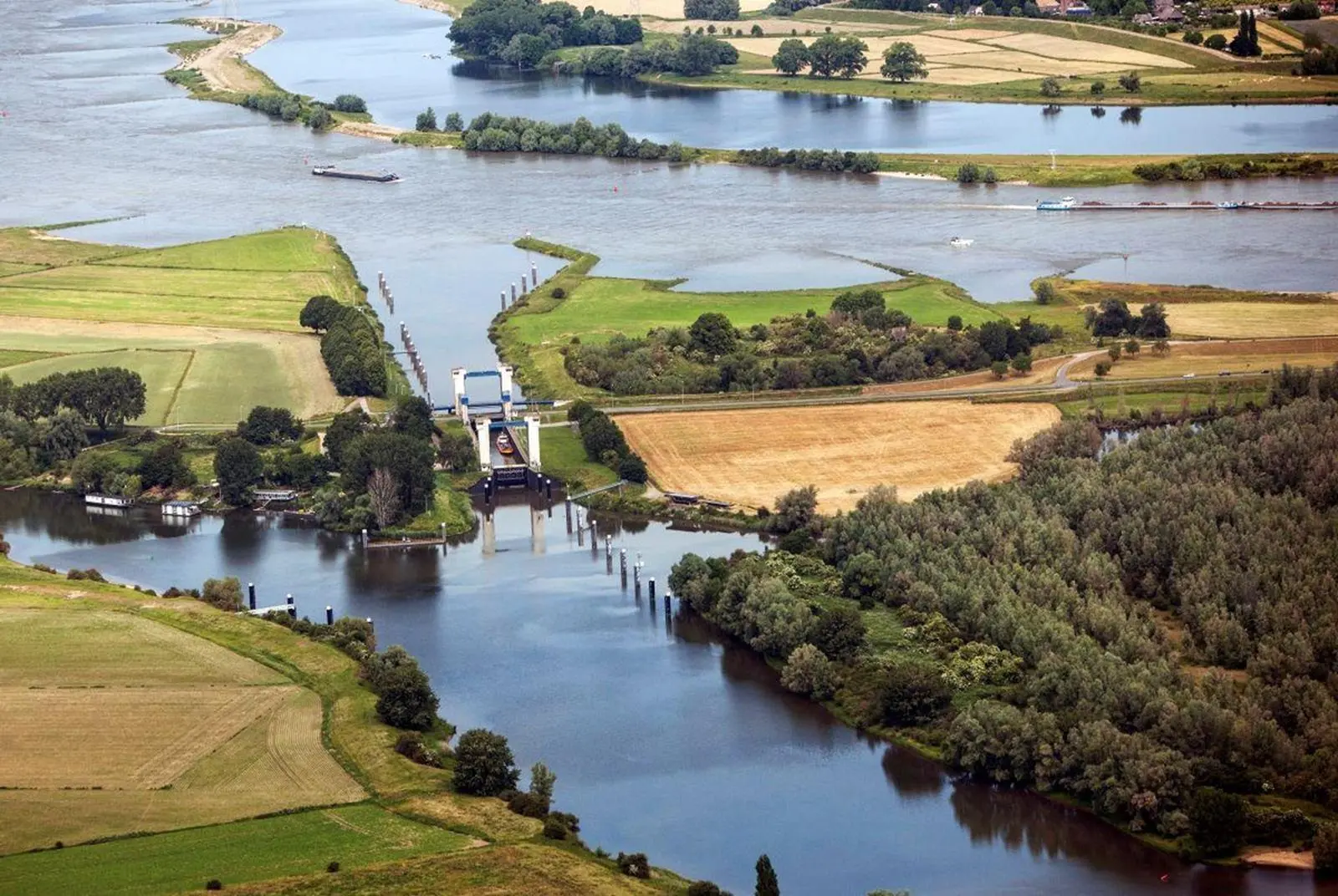
New channels are being built or re-opened to run parallel to the main river and carry water at lower velocities, to create habitats for spawning fish or nursery habitats and refuges during periods of high discharge.
They are carefully positioned in floodplains or outside navigation corridors, enhancing wildlife without being harmed by shipping or other water transport.
These will need bed and bank shaping, sediment management and flood and navigation checks.
Closely connected are side arms or backwaters, which are being re-connected or improved in terms of how they fit with the main river.
Side channels and side arms restore flow diversity that straightened rivers have long been without, the WFD says.
3. River wood installations
Where fallen trees were once routinely removed for safety or other reasons, it has now been widely accepted that they are key ecological features, creating shelter, flow shadows and feeding grounds for fish.
Contractors will now source and prepare wood depending on what species or habitat structure they are looking to create.
It will have to be ballasted or anchored so it remains stable during high flows and does not migrate into navigation lanes. This will be done by crane pontoons and workboats.
Patricia Zorko, deputy director-general of the Rijkswaterstaat, said: “With these contracts, we are moving from planning into delivery. Together with our market partners, we are working towards cleaner water, nature restoration and a future-proof river system.
“Meeting the challenge of the Water Framework Directive requires collaboration, craftsmanship and vision. That is what we are bringing together here.”
The WFD applies to waterways across Europe, establishing a common framework for protecting surface water and groundwater. The works will include river basin management plans, chemical pollution elimination, dyke reinforcements, dredging and a lot of monitoring and survey work.
Related Articles
 MARINE CONSTRUCTION
 MARINE CONSTRUCTION
 MARINE CONSTRUCTION