





Dutch hail success of two-year reef block scheme
A consortium including the Dutch water board has reported flood defence and marine biodiversity success two years after a reef scheme was installed in Rotterdam’s most important shipping lane.
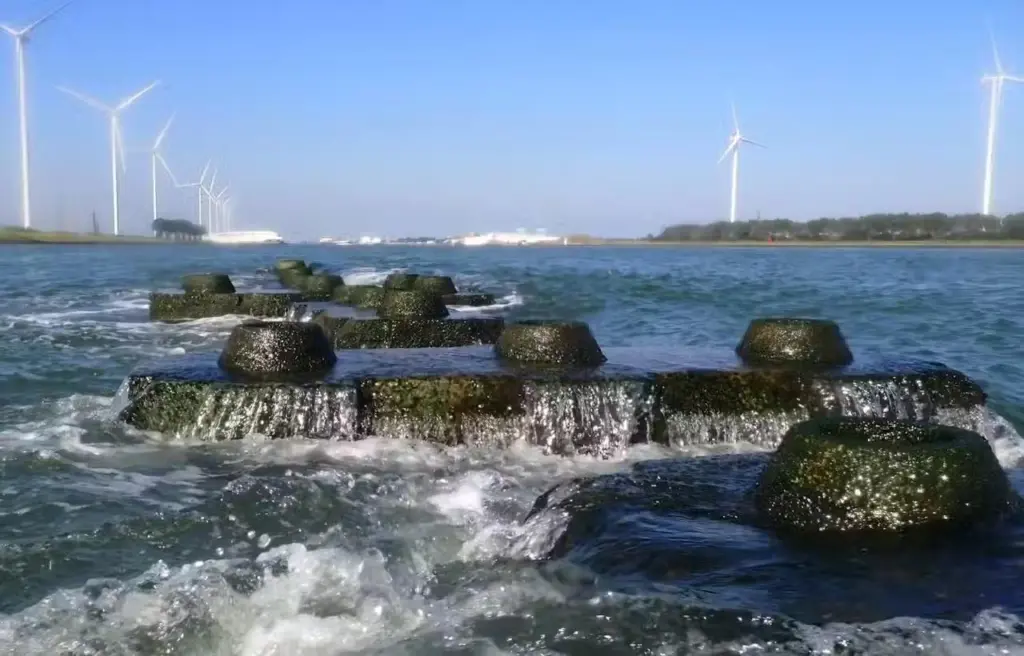
The Rijkswaterstaat, or Ministry of Infrastructure and Water Management, has reported results of the ‘Rotterdam reef’ scheme, which involved 17 reef blocks being installed in the Nieuwe Waterweg near Rozenburg, the main access route to the Port of Rotterdam.
Fears over bank erosion caused by the waves of the giant ships that come and go from one of Europe’s busiest ports led to the project, which is being seen as a pilot test for nature-based wave barriers that could act as flood defences as well as enhance marine growth.
Enter Dutch start-up ‘Reefy’, which designed 17 reef blocks three metres in length and weighing six tons each.
Designed to withstand the heavy wave loads coming from large ships, they proved their worth in July 2023, when they stood up to Storm Poly and remained stable, according to the Rijkswaterstaat. Reducing the wave action has also helped to silt up the reef, whcih is also good for coastal protection and erosion prevention, the Rijkswaterstaat says.
When it comes to marine life, project leaders estimate the blocks were three times as biodiverse as normal concrete, with tunnels, shaded passages and rough surfaces creating the sort of ecosystem in which marine animals can flourish.
One of the parties installing the blocks was Boskalis.
“Boskalis chose to work with Reefy in the Rotterdam Reef project as we see value in its double function as environmental breakwater that can both withstand waves and provides habitat for marine life,” said Sander Steenbrink, general manager Research and Development with the Dutch dredging and marine engineering firm.
“The Reefy living breakwater has been tested in our experimental facilities, showing stability and wave attenuation under hurricane conditions,” said Marcel van Gent- Full professor of Coastal Structures (TU Delft), Editor-in-Chief Coastal Engineering (Elsevier). “We see their potential in the field and are looking forward to future collaboration.”
Related Articles
 MARINE CONSTRUCTION
 MARINE CONSTRUCTION
 MARINE CONSTRUCTION