![MaritimeJournal[Seawork]](https://www.maritimejournal.com/wp-content/uploads/2026/09/MaritimeJournalSeawork.svg)





Latvia joins offshore tide with port hub plans
Latvia is positioning a port at its capital of Riga as a Baltic regional hub for offshore wind in the region’s nascent industry.
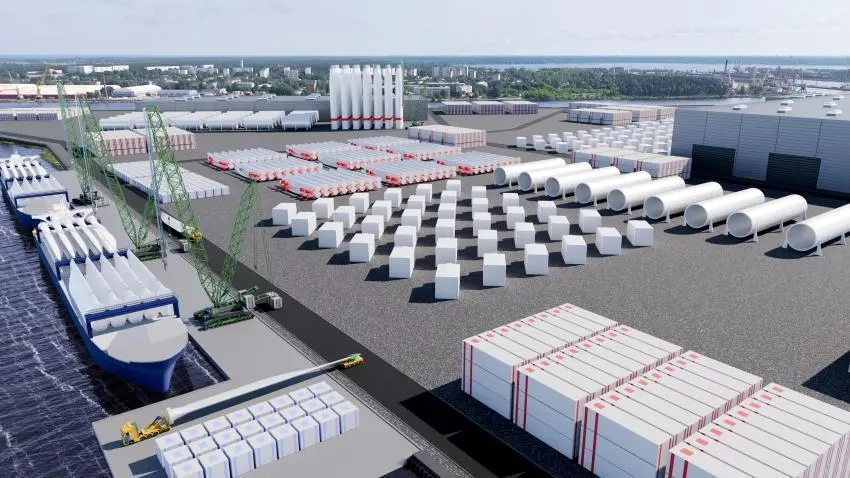
The Riga Port Authority has just released Early Information for construction works worth €70 million, including a Ro-Ro berth and logistics area in the northern part of Kundziņsala, part of the Riga port.
It is a part of the project ‘Development of Wind Technology Production Complex in Kundziņsala’, which will need total spending of €85 million, of which €55 million is being funded by the European Regional Development Fund and almost €10 million by the state budget.
The port infrastructure will have to be revamped to to handle very large next-gen offshore wind components, explicitly nacelles of more than 2,000 tons each and blade lengths or more than 120 metres.
New heavy-duty quayside for offshore wind cargo will be needed, including a deep-water quay with increased bearing capacity.
Dredging and shoreline works will also be needed to attain 13.5 metres’ depth in the adjacent water area, which will take place over about 20 hectares with 437,000m3 dredged volume, the port’s plans say.
“By leasing the newly developed industrial zone in Kundziņsala to manufacturers of wind energy technology components, it is planned to ensure €160 million in exports, 650 new jobs, and at least €7.8 million in annual tax revenue,” said Latvian minister of Economics Viktors Valainis.
Kundziņsala is already the container logistics centre of Riga Port, handling 72% of all sea containers in Latvia. Six out of nine active port companies in Kundziņsala are engaged in container cargo processing.
In the coming years, Kundziņsala also plans to become a major fuel and energy hub within Riga Port.
Construction is scheduled to begin on the first renewable fuels plant in the Baltic States, producing hydrotreated vegetable oil (HVO) and sustainable aviation fuel (SAF). Amber Flow Fuels will invest €120 million, with production starting by 2027. The facility will increase Latvia’s fuel exports by at least €150 million while strengthening energy independence.