




London 25km ‘Super Sewer’ finally completed
The largest infrastructure project ever undertaken by the UK water industry has finally been completed, some 12 years after initial investigations were carried out.
After eight years of intensive building works London’s new ‘Super Sewer’, formally known as the Thames Tideway Tunnel, is now complete, resulting in a 25km long, 7.2m wide main tunnel with a 4.5km connection tunnel in southeast London and a 1.1km tunnel in southwest London.
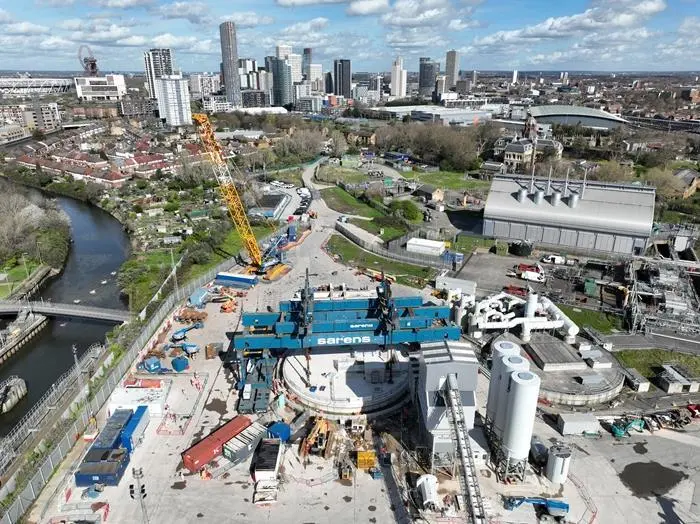
The critical milestone was achieved by engineering firm Tideway in March, with the fitting of a 1,200-tonne concrete ‘lid’ on the top of a 70m-deep shaft.
Twenty-four metres in diameter, the lid had to be placed using a purpose-built gantry crane and other manoeuvring equipment in a procedure that took five hours.
It was the heaviest lift in the entire project, which has been done by Tideway, a consortium of investors including more than two million pensioners.
The cost of the tunnel is estimated to be £4.5 billion (€5.3 billion), and will be paid for by Thames Water customers through their water bills, which Tideway promises will rise by no more than £25 (€30) a year.
Engineering works
The project, extending from Acton to Beckton, involved 70 work sites, including 11 riverside construction sites.
The main reason for the project was to reduce by almost 100% the millions of tons of storm sewage that spills into the River Thames every year, thanks to an outdated Victorian sewer system that has never been updated despite the population more than doubling since then.
The storm sewage will be diverted into the new infrastructure to change the famous river into a cleaner waterway than it has been since London was a city.
Jack-up rigs were deployed along the river in 2011 to carry out ground investigations to analyse the material that tunnel boring machines would have to deal with.
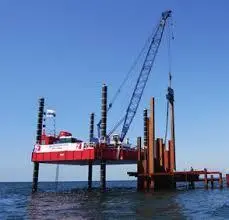
Red7Marine’s Seajack rigs were hired for the job, and it used its own tug to move them around the river.
Other investigations were carried out by Fugro, which over a seven-month period undertook drilling, downhole geophysics and testing down to 80 metres along a 10km stretch of the river.
The company designed and installed adaptations to the Skate 2D jack-up barge so that leg handling and storage could be done with a single vessel, as well as completing the grilling and testing.
As the tunnels were excavated, millions of tons of underground material were removed by waterway from central London and are now being used to create new parcels of land.
A range of barges from 500t to 1,800t has been used to remove the spoil.
“This is the moment we’ve all been waiting for,” said Tideway CEO Andy Mitchell. “The underground civil engineering on the Tideway project is now complete following eight years of dedicated hard work from all our teams working in the capital.
“There is still work to do – we need to finish some above-ground structures and, crucially, test the system – but this nonetheless marks an absolutely critical milestone for the Tideway project and for London.”
Related Articles
 MARINE CONSTRUCTION
 MARINE CONSTRUCTION
 MARINE CONSTRUCTION