


Norway marks ‘historic day’ for CO2 storage
A ‘historic day’ has been marked in Norway with the official completion of a transport and storage facility for CO2 captured from industrial activities.
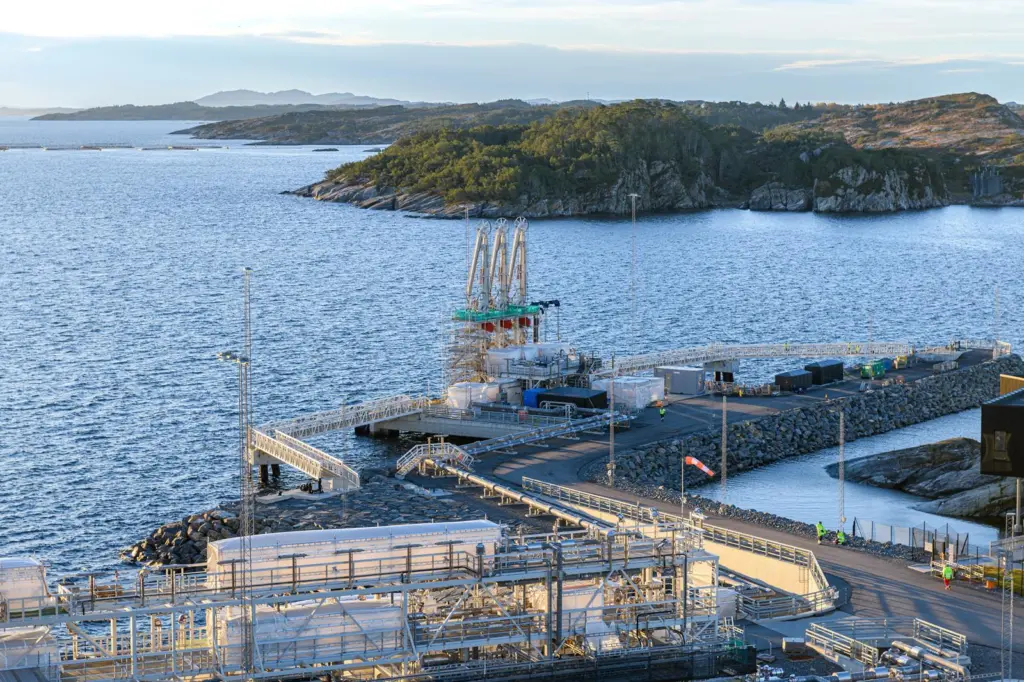
The Longship project, Norway’s first full-scale carbon capture and storage project, has been augmented by the transport, receiving terminal and pipeline works by the Northern Lights joint venture in Øygarden and was reported in Maritime Journal just over a month ago.
The Longship part of the project entails capturing the CO2 from the Heidelberg Materials cement factory in Brevik and the waste-to-energy plant Hafslund Oslo Celsio. Two other customers, Yara and Ørsted, have also been signed up.
This is where the Northern Lights JV, consisting of energy giants Shell, Equinor and TotalEnergies, steps in, to transport and store the gas.
Liquid carbon dioxide is transported by ship to an offshore receiving terminal, where it is then piped 100km to its permanent offshore storage location then injected into a saline aquifer some 2,600m below the surface of the sea.
“The onshore and offshore infrastructure has been delivered in time for customers and within budget and is now ready to receive CO2 from Norwegian and European industry,” a statement said.
“That includes the CO2 receiving terminal in Øygarden and pipeline, injection well and storage infrastructure 110 km offshore,” said a spokeswoman. “We have signed four customers who will deliver liquefied CO2 to Northern Lights: Heidelberg Materials and Hafslund Oslo Celsio, which are both part of the Norwegian state-supported Longship project, and Yara and Ørsted, which are commercial customers.”
Geologic storage
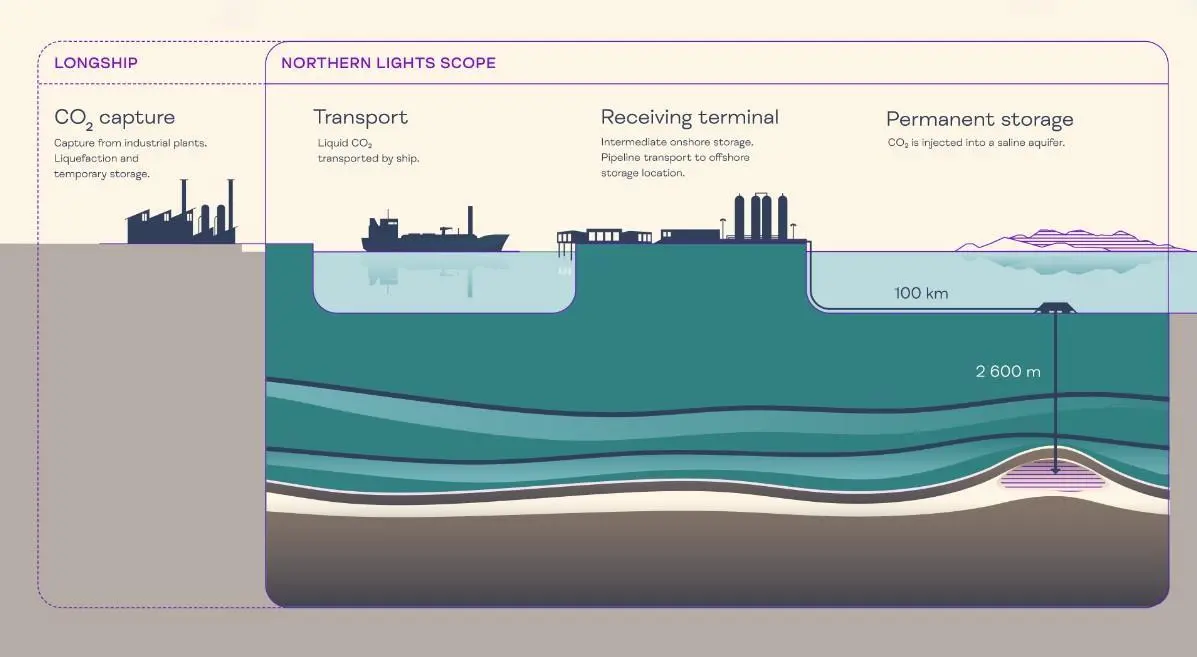
The Northern Lights joint venture cites a report by the US Department of Energy that spent $1 billion over 20 years on a Carbon Storage Research and Development programme to develop the technologies for widespread commercial deployment of geologic storage.
“Geological storage of CO2 has been a natural process in the Earth’s upper crust for hundreds of millions of years,” it says. “While this provides supporting evidence that CO2 can be securely and safely contained in the deep subsurface, it is vitally important that the technical means exist to identify suitable sites and monitor stored CO2 to verify secure containment.
“CCUS projects supported by DOE and other organizations around the world, which in 2019 injected more than 25 million metric tons of CO2, have shown no adverse impacts to human health or the environment. And no DOE supported project has observed migration of CO2 outside of the intended storage reservoir or confining cap rock.
“Increasing years of experience and a preponderance of successful projects will promote even further confidence in secure storage for operators, regulators, insurers, financial institutions, environmental groups, and the public.”
The 18-page report, Safe geologic storage of captured carbon dioxide: Two decades of DOE’s carbon storage R&D program in review, contains technological information about how CO2 is stored under the sea and can be found here.
Related Articles
 OTHER NEWS
 OTHER NEWS
 MARINE CONSTRUCTION